The little girl who slept in the back room of Jack Ruby’s Dallas nightclub while the future assassin of Lee Harvey Oswald kept watch over her would grow up to stare down John Wayne on screen, but the trajectory of Kim Darby’s life was defined by a series of cataclysmic near-misses and private battles that left her standing just outside the spotlight of history.
Deborah Zerby was born into a family of vaudeville performers on July 8, 1947, in Los Angeles, her lineage stretching back to circus clowns and dance troupes that predated talking pictures. Her parents, John and Inga Zerby, worked the supper club circuit as the Dancing Zerbies, dragging their young daughter through a haze of cigarette smoke and last-call sentiment that would shape her understanding of show business as something both magical and profoundly unstable. When her parents split when she was two, custody went to her father, a working dancer who was often absent, leaving the actual raising of the child to her grandparents.
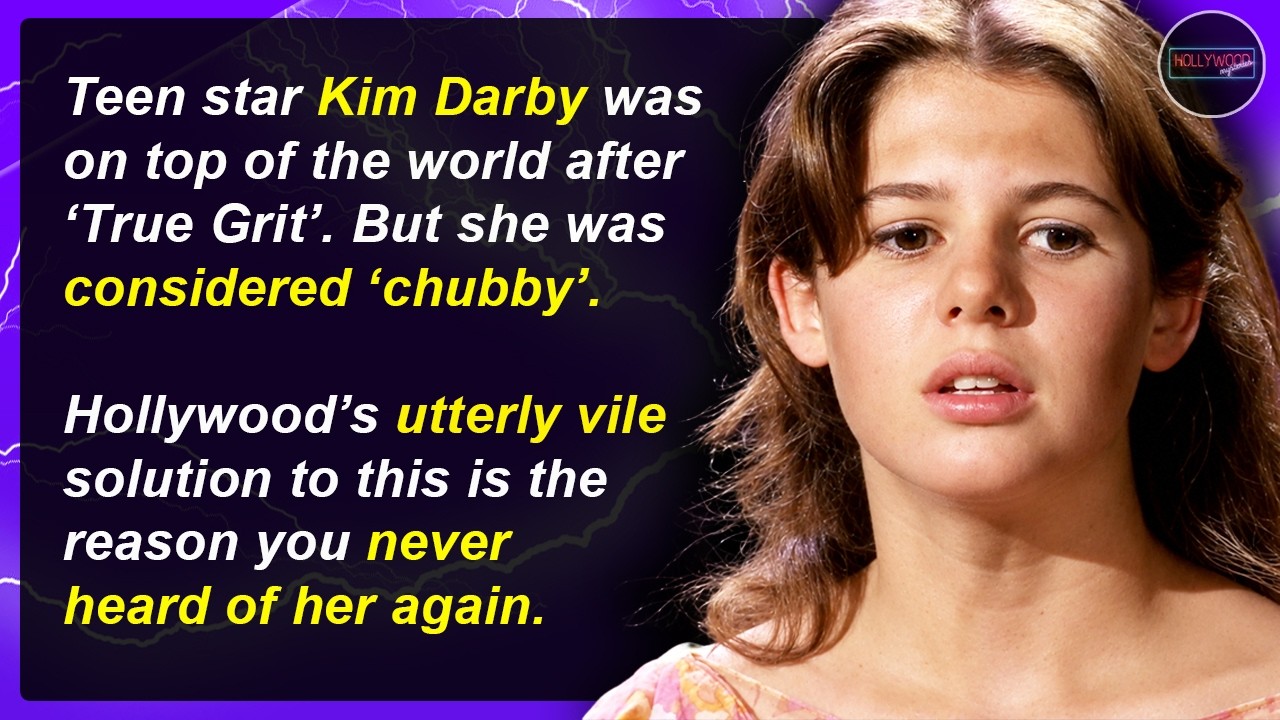 She made her stage debut at age three in a Las Vegas showroom when a comedian hauled her on stage and introduced her as the manager of the show, a bit she kept until school came for her.
It was on this threadbare circuit that she acquired her most bizarre footnote in American history. Her parents played a Dallas club run by Jack Ruby, and when they were on stage, it was Ruby who minded the boss’s daughter in the back. That the man who would murder Lee Harvey Oswald on live television once babysat the future Mattie Ross is the kind of coincidence on which America’s entire twentieth-century culture built its myths.
Darby remembered none of the geopolitics, only being minded by Mr. Ruby, a strange inheritance that set the template for a life spent brushing against enormous events while remaining herself just off to the side of them.
The name had to go. Derby Zerby was a burden no child could drag across a Los Angeles schoolyard. She borrowed the name of the prettiest girl at school and anglicized her father’s joke, and Kim Darby walked out into the world sounding like someone who had never once been laughed at.
She studied dance with her father and with Nico Charisse, but it was acting that finally took hold. At 14, she talked her way into Tony Barr’s acting workshop at Desilu, and Barr, struck by her openness and emotional readiness, promoted her out of the youth class into his adult one. The work came fast for a teenager who looked younger than her age and could cry on cue, leading to a long grind of episodic television that was the finishing school of every young actor of the sixties.
In 1966, she played the title role in “Miri,” an early episode of a new science fiction series called Star Trek, as a girl teetering on the edge of adulthood on a planet where a plague has killed all the grown-ups. Darby, all trembling adolescence and unspoken longing, gave the throwaway part a real heartache, a performance a certain kind of Trekkie can still recite. But what got her seen most was an episode of the Ben Gazzara series Run for Your Life, which happened to be flickering on the set the night producer Hal B.
Wallis was looking for a face. He was looking for Mattie Ross.
Wallis had bought the film rights to Charles Portis’ novel True Grit, outbidding John Wayne himself, who had wanted the property so badly he had put up $300,000 of his own money. Wayne was to play Rooster Cogburn, the fat, drunk, one-eyed federal marshal hired by a 14-year-old Arkansas girl to hunt down the man who murdered her father. But Mattie, the girl, was the real driving force, a pigtailed avenging angel who out-talks, out-argues, and out-wills every grown man she meets.
The part was seriously coveted, and half of young Hollywood circled it like buzzards. Wayne wanted it for his own daughter, Aissa. Wallis and the director, Henry Hathaway, said no.
Mia Farrow accepted it eagerly and then let Robert Mitchum talk her out of it with horror stories about Hathaway’s raging temper. Tuesday Weld passed. Wayne had Karen Carpenter come in and read.
Elvis Presley was floated for the Texas Ranger LaBoeuf until Colonel Tom Parker demanded Elvis receive top billing over Wayne, at which point the role went to country singer Glen Campbell instead.
Into the scrum of famous near-misses walked Kim Darby, whom Wallis had spotted on his television set. Surprisingly, she didn’t want it. She turned it down three times.
Her reasons had nothing to do with the quality of the role, which was magnificent, and everything to do with the fact that her private life had just blown up in the most ordinary way imaginable. By the time True Grit came calling, Kim Darby was 21, married, freshly a mother, and about to be single. In 1968, she had married James Stacy, a handsome, easy, charming television actor who had already survived one Hollywood marriage to Connie Stevens.
Darby and Stacy had a daughter, Heather, and then with the rapidity that would come to define every one of Darby’s marriages, they fell apart.
She was then a new mother and a nearly divorced one when Wallis kept ringing. In the end, she said yes for reasons that were half artistic and half practical. She told critic Roger Ebert about it a decade later, still able to summon up the exhaustion.
“I started the picture two weeks after she was born, but Hal Wallis, the producer, kept after me, and I finally took it, not only because it was a wonderful role, but for some personal reasons, too, because I had to think about supporting us.” A single mother of 21 flew to Colorado to play a 14-year-old avenging her daddy.
The shoot was not a honeymoon. Hathaway, whose reputation had scared off Mia Farrow, laid into Darby on the very first day. “It got me so off guard,” she remembered.
“I just got up and went back to my dressing room.” Eventually, the director and his young star reached a treaty in that dressing room and on terms she dictated. “I said, ‘Henry, I’ll do anything you want.
Just don’t yell at me again.’ After that day, we went along swimmingly.” She was not the only one Hathaway abused.
 Robert Duvall, playing the outlaw Ned Pepper, feuded with him so bitterly that Duvall’s summary of the production was a study in omission. Dennis Hopper was on the picture too, getting his fingers lopped off in a single incredible scene.
With Wayne, there was no dressing room treaty because there was barely a conversation. The Duke was then 59, down to one lung from cancer, and monumentally uninterested in the anxious, methody young actress the producer had hired over his objections. The two of them hardly spoke off camera.
Wayne’s verdict on her was this: “Christ, talk about having no chemistry with your leading lady. She was the goddamn lousiest actress I ever worked with.” He said kinder things about her on other days, though.
Darby, for her part, spent the first five years after the picture saying impolite things to reporters and the following decades taking them all back. “There were times I said I hated him and that I hated Henry,” she said. “I never hated John.
I never got to know him. We didn’t talk.” The truth was less a feud than a case of mutual incomprehension, a middle-aged conservative legend and a 22-year-old whose entire generation was marching against his war.
By her own reckoning, she was only half there. She was a new mother fretting over a baby in a marriage in ruins, trying to play a child while being ambushed hourly by adulthood. She believed she had only truly found Mattie at the very end.
“I only performed well in the boarding house scenes, which were the last we shot,” she said. “I wasn’t so worried about my baby and ex-husband. I can see my eyes sparkle.”
Watching the film, it is not fair to her as self-appraisal. Her Mattie is full of prim ferocity, a small person with a lot of spine, correcting the grammar of killers and haggling the horse trader down to the last dollar. Wayne, for all his complaining, clearly knew what he had beside him.
He always said that the film’s tenderest passage, the one in which Rooster sits by a campfire and confesses to the girl his own botched attempts at marriage and fatherhood, was the best acting he had ever done. A lot of what makes it land is Kim Darby just listening.
The picture opened in the summer of 1969 and went straight to number one at the American box office. Audiences adored Wayne’s ruined marshal, and the Academy, in a spasm of career-capping sentiment, gave him the only Oscar he would ever win. Darby collected a BAFTA nomination as most promising newcomer and apparently a big future.
Everyone agreed that a star had been born. Everyone, including Kim Darby, assumed the whole industry was about to open before her like a door. What had made her so suddenly so bankable was also what would make her so hard to place.
She didn’t look or sound like the lacquered ingenues the studios were manufacturing. She looked like an actual girl, a little snub-nosed and a little plain with a flat, unmusical voice and a habit of appearing to think before she spoke. In a Hollywood still overstocked with polished starlets, she registered as something genuinely new, unvarnished, and real.
The trouble with being new, of course, is that nobody yet knows what you are. And once the novelty cooled, the machine that had grabbed for her could not make up its mind whether she was a leading lady or a character actress, an innocent or a neurotic. And so, in time, it simply quit deciding.
She had been, by her own joking admission, chubby during True Grit, still soft from the pregnancy, and Hollywood, having decided she was going to be a leading lady, went to work on her. Or more accurately, she went to work on herself, albeit at the industry’s urging and by the era’s preferred methods. “At that time, after True Grit, my agents and my manager expected me to be a leading lady,” she said.
“And one way I went about it was to get really thin and not a healthy way.” The not a healthy way was amphetamines. What started as a diet became an addiction and a full eating disorder that went on for 16 years.
At its worst, it took the girl who had out-toughed John Wayne down to a dangerously low weight. She was the whole time still a working actress and a mother, appearing on the nation’s TV screens as the wholesome girl next door while starving in the wings. “I am 35 years sober,” she said in 2011.
“I never drank, but to get thin, I was taking amphetamines. I am so lucky.” The luck was in surviving it at all.
Much of the promise everyone had seen in her got spent over the years that should have made her on a chemical campaign to become someone thinner and blonder and generally less like herself, which is to say less like the thing that had ever made her worth watching.
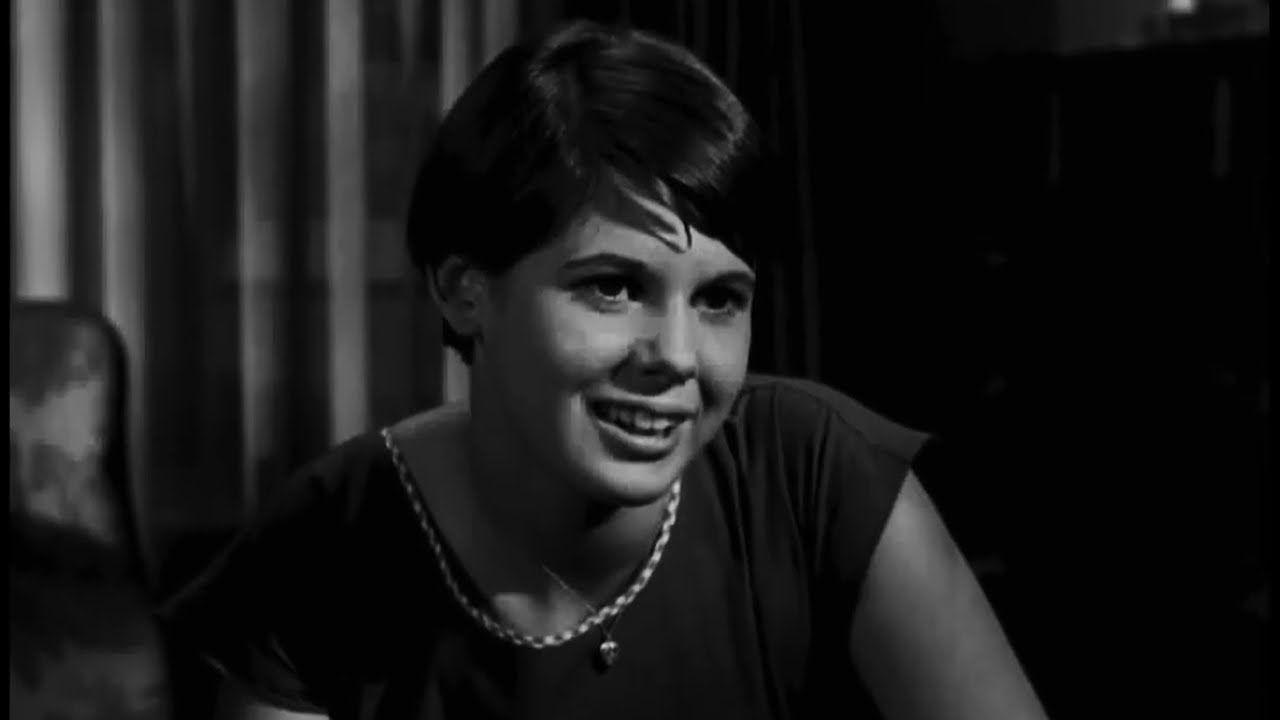 The work in the meantime kept declining to catch fire. The same year as True Grit, she made Generation, a pretty limp counterculture comedy about a father trying to cope with his pregnant daughter’s plan to give birth at home. Her co-star was the doomed, magnetic Pete Duel, who would be dead by his own hand within two years.
In 1970, she made Norwood, a shapeless vehicle assembled to turn Glen Campbell into a movie star. The same year she surfaced in The Strawberry Statement as the co-ed who lures Bruce Davison into campus radicalism. She was busy.
She was everywhere and none of it stuck to her. In 1971, her luck curdled in a way that had nothing to do with her at all. She was cast opposite Elliott Gould in a modest Warner Brothers picture called A Glimpse of Tiger, and Gould, then teetering at the very top of his brief stardom and privately falling apart, behaved so erratically on the set that the studio fired him and shut the entire production down after a matter of days.
Warner Brothers, left holding a Barbara Streisand commitment and a dead movie, gave the wreckage to Peter Bogdanovich, who threw out very nearly everything and built on the ruins the screwball smash What’s Up, Doc? Kim Darby had been attached to a film that not only collapsed but was promptly reincarnated without her as somebody else’s enormous hit.
That same year came The Grissom Gang, Robert Aldrich’s lurid, sweat-soaked Depression-era grotesque in which she played Barbara Blandish, a spoiled heiress kidnapped by a family of half-witted sadists. It is a hard, ugly, and very accomplished Aldrich picture, and it flopped so spectacularly that it earned back barely a fifth of its budget. In a final little Hollywood joke, one of the supporting parts went to Connie Stevens, the first Mrs.
James Stacy, so that Darby found herself sharing a call sheet with her ex-husband’s ex-wife. And then, as she was struggling through all this failed movie ambition, she made something that would outlive most of it. In 1973, she starred in Don’t Be Afraid of the Dark, an ABC movie of the week about a young wife named Sally who inherits a gloomy old mansion and is slowly hunted through its rooms by a colony of tiny whispering creatures that want to drag her down into the dark and make her one of them.
It is only 74 minutes long and was made on pocket change, but it is genuinely and permanently scary. One of the children it terrified was a young boy in Guadalajara called Guillermo del Toro, and he would grow up to make Pan’s Labyrinth and would in 2010 produce a lavish remake as an act of homage. Darby’s Sally dissolves from a personality of brisk competence into full hysteria as the house consumes her, a masterwork of televised dread.
TV kept faith with her long after the movies gave up. In 1976, she played the unhinged Virginia Calderwood in Rich Man, Poor Man, the sprawling adaptation of the Irwin Shaw novel that more or less invented the American miniseries, and was rewarded with an Emmy nomination. She was always superb at damaged women, at the girl whose smile is stretched a half inch too tight, at playing the wife or daughter you sense is one bad afternoon from coming apart.
Through the seventies, she worked almost without stopping in the disposable medium of the made-for-television movie, playing wives and victims in historical footnotes. It was employment, and it was constant, and it led everywhere on Earth except back to the top.
If her professional life in these years was a set of near-misses, her private life was a set of very fast hellos and goodbyes. Having divorced Stacy almost the instant Heather was born, she married in February of 1970 the actor James Westmoreland, a man she had known just three weeks before she married him. The marriage lasted 47 days.
Her third marriage is the one that reads like a plot from a TV 𝒹𝓇𝒶𝓂𝒶. She married William Tennant, known to everyone as Bill, one of the hottest agents and executives in early seventies Hollywood, a man who cut the deals on Easy Rider and Rosemary’s Baby. But Bill Tennant walked the world holding on to a private horror few of his clients could imagine.
He had been Roman Polanski’s agent and close friend. On the morning of August 9, 1969, it was Tennant who was called to 10050 Cielo Drive. Tennant was the guy who identified the mutilated body of Polanski’s pregnant wife, the actress Sharon Tate.
And it was Tennant who got Polanski on the telephone in London to break it to him. So, the little girl who had been babysat by the man who shot Oswald grew up to marry the man who found Sharon Tate. Kim Darby had by now a near-supernatural gift for standing exactly one degree removed from the darkest events of her decade.
Tennant’s own ending was long and terrible in its own right. Cocaine took his marriages, then his money, then his home, and the golden boy of seventies Hollywood spent years destitute before his death in 2012.
And then there was the fate of the man who had fathered her only child. On September 27, 1973, James Stacy took his girlfriend for a ride on his motorcycle through the Hollywood Hills and was struck head-on by a drunk driver. The girlfriend, a young woman named Claire Cox, was killed instantly.
Stacy lost his left leg and his left arm. He won a landmark lawsuit against the bar that had over-served the driver, dragged himself back to acting, and earned Emmy nominations playing broken and wounded men. And then two decades on, the story took its final and unforgivably dark turn.
In 1995, Stacy was charged with molesting an 11-year-old girl he had invited to swim at his house. He fled to Hawaii, hurled himself off a cliff in a suicide attempt, survived, was extradited, and in 1996 was sentenced to six years in prison. He died in 2016.
This was the father of Heather Elias, the baby Kim Darby had left in Los Angeles to go and play Mattie Ross, and it was one more of the terrible events that seemed always to occur in her vicinity, while she herself remained a step outside the frame.
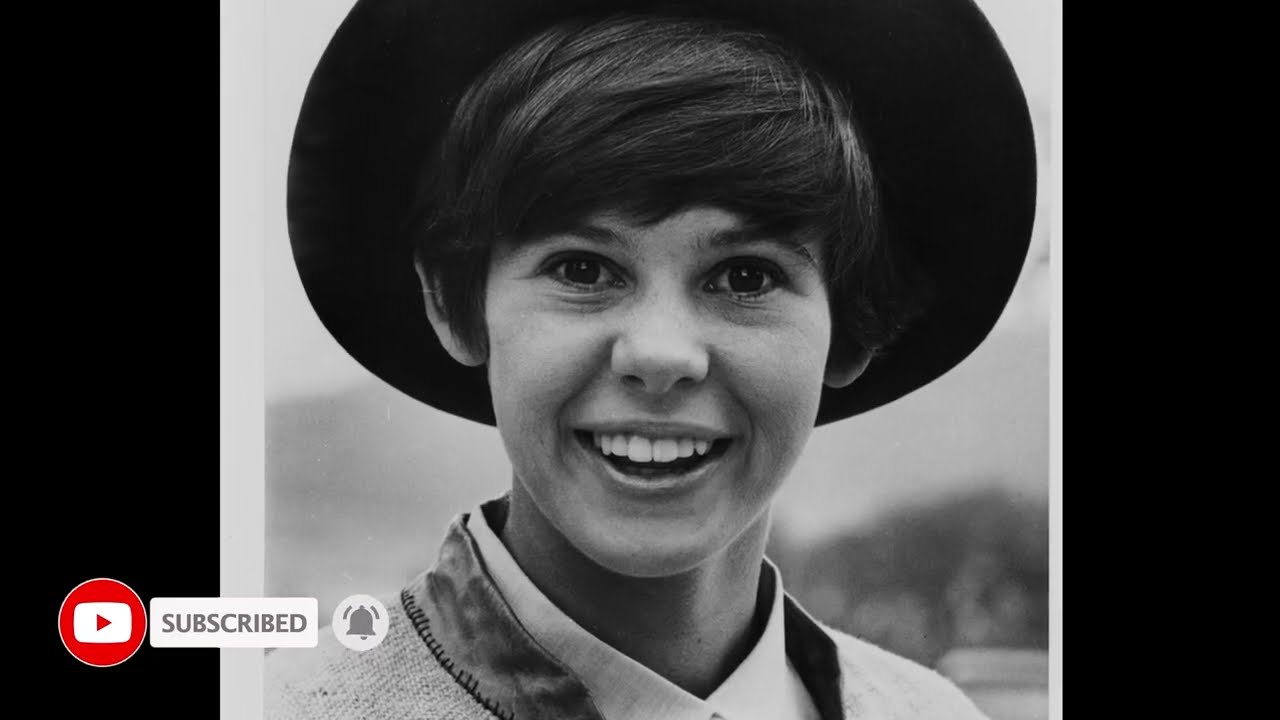 By the late 1970s, the woman everyone had tipped for stardom had become, in the industry’s cold shorthand, hard to cast. She had a specialty by then, and she hated it. Somewhere along the way, she had been reclassified as a sufferer, and every offer that came was for what she called the “woe is me” role.
So, she stopped. For nearly three years, she did not even read scripts. She raised Heather, and she sat with herself.
When Roger Ebert met her again in 1978, promoting a Henry Winkler picture called The One and Only, she was on a hotel couch nibbling at a plate of cottage cheese and talking with a sincerity he found almost heartbreaking. “I wanted to wear myself better,” she told him. She was finished being the threatened female.
“I absolutely wouldn’t play a victim ever again,” she said. “I was the one they always called for the woe is me role. It’s funny.
In True Grit, I was pluckier almost than John Wayne. And so, how did I get typecast as the threatened female?”
The comeback came in comic disguise. In 1985, a 24-year-old writer-director named Savage Steve Holland, working in a cartoonish style that was a mix of John Hughes and a Looney Tunes short, cast her as the mother in Better Off Dead. This was a teen black comedy about a lovelorn boy played by a young John Cusack whose repeated attempts to 𝓀𝒾𝓁𝓁 himself keep going hilariously and elaborately wrong.
Darby played Mrs. Meyer as a beaming domestic lunatic, blissfully oblivious to her son’s despair, ladling out gelatinous casseroles and gift-wrapping TV dinners for Christmas. In the film’s most quoted scene, she serves up an all-French menu in an accent from no place on earth.
“We have French fries and French dressing.” She adored it. “I had great fun on that,” she said, because I didn’t have to cry.
After a career spent being ordered to weep on command, she got at last to be funny on purpose, and a whole new generation took the movie to its heart with the devotion usually reserved for a midnight cult film. She settled contentedly into that comic colt lane. In 1987, she played the biology professor in Teen Wolf Too, opposite a very young Jason Bateman.
And in 1995, she turned up as the adoptive mother of Laurie Strode in Halloween: The Curse of Michael Myers, closing a strange circle by joining outright the horror machinery she had helped to invent with Don’t Be Afraid of the Dark.
In 1999, she delivered one of her last genuinely arresting performances on The X-Files as a broken woman who confesses to the murder of her own vanished son. The episode is about the unbearable, unhealable weight of a lost child, and Darby, who knew a thing or two about children and loss, played it with the stillness that stops the whole episode cold. By then, she had reinvented herself yet again.
In 1990, she began teaching acting around Los Angeles. And from 1992 to 2009, she taught in the extension program at UCLA, where her classes were required of all the film students in the entertainment studies program, which meant that a generation of aspiring young directors absorbed the rudiments of screen performance from the original Mattie Ross without necessarily realizing whose feet they were sitting at. It suited the woman who had been standing underneath the sweetheart image the whole time.
“People underestimate me,” she said, “but I’m very tenacious and I do what I have to do to get something done.” And then she stated something she had always wanted to state. “I’m not a little waif and I’m not a victim.
I’m none of those things.”
When the Coen brothers remade True Grit in 2010 with a 13-year-old newcomer named Hailee Steinfeld taking the role that had made and then quietly unmade Kim Darby, Darby was impressed. She called the new film a masterpiece and warmly congratulated the girl who had inherited her part and with it the Oscar attention that had once passed Darby by. She had made a certain peace, it seemed, with being the first Mattie and not the famous one.
The answer to a trivia question, the version your grandmother remembers. With a career like Kim Darby’s, it would be easy to file her under squandered promise and move along. The movie industry, which invented the phrase flavor of the month for people like her, did just that.
But a life is not a marquee. The stardom everyone predicted never actually came. But the work she did in its place has been more difficult to 𝓀𝒾𝓁𝓁.
Kim Darby spent her life exactly one degree removed from the enormous events of her century. Babysat by an assassin. Married to a man who found a murdered starlet.
Mother to the child of a man the world would come to revile. Tipped for a stardom that kept going to other women while she waged a private and nearly fatal war on her own body. She was seldom at the center of the picture, but she was again and again the figure at the very edge of the frame that you somehow cannot stop looking at.
The one with spine and comic timing, and that in the end is a kind of grit for which the Academy never did get around to handing out a prize.


