For a brief moment, Elliott Gould seemed unstoppable.
The unconventional looks.
The nervous energy.
The strange sex appeal.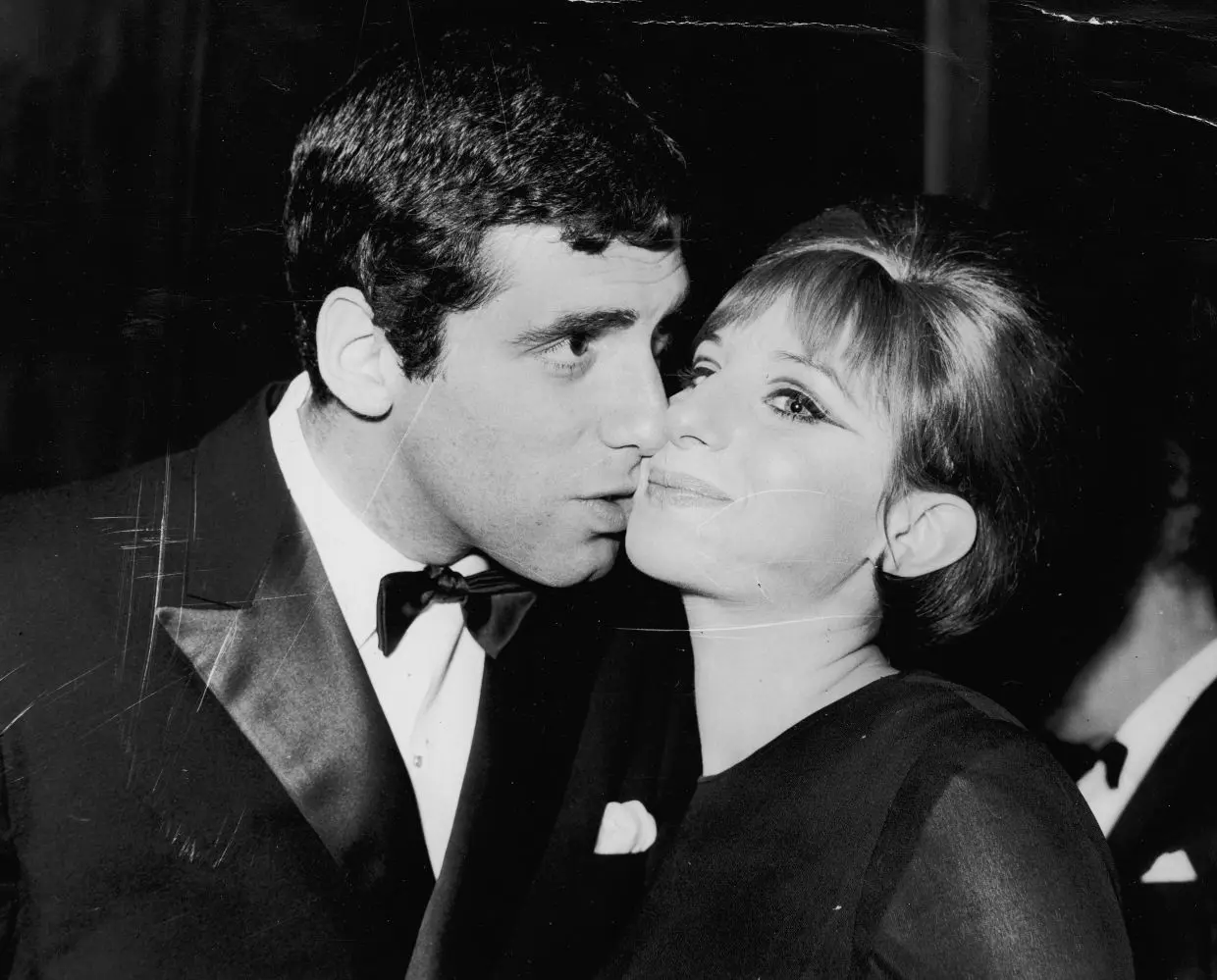
The actor who looked nothing like Hollywood’s traditional leading men—and somehow became one of its hottest stars.
By 1970, Gould was Oscar-nominated, starring in enormous hits, and appearing on the cover of Time magazine.
He had also been married to Barbra Streisand, one of the most famous women in entertainment.
Hollywood appeared to belong to him.
Then everything began to collapse.
A troubled marriage.
Overwhelming fame.
Increasing emotional pressure.
And finally, a disastrous movie production that helped turn one of Hollywood’s hottest actors into someone the industry suddenly considered too risky.
But Elliott Gould’s story did not end there.
Long before Hollywood knew his name, Gould was a Brooklyn kid searching for somewhere he belonged.
He found it in performance.
The theater gave him direction, and Broadway eventually became the foundation of his early career.
Then Barbra Streisand entered his life.
They met while both were still building their careers and married in 1963.
But something extraordinary soon happened.
Streisand exploded into superstardom.
Her voice, personality, and talent made her a phenomenon, while Gould was still trying to establish an identity of his own.
The imbalance placed increasing pressure on their marriage.
He was no longer simply Elliott Gould.
In many rooms, he was Barbra Streisand’s husband.
But Gould’s own breakthrough was coming.
 And when it arrived, it happened fast.
In 1969, Bob & Carol & Ted & Alice turned him into one of the faces of a changing Hollywood.
The film explored relationships, sexuality, marriage, and the cultural upheaval of the era.
Gould’s performance earned him an Academy Award nomination.
Suddenly, the qualities that once made him an unlikely leading man became exactly what audiences wanted.
He was awkward.
Neurotic.
Funny.
Sexual without looking like a conventional matinee idol.
Then came MASH*.
Directed by Robert Altman, the film became a major hit and strengthened Gould’s reputation as the perfect actor for the rebellious new Hollywood emerging at the beginning of the 1970s.
In 1970, Time put him on its cover.
That image captured an extraordinary moment.
Elliott Gould had arrived.
But success was moving faster than he could comfortably process.
His marriage to Streisand deteriorated and eventually ended.
Meanwhile, Hollywood expected Gould to keep delivering.
More movies.
More pressure.
More attention.
Then came A Glimpse of Tiger in 1971.
The production became the turning point.
Accounts from the troubled shoot described increasingly erratic behavior from Gould, and the project eventually collapsed.
The film was canceled.
For an actor who had recently been treated as one of Hollywood’s most exciting new stars, the consequences were devastating.
Suddenly, Gould was viewed differently.
The eccentricity that had made him fascinating could now be interpreted as instability.
The unpredictability audiences loved on screen became something producers feared behind the camera.
His momentum disappeared almost as quickly as it had arrived.
But Gould did something that ultimately changed the direction of his life.
He sought help.
Therapy and self-reflection became part of a period in which he attempted to understand what had happened rather than simply continue running at the same speed.
And slowly, he returned.
One of the people willing to work with him again was Robert Altman.
Their reunion produced one of Gould’s most important performances.
In The Long Goodbye, Gould played Raymond Chandler’s famous detective Philip Marlowe—but nothing about his version felt conventional.
He was rumpled.
Detached.
Confused by the changing world around him.
It was exactly the kind of character Gould understood.
Then came California Split, another Altman collaboration that further demonstrated that the actor Hollywood had nearly written off still possessed the qualities that had made him special.
His career would never again follow the same meteoric trajectory of 1969 and 1970.
But perhaps that saved it.
Instead of remaining trapped as a superstar, Gould gradually transformed into something more durable.
A character actor.
A familiar presence.
A performer who could disappear for a while and then suddenly remind audiences exactly why they liked him.
Decades later, a completely different generation discovered him through Friends, where he played Jack Geller, the eccentric father of Ross and Monica.
Then the Ocean’s Eleven films introduced him to another generation as Reuben Tishkoff.
The young Brooklyn performer who once struggled to escape the shadow of Barbra Streisand had survived long enough to become a Hollywood institution himself.
And that may be the most remarkable part of Elliott Gould’s story.
His career appeared to explode overnight.
Then it almost imploded just as quickly.
Marriage to one of the world’s biggest stars brought attention and pressure.
Hollywood fame brought opportunity and instability.
And one disastrous period nearly convinced the industry that his moment was finished.
But Gould survived.
He adapted.
And the qualities that once made him seem unusual eventually became his legacy.
Before actors like Elliott Gould, Hollywood leading men were often expected to project certainty.
Strength.
Control.
Gould offered something different.
Anxiety.
Vulnerability.
Confusion.
Humor.
Human imperfection.
He helped prove that a movie star did not always have to look invincible.
Sometimes the most fascinating person on screen could be the man who looked as though he was barely holding everything together.
For a while, Elliott Gould really was barely holding everything together.
But unlike so many Hollywood stories of sudden fame and spectacular collapse, his fall was not the ending.
It became the beginning of his second act.