For over a century, the Viking grave sat in Swedish museum collections labeled with quiet confidence: male warrior, high-ranking commander, complete with a sword, axe, spear, armor-piercing arrows, two shields, and the remains of two sacrificed horses. The burial, first excavated in Birka in the 1880s, became a routine textbook example of elite Viking military burial, cited repeatedly in academic papers and displayed in museums as settled fact. In 2017, researchers ran a genetic analysis on the skeleton. The result overturned the label.
The remains were biologically female. The initial pushback was fierce. Some researchers suggested the weapons must have been ceremonial, symbolic, or somehow misattributed, despite having been found in direct, undisturbed association with the body. It required additional osteological analysis, examining the skeleton for signs of horseback riding and physical activity consistent with combat training, before the academic community largely accepted the genetic conclusion.
Further evidence included the deliberate placement of gaming pieces near the body, suggesting tactical command responsibilities. The case became a clear demonstration of how deeply assumptions about male warriors had become embedded, to the point that even direct genetic proof required additional convincing. Birka is not an isolated case. On the Eurasian steppes, spanning parts of modern-day Russia, Ukraine, and Central Asia, the Scythians and Sarmatians left behind burial mounds long associated with the Greek myth of the Amazons.
For years, that connection was dismissed as legend. Large-scale excavation of their burial sites changed that assessment. A significant percentage of female remains, sometimes estimated at 20 to 30 percent depending on the site, were found buried with weapons and riding equipment. More importantly, their skeletons showed healed combat injuries: arrow wounds, blows consistent with close-quarters fighting, trauma that healed long before death.
These were not decorative inclusions. These were women who had fought, taken damage, and survived. The evidence suggests the Greek stories of Amazon warrior women were not pure invention, but an exaggerated and mythologized account of a real cultural pattern observed by travelers who encountered Scythian and Sarmatian women fighting, riding, and hunting as a normal part of their expected social role. The reassessment extends well beyond combat.
Some of humanity’s oldest known art may also have been made by women. Paleolithic cave art sites across Europe contain handprints stenciled onto walls by blowing pigment around a hand. For decades, researchers assumed these hands were male, fitting the broader assumption that art, like hunting, was primarily male work. Researcher Dean Snow applied a method measuring relative finger length ratios, a statistical difference between male and female hands, to a sample of these prints.
The majority showed characteristics statistically more consistent with female hands than male ones. The finding challenged a long-standing assumption, suggesting women may have been responsible for a significant portion of some of the oldest surviving visual art in human history, deep inside cave systems, unrecognized as potentially female work for tens of thousands of years. Economic power offers another avenue of evidence. Written records from ancient Mesopotamia show women operating as independent merchants, managing trade transactions, and in some documented cases running substantial business operations involving textile production and long-distance trade under their own name and authority.
They were not acting as extensions of a husband or father. Property rights and legal standing varied widely across the ancient world. While many societies imposed serious restrictions on women’s legal autonomy, the picture was not uniformly restrictive. Some ancient Egyptian legal records show women independently owning property, initiating legal proceedings, and serving as witnesses in legal transactions with formal standing that was more extensive than what women in some later historical periods in other parts of the world were allowed.
The history of women’s legal status does not follow a neat, continuously improving timeline. Religious authority also gave women real power in several ancient societies. The Oracle at Delphi in ancient Greece, the Pythia, held one of the most politically influential religious positions in the entire Greek world. Rulers and military leaders traveled significant distances to receive guidance from her, and her prophetic authority carried genuine weight in decisions of state and war.
Genetic evidence offers a different angle. Researchers studying ancient DNA across numerous sites have identified a pattern called patrilocality combined with female exogamy. Men frequently remained in their birth community across generations, while women more commonly moved to another community upon reaching adulthood, often through marriage. This creates a genetic signature: continuity in male-inherited Y chromosome lineages, combined with more diversity and turnover in maternally inherited markers.
The implication is that women moving between communities served as crucial carriers of cultural knowledge, technology, language, and social connections between otherwise separate groups. A woman joining a new community could bring new craft techniques, political connections, genetic diversity, and new ideas. Female mobility, sometimes read simplistically as evidence of women being treated as property, was in fact a significant vector of cultural exchange and innovation across ancient social networks. Part of the problem has been how evidence has been presented to the public.
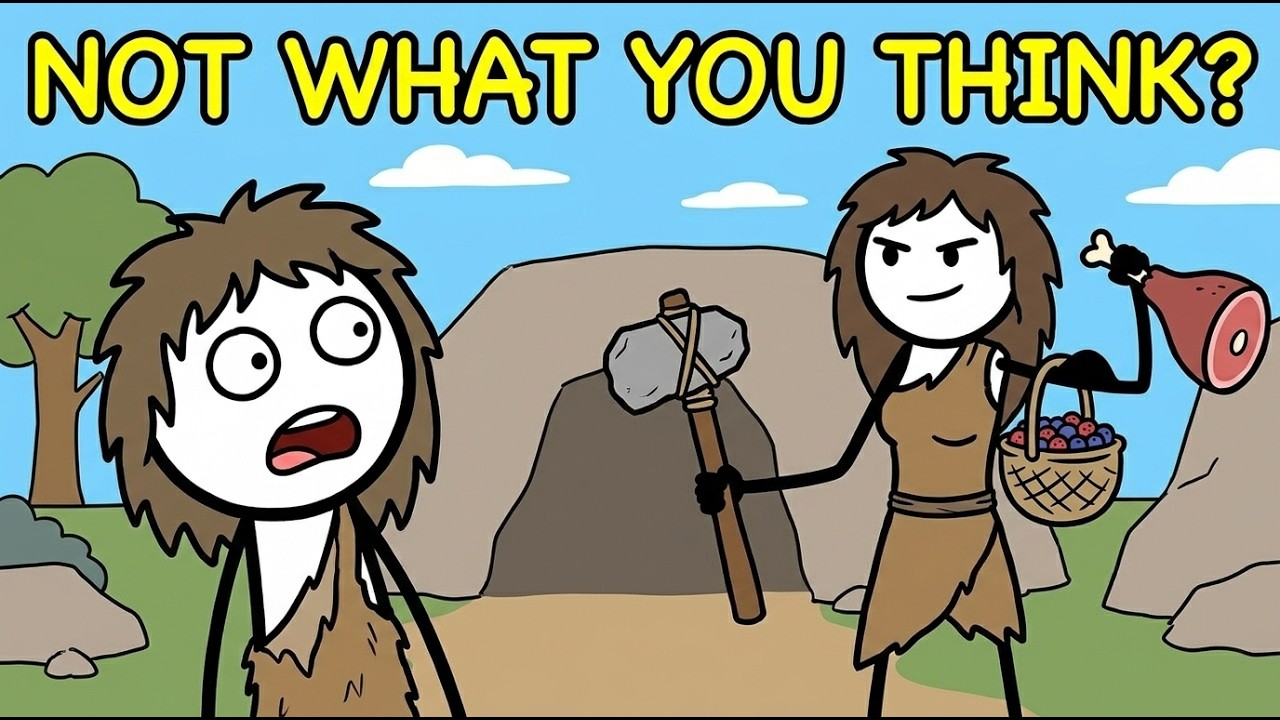
Museum dioramas depicting ancient life were largely designed during the 20th century by researchers working within cultural contexts that held fixed assumptions about gender roles. Those assumptions were projected backward onto ancient societies and presented as settled historical fact rather than as the interpretive choices they were. Much of the current correction is not new archaeology. It is a delayed revisiting of interpretations that were always shaky, now examined with more methodological rigor and less unexamined bias.
There is also a risk of overcorrecting into an equally simplistic narrative: that every ancient woman everywhere held equal status to men. That is not accurate either. Many ancient societies imposed genuinely severe restrictions on female autonomy, legal standing, and personal freedom. The honest picture is complicated.
Roles varied enormously depending on the specific culture, time period, and social context, sometimes dramatically within the same broader civilization across different eras. Individual women’s roles could also shift within a single lifetime. Evidence from multiple contexts suggests a woman might be a craft producer in her younger years, a property-owning household manager in middle age, and a recognized community elder or advisor later in life. These were not fixed, lifelong categories for everyone.
A compelling case study comes from the Moche culture in northern Peru. In 2006, archaeologists uncovered the tomb of the so-called Lady of Cao, dating back roughly 1,600 years. She was buried with extraordinary ceremonial wealth: gold jewelry, war clubs, spear throwers, and crowns, the kind of burial assemblage previously associated almost exclusively with male rulers in Moche society. The tomb also included evidence of human sacrifice, a practice reserved for individuals of the very highest social and political rank.
Analysis confirmed the remains were female and indicated she had held genuine ruling authority, possibly combining political and religious leadership. The discovery forced a reconsideration of assumptions about Moche political structure, showing women could hold the highest tier of political authority in at least some pre-Columbian South American societies. Ancient Egypt provides one of the most extensively documented examples of formal female political power. Hatshepsut ruled as a fully recognized pharaoh, not merely a queen consort or temporary regent.
She commissioned major construction projects, led successful trade expeditions, and maintained stable rule for roughly two decades. After her death, later pharaohs made attempts to erase significant portions of her monuments and records. The deliberate erasure itself is revealing. It suggests her reign was not a minor footnote; it was a genuine example of effective female political authority that later rulers felt compelled to minimize.
Roman accounts of Celtic societies, despite cultural bias, consistently describe women holding different social standing compared to Roman norms. Roman writers noted Celtic women could own property independently, participate in political assemblies, and in several documented cases lead military campaigns. The most famous example is Boudica, who led a large-scale multi-tribal rebellion against Roman occupation in Britain, inflicting serious losses on Roman forces before being defeated. Given the potential for exaggeration, these accounts require critical scrutiny, but their consistency across multiple separate sources, combined with archaeological evidence of high-status female burials in Celtic regions, suggests genuine differences in how Celtic societies structured female participation.
The methodology driving much of this reassessment is itself important. Earlier excavations frequently determined a skeleton’s sex primarily based on associated grave goods: weapons suggested male, jewelry or domestic items suggested female, rather than directly examining the skeletal or genetic evidence first. Modern bioarcheological analysis examines the body’s actual physical and genetic evidence before considering cultural assumptions attached to grave goods. This shift has directly overturned the gender assignment of numerous burials previously assumed male simply because of a sword or spear lying nearby.
Acknowledging women’s roles in combat, art, trade, and politics should not erase the genuine significance of domestic labor and childbearing in ancient societies. These different roles were not necessarily mutually exclusive. The same woman likely moved between several of them across different points in her life, or even held several simultaneously. The pattern is more complex and more accurate than either a narrow domestic-only stereotype or a purely warrior-focused counter-narrative.
The geographic spread of these findings is significant. Documented examples now span Viking Scandinavia, the Eurasian steppes, Paleolithic Europe, Mesopotamia, Egypt, Celtic Britain, and pre-Columbian Peru: completely separate cultures across thousands of years and multiple continents, all showing similar patterns of under-appreciated or miscategorized female authority and skill once rigorous, bias-aware methodology was applied. The accumulated evidence points to a picture considerably more varied and more powerful than the flattened stereotype that dominated popular imagination for most of the 20th century. Women fought and led in battle in numerous documented contexts.
Women created significant portions of humanity’s earliest visual art. Women operated as independent economic actors, traders, and craft specialists. Women held formal religious authority with substantial political weight. And women’s mobility between communities likely made them crucial carriers of cultural exchange across the ancient world.
This does not mean every ancient woman everywhere held equal status to men. That would be its own kind of historical oversimplification. What it does mean is that the narrow, passive stereotype many absorbed without question does not hold up against the accumulated archaeological, genetic, and historical evidence.
Much of that evidence sat quietly in museum collections and excavation records for generations, waiting for researchers to set aside inherited assumptions and look closely enough to notice what the bones, the burials, and the handprints on ancient cave walls had been saying all along.