The piercing wail of air-raid sirens had faded into a haunting memory, replaced by the deafening roar of C-47 engines and the ominous creak of canvas and wood. For the men of the 17th Airborne Division, the quiet terror of the glider was a unique brand of warfare, a silent descent into the unknown. Sydney Levit, a young infantryman barely out of his teens, was one of these men.
His story, a harrowing tapestry of frozen foxholes, desperate combat, and the unforgettable eyes of liberated prisoners, offers a stark, visceral look at the final, bloody chapters of World War II in Europe.
 Levit’s journey into the abyss of war began not with a grand patriotic speech, but with a simple, almost naive, act of volunteering. “World War II was a popular war,” he recalls, his voice carrying the weight of eight decades. “Everybody wanted to go.
Everybody, with no exceptions.” At eighteen, the rigors of paratrooper training felt less like preparation for slaughter and more like an extreme sport. The five required jumps—four in the blinding daylight and one in the inky blackness of midnight—were a crucible of youth and adrenaline.
The first jump, however, was a moment of pure, unadulterated fear. “I was terrified,” Levit admits with a chuckle that belies the gravity of the memory. “I was going to say if this thing doesn’t work I’m in big trouble.”
The sensation of landing, he describes, was the equivalent of “jumping off a car going 60 miles an hour.” Young and dumb, they were, but they were also the tip of the spear.
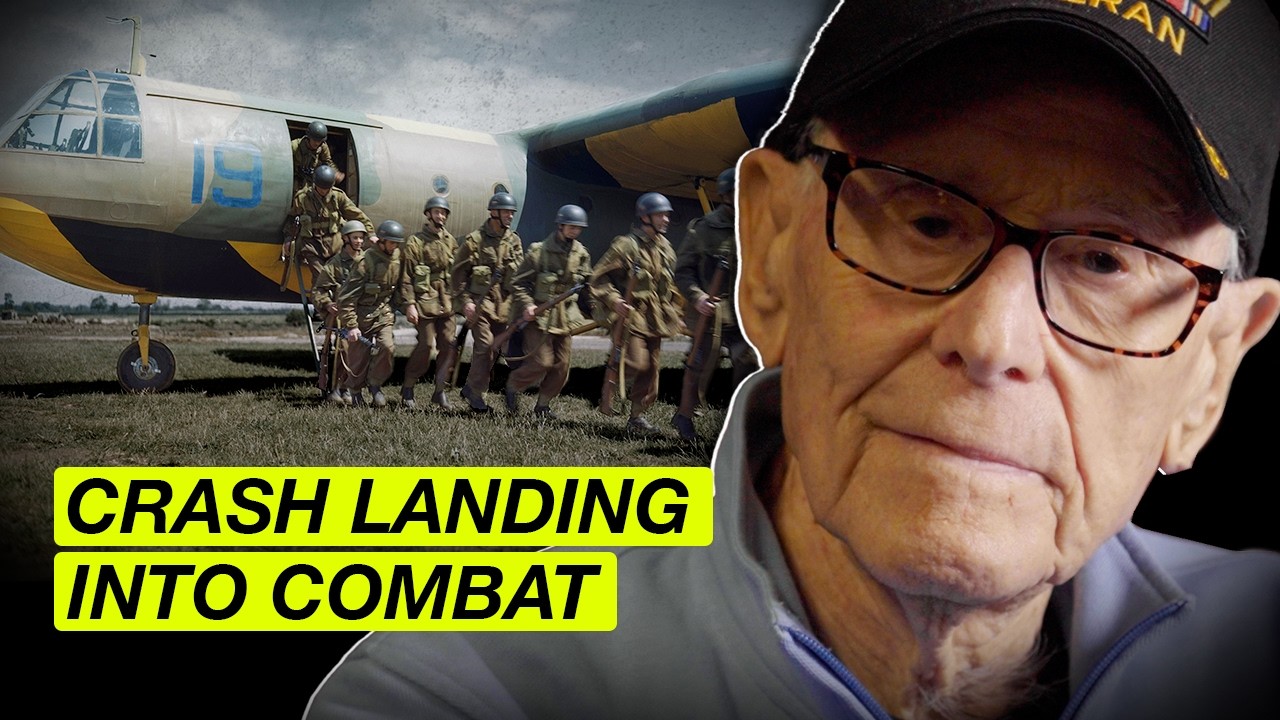
But it was the glider that set Levit’s unit apart. These fragile contraptions, constructed of little more than pipe, canvas, and a wooden floor, were a terrifying leap of faith. “We all walked around and then we said, ‘There’s no motor.
How does this thing fly?'” Levit remembers the initial confusion at Fort Benning. The answer was a tow rope attached to a C-47, with a second, longer rope for the glider behind to prevent a mid-air collision.
Packed with thirteen infantrymen, a pilot, and a co-pilot, these silent coffins were designed to deliver men and equipment—jeeps and small cannons—directly into the heart of the battle, with no parachute drift to scatter the forces. It was a concept that required immense nerve, a fact that would be proven time and again in the skies over Europe.
The idyllic, almost game-like atmosphere of training shattered violently in the frozen hell of the Ardennes Forest. The Battle of the Bulge was not a campaign of strategic maneuvering; it was a brutal, grinding meat-grinder. “Once you entered the battle, you weren’t told what to do because they were shooting a lot of stuff at us and we were shooting back a lot of stuff at them,” Levit states, summarizing the chaos of his first combat experience.
The orders were simple: move north, south, east, or west, wherever the officers pointed. The 17th Airborne was bleeding. Casualties were so catastrophic that the 193rd and 194th regiments were combined into a single fighting force, a grim testament to the staggering losses.
The unit that had trained together was being systematically destroyed, and replacements were fed into the line like fodder.
The landscape itself was an enemy. Levit was ordered to a place ominously dubbed “Dead Man’s Ridge.” It was a hill, with a gully at its base and the German army entrenched on the opposite slope.
 The cold was “bitter, constantly bitter,” the worst winter Europe had seen in forty years. The men were criminally ill-equipped, issued summer-weight uniforms because a general had predicted the war would be over by April. “It created all the problems that we all had with our feet and hands,” Levit says, his tone turning grim.
The cold was so profound that they couldn’t risk lighting fires, and survival meant sharing a foxhole with a stranger, a “replacement” who was given a stark warning by the sergeant: “The man you’re standing in front of, if he moves to the left, you better move to the left. If he moves to the right, you better move to the right, otherwise you’ll never last a day.” Levit was paired with a man named Tony Ginty from Chicago, a father of three who refused to seek a discharge despite the danger.
“He was a good guy to be with,” Levit recalls, “and he was a short tang guy so he was nice and warm in the foxhole.”
The physical toll was immense. Levit was eventually pulled from the line and shipped to a hospital in Paris, his hands and feet ravaged by frostbite. The treatment was primitive and agonizing: he lay in bed for three days with his extremities 𝓮𝔁𝓹𝓸𝓼𝓮𝓭 to the cold air, hoping to stave off gangrene.
He and countless others would suffer from the effects of that frozen hell for the rest of their lives. Yet, despite the horrific conditions and the constant threat of death, the Americans pushed forward. Levit offers a pragmatic, almost humble, theory for their success against the battle-hardened Germans.
It wasn’t superior tactics or bravery, he argues, but sheer, overwhelming logistics. He describes a massive, unending convoy of tanks, trucks, and troops moving along two main roads for four days straight. “If I were a German soldier and sitting on top of it, I give up,” he says.
“It was massive. The Germans couldn’t replace what we took or what we destroyed. So in my mind we won the war for one war production.”
As the Bulge collapsed, the 17th Airborne was pulled back, reorganized, and given a new, monumental task: Operation Varsity, the airborne assault across the Rhine River. It was a mission designed to end the war, and Levit would go in by glider. “The sad part about the varsity campaign, nobody knows about it,” he laments.
The operation lasted a mere four hours but involved a staggering 16,000 troops, half of them British, half from the 17th Airborne. The Germans knew they were coming. They had sown the landing zones with a deadly obstacle course of poles, barbed wire, and stakes.
“You had to be pretty lucky to land in a safe spot,” Levit says. He was one of the lucky ones. His pilot found a good spot, and the glider skidded to a halt.
 The immediate priority was to “run to unit it up,” to gather as many men as possible to create a formidable force. Alone, thirteen men were just a target; together, they were a firebase.
The chaos of the landing gave way to a surreal and deeply haunting encounter. As the men of the 17th Airborne advanced through the pouring rain, they came upon a massive prison camp, its gates wide open. The Germans, in their final retreat, had killed the Russian prisoners but had left the others behind.
Levit and his comrades entered a pitch-black building, drawn by a single, flickering light. They walked down a huge hall and into a room where the flame was burning. What they saw would be seared into their memories forever.
“These are prisoners. They’re emaciated. They’re all in striped uniform, so to speak,” Levit describes, his voice slowing.
“And all of a sudden, this group of men, us, walk into this room. They don’t know who we are. They had no idea who we were.
They didn’t know the uniforms. They didn’t know nothing.” The most profound impression was not the squalor or the starvation, but their eyes.
“You looked at their eyes, it was like, whoa.” It was a look of utter despair, confusion, and a fragile, flickering hope that was too afraid to ignite.
In a moment of compassionate error, the American soldiers gave the prisoners whatever food they had in their pockets—chocolate, C-rations, K-rations. “The worst thing you could do to give out food on people who haven’t had no food,” Levit says, reflecting on the mistake that likely caused severe suffering for some of the men they were trying to save. The encounter was interrupted by a rhythmic hammering sound echoing down the hall.
A few soldiers went to investigate, shining a flashlight into another room. There, they found a small, frail man, a Greek prisoner, furiously smashing a machine with a hammer. He had been attached to that machine for over two years, forced to make shoes for the German army.
He had sworn that if he ever lived to escape it, he would destroy it. And there, in the final days of the war, he was keeping his promise, a small, personal act of defiance against his captors.
 Operation Varsity was a resounding success. The sheer force of the airborne assault, combined with the relentless ground advance, broke the back of the German resistance on the Rhine. Levit describes the preparation for the river crossing as awe-inspiring: “We had the cannons lined up wheel-to-heel and there wasn’t five or 10.
Must have been hundreds.” The sheer firepower was overwhelming. They crossed the river and moved with incredible speed toward the town of Wesel, which they “ruined.”
Levit visited the town two years ago and was amazed to see it completely rebuilt, a phoenix rising from the ashes of total war. The speed of the advance signaled the beginning of the end. When the news of the German surrender finally came, the reaction was one of pure, unadulterated joy.
“It was a cheering and happiness noise,” Levit remembers. “The guys were shooting their guns off into the air.” But the celebration was short-lived.
The war in Europe was over, but the war in the Pacific still raged. The surviving men of the 17th Airborne were loaded onto ships and sent back to the United States to prepare for the invasion of Japan.
The journey home was a period of tense anticipation. Levit was on a ship in the middle of the ocean, training for what was expected to be a bloody, apocalyptic assault on the Japanese mainland. Then, the announcement came over the ship’s loudspeaker: Japan had surrendered.
The reaction from the 6,000 men on board was a cacophony of pure, primal relief. “You can imagine the noise,” he says. The threat of Operation Downfall, a mission that promised casualties on an unimaginable scale, had vanished in an instant.
As the ship approached New York Harbor, Levit witnessed a moment of profound symbolism. “The ship leaned to the side. Everybody wanted to see the Statue of Liberty.”
It was a sight that represented survival, freedom, and the end of a nightmare that had consumed their youth.
Sydney Levit’s story is not just a recounting of battles and dates; it is a testament to the resilience of the human spirit. From the terrifying silence of a glider flight to the bitter cold of a frozen foxhole, from the chaos of combat to the haunting eyes of the liberated, his experiences encapsulate the totality of the Second World War. He was a young man who volunteered for the most dangerous missions, endured unimaginable hardship, and witnessed the very best and worst of humanity.
His memories, preserved with startling clarity, serve as a vital connection to a generation that is quickly fading into history. The laughter in his voice as he recalls the absurdity of his youth is a stark counterpoint to the gravity of his experiences, a reminder that even in the darkest of times, the human will to survive and remember endures. The gliders are gone, the battlefields have grown over, but the stories of men like Sydney Levit remain, etched not in stone, but in the very fabric of our understanding of what it means to fight, to lose, and to come home.