A wild wolf can hear you long before you ever know it is there. Then the animal leaves without being seen. Many people interpret this as proof that wolves are harmless or that they recognize humans as off-limits by some kind of natural agreement. That interpretation is comforting, but it is not accurate.
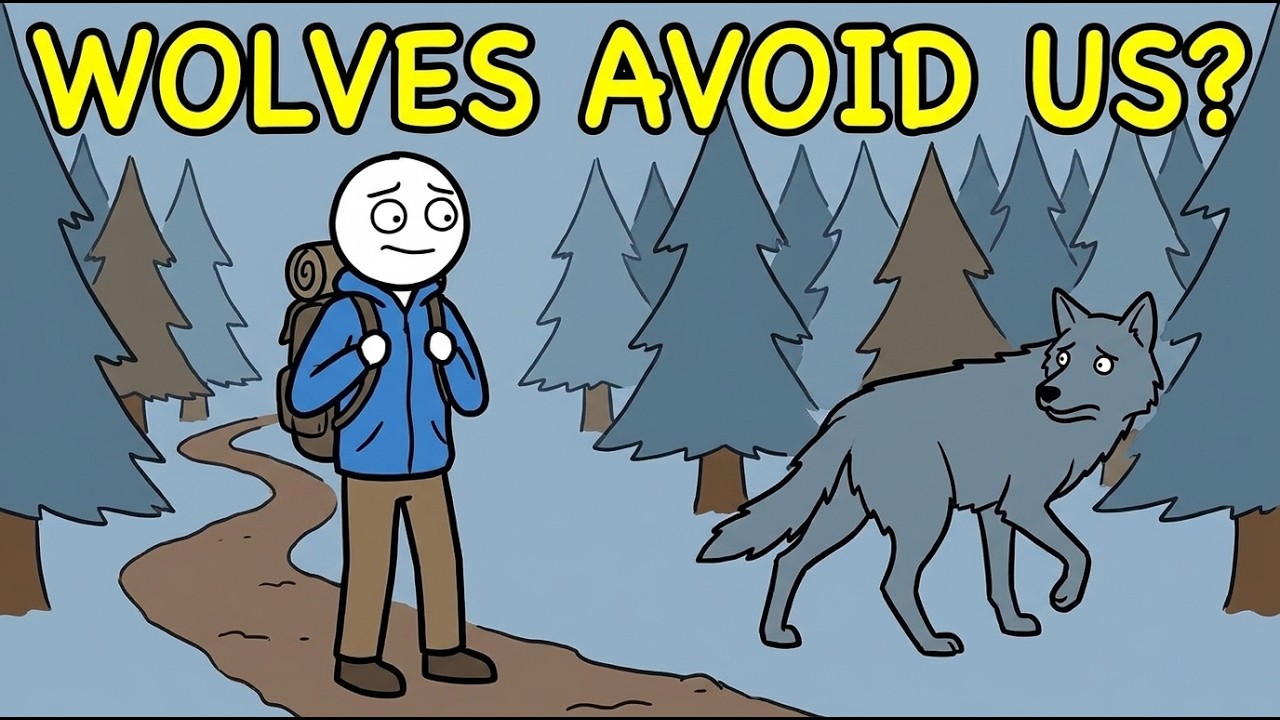
The real reason most wolves avoid us is far more practical: attacking a person is usually a terrible decision. The idea that wolves never attack people is simply false. They have done so historically, and rare verified attacks still occur. Many of the most dramatic incidents on record involved rabies, a disease that destroys normal wariness and produces abnormal aggression.
The question is not whether wolves can attack, but why they so rarely do. The answer lies in the costs. A moose can strike with its legs. A deer can deliver a sharp wound.
But neither has ever fired a warning shot or returned the next morning with tracking equipment and a group of relatives. From a wolf’s perspective, a human is only the visible part of a much larger threat that includes tools, vehicles, dogs, and the consequences that arrive long after the first encounter. Wolves were nearly eliminated from much of their historical range in North America through sustained human persecution. The survivors did not need to understand history.
They needed to respond correctly to human cues. Individual experience reinforced the pattern, and younger animals learned from older ones. The result was not a perfect genetic terror of every person, but a strong, learned wariness passed down through generations. This is why a wolf that flees at the first sight of a person and one that calmly crosses a road two hundred meters away may both be behaving cautiously.
Animals living in human-dominated landscapes must tolerate some disturbance or lose access to most of their habitat. A distant observation is not the same as a fearless approach. The problem begins when this caution breaks down. A wolf that has been repeatedly exposed to people at close range may learn that humans do not attack.
Human scent stops predicting danger. If the animal is then fed or rewarded in some way, it may become increasingly bold. Several modern wolf attacks in North America and Europe involved animals that had already become unusually fearless around humans, often after receiving food or repeatedly using human areas. The attack was rarely the first warning.
Young wolves can complicate the picture. Curiosity and inexperience may bring a juvenile closer than an older animal would go. It may inspect something unfamiliar, follow for a short distance, or hesitate before retreating. That does not automatically mean it is stalking a human as prey.
But it does mean the behavior should not be rewarded. Wildlife managers pay close attention to wolves that repeatedly approach people, remain nearby despite hazing, enter camps, or appear to seek food. Advanced habituation removes one of the main barriers protecting both species. Predatory attacks force an uncomfortable distinction between adults and children.
Children may move erratically, run, cry, or remain farther from adults while playing or tending livestock. In regions and historical periods where children worked alone near forest edges, wolves had more opportunities to encounter a human whose size felt closer to familiar prey. This does not mean every child is in danger. It means risk is not evenly distributed, and the factors that increase it are rarely romantic.
Even a hungry wolf usually chooses distance. Predators do not receive medical leave. Their survival depends not only on what they can kill, but on what they can kill without paying too much for it. A human remains unfamiliar and dangerous.
Livestock, carrion, garbage, and smaller wild animals often offer more recognizable options. Even a desperate animal makes choices based on experience and opportunity. Defensive behavior is another reason attacks cannot all be explained through hunger. A wolf may bite if trapped, pursued, handled, or prevented from escaping.
The major attack reviews distinguish these defensive and provoked incidents from true predatory attacks. Most close sightings end without injury. But a wolf that continues approaching after being recognized, confronted, and given space is communicating something unusual and should be treated seriously. The difference between cautious observation and dangerous boldness is not always obvious from one moment.
A wolf that stands and watches may simply be gathering information. It may be deciding what a person, a dog, or an unfamiliar smell means. To the human nervous system, being followed and being hunted feel almost identical, but they are not the same event. Wolves do not see a human and think of the entire history of persecution.
They see a strange animal in a place that used to feel safe. The sound of a howl carries because low frequencies travel far. The pack may be completing the wilderness equivalent of a family conversation, not planning an ambush. Fear encourages bad decisions.
The right response is neither fairytale panic nor the confidence that wolves are harmless forest puppies. The human who intervenes in a dog-wolf encounter can be pulled into a conflict that did not begin as predation on people. A dog that chases a wolf and then returns toward its owner can bring the conflict with it. Giving the animal space is not a rejection of connection.
It is helping the wolf make the decision most wolves already prefer. A wolf that appears calm may be watching you for another reason. It may be learning. It may be testing the consequences of closer approach.
The event receives intense attention precisely because it is rare. A rare event can still be catastrophic to the person experiencing it. This is why filming a fearless wolf while celebrating how comfortable it is around people may document the beginning of a management problem, not a magical connection with nature. At some point in prehistory, wolves and humans entered a relationship close enough to produce the first domesticated animal.
The exact route remains debated. Some hypotheses involve wolves tolerating human proximity or depending on resources near people. But a socialized captive wolf is not the same as a wild wolf. And a neighbor’s dog acting possessive in the snow is not evidence of pack ecology.
Wild wolves avoid us partly because they never crossed the final distance dogs did. They remain wary of the unfamiliar and the dangerous. The animal in the trees may be watching you. It may know exactly where you are.
It leaves not because you are stronger than a wolf. It leaves because one human has never meant only one human.