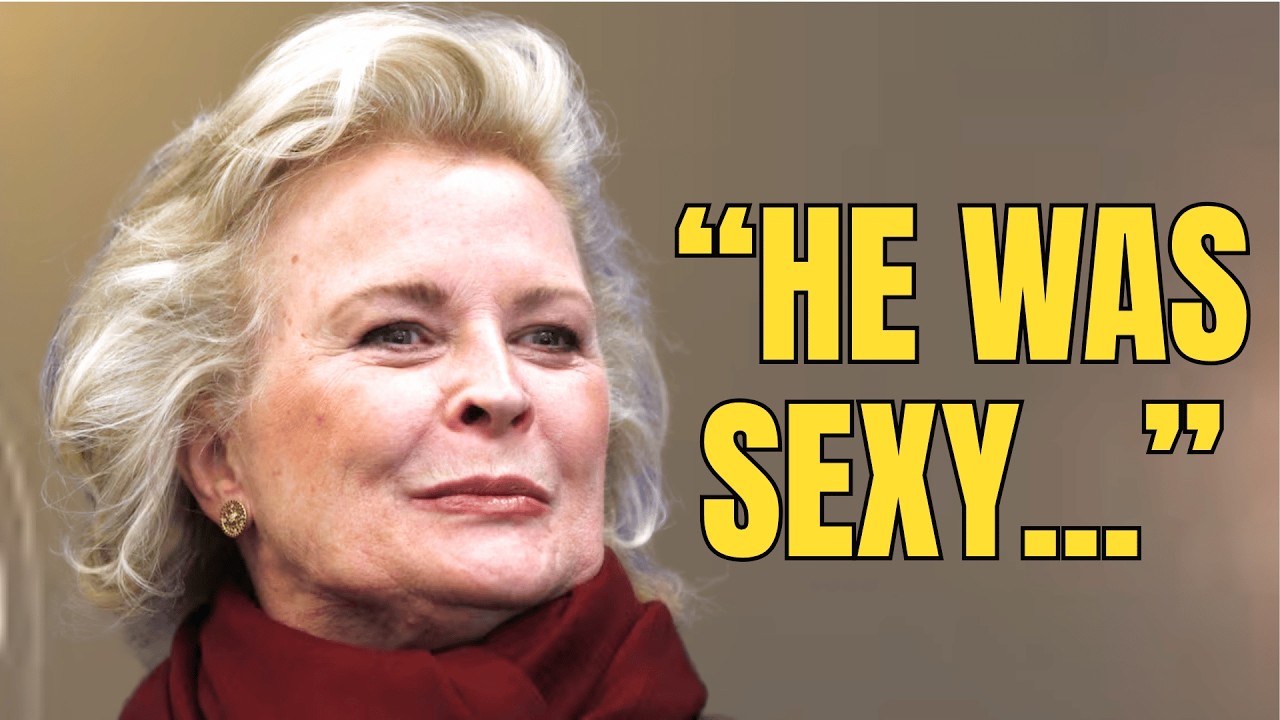
Candice Bergen once described a college date with Donald Trump as color-coordinated and forgettable: he arrived in a burgundy limousine wearing a burgundy three-piece suit with matching patent leather boots, and she was home by 9:00 with no physical contact whatsoever. Her assessment of the future president was blunt: “He was a good-looking guy and a douche. ” The date happened while both attended the University of Pennsylvania in the 1960s, and Bergen has revisited the story for decades with the same deadpan delivery. Born May 9, 1946, in Los Angeles, Bergen grew up as the daughter of Edgar Bergen, the famed ventriloquist, whose wooden partner Charlie McCarthy occupied an unusual place in the household.
Bergen has said she suspected her father preferred the dummy, which got the best lines, the spotlight, and a satin-lined case. Her childhood included riding bikes to the Beverly Hills Hotel, attending Disneyland’s opening in 1956, and knowing Liza Minnelli from age seven. She enrolled at the University of Pennsylvania at 18, but left in her sophomore year to pursue modeling and acting. In 1967, Bert Stern photographed her for the cover of Vogue, a shoot requiring 40 hairpieces.
She later worked as a photojournalist, spending time with Jane Goodall at Lake Tanganyika, covering Muhammad Ali and the Ku Klux Klan, until she concluded she was not good enough to do it at the level she wanted and stopped. Bergen’s personal life drew attention over the years. She lived with music producer Terry Melcher in a house on Cielo Drive in Beverly Hills, a property that became infamous shortly after they moved out as the site of the Manson murders. She also went on a single date with Henry Kissinger, a detail she disclosed with the same matter-of-fact tone she applied to the Trump story.
In the late 1970s, at a dinner party, she met French filmmaker Louis Malle. Their first meeting was unremarkable, but Bergen’s college friend, photographer Mary Ellen Mark, predicted she would marry him. They wed in 1980, six months after beginning a serious relationship. Bergen later acknowledged the speed: “Yeah, six months.
It was fast. But when you’ve dated a lot of people and you’re 34, you kind of know. ”
In 1988, Bergen took on the role that defined her career: Murphy Brown, a sharp, twice-divorced, recovering alcoholic investigative journalist on a fictional Washington newscast. Created by Diane English, the show was an immediate hit.
Bergen has said she had never seen a character like that on television before, one who was competent, difficult, morally serious, and profoundly alone. The marriage to Malle survived the demands of a transcontinental career. Louis remained rooted in France while Bergen worked five days a week on a CBS soundstage in Los Angeles. They commuted, wrote letters, called, and made it work.
In 1985, their daughter Chloe was born. Bergen had been ambivalent about motherhood, once wondering in writing whether she could love a baby as much as a dog, but described her daughter as the greatest gift of her life. Murphy Brown’s writers incorporated Bergen’s real pregnancy into the show’s fourth season. In May 1992, Murphy gave birth to a son she chose to raise alone, and more than 33 million people watched.
Two days later, Vice President Dan Quayle delivered a speech naming the fictional character directly, accusing the show of mocking the importance of fathers and dismissing Murphy’s choice as “just another lifestyle choice. ”
The speech ignited a national argument that played out on magazine covers and editorial pages. Bergen later said she was frightened by the intensity of the backlash and hid behind her curtain, unsure how to manage the energy. The Season 5 premiere responded directly, with Murphy telling viewers that families come in all shapes and sizes and suggesting the Vice President might expand his definition.
The episode became one of the most watched in the show’s run. Murphy Brown won 18 Emmy Awards over 10 seasons, and Bergen won five for Outstanding Lead Actress in a Comedy Series. She became the highest-paid actor on American television. At the 2024 Emmy Awards, at 78, she referenced J.
D. Vance’s “childless cat ladies” remark with the timing of someone who had been making the argument for 30 years. “Oh, how far we’ve come,” she said. “Today, a Republican candidate would never attack a woman for having kids.
So, as they say, my work here is done. Meow. ”
While Bergen’s career soared, Malle was dying. Diagnosed with lymphoma that progressed through the later years of Murphy Brown, he died on Thanksgiving Day, 1995, at the couple’s home in Beverly Hills.
He was 63; Chloe was 10. Bergen has spoken about how her daughter took it upon herself to care for her father, reading to him every night. Chloe also brought him Goofy slippers from Disneyland that he refused to remove and was buried in. Bergen spent three years grieving privately before meeting Marshall Rose, a New York real estate developer and philanthropist who had also lost his spouse.
A 60 Minutes producer and his wife played matchmakers. They married in June 2000. Bergen said she prioritized her marriage above almost everything else, asking only that work not take her away from her husband for more than a week or two. Rose died on February 15, 2025, at home in New York City, from complications related to Parkinson’s disease.
He was 88, and the couple was three months shy of their 25th wedding anniversary. Candice Bergen turned 80 on May 9, 2025. She celebrated with 50 people at a dinner club and told her daughter in a podcast that just being in the country with her grandchildren was the dream. She said she loved them to death, describing her grandson Arty as “filled with explosives.
” Her granddaughter gave her the name Toto when she was 18 months old, and the name stuck. She has been called Charlie McCarthy’s sister, Murphy Brown, a feminist icon, and the highest-paid actor on television. She is now mostly called Toto.
She remains working, with the timing intact, making grief and joy sit in the same sentence without either canceling the other out.