The next time you picture yourself on the deck of an ancient Greek warship, it pays to remember that the man urging you forward was not a glamorous hero but a man in mortal terror of a bad death. The single greatest fear for an oarsman wasn’t a monster or an arrow; it was the horror of drowning. A body lost at sea gets no funeral, no fire, and no proper burial, a fate worse than any wound. This belief, that your soul would never settle without the correct rites, was the engine of dread driving every decision made on the water.
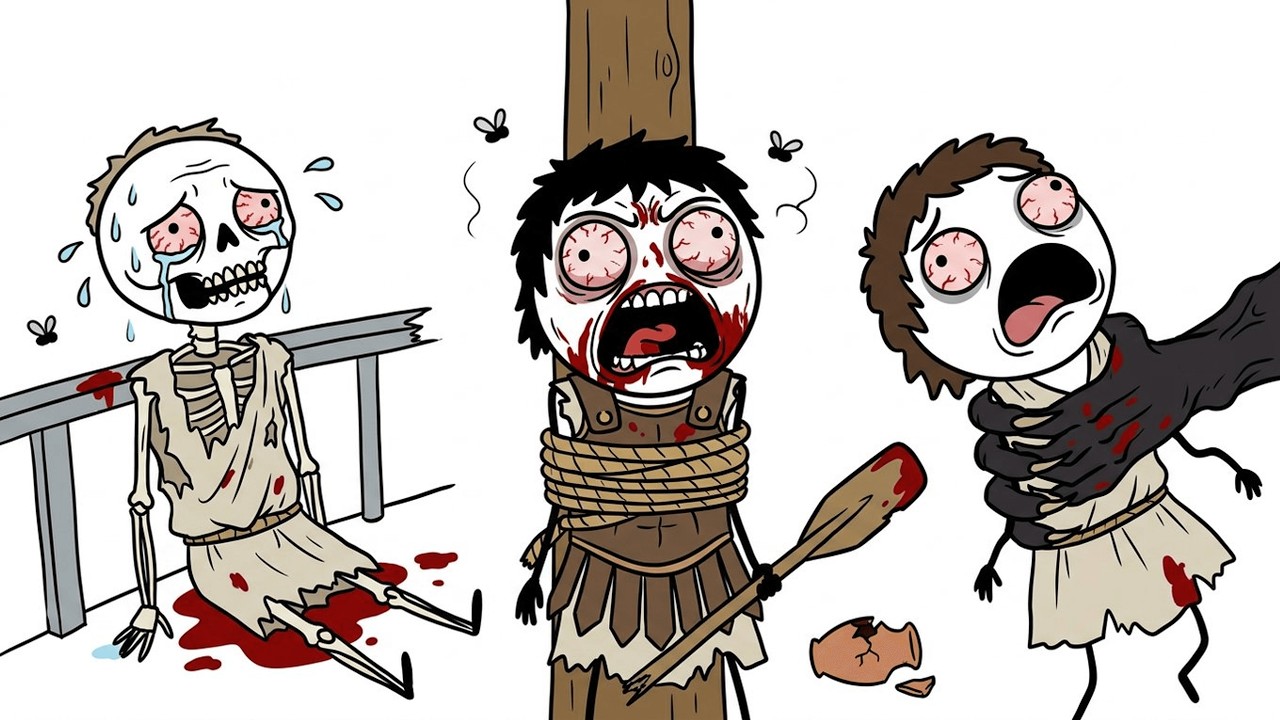
For the crew, it wasn’t just your life on the line; it was the very salvation of your spirit that was being paddled across the deep. Before you ever grip an oar, the myth of the whip-wielding slave driver is the first lie to be discarded. The men on these ships were not terrified conscripts; they were warriors, volunteers, and shareholders all at once. A clay tablet recovered from the era lists over 500 rowers by their hometowns, while another dispatches exactly 30 men to a place called Pleuron.
These were men with a stake in the venture, and a terrified, beaten stranger was worthless to a captain who needed coordinated strength. The navies of the era ran on the silent investment of the crew long before they sailed into the sight of the enemy. The details of the ship itself reveal why survival was so brutal. Homer calls them “black ships,” and the reason is a lesson in ancient naval engineering.
The hull was black because it was waterproofed, sealed tight against the corrosive sea. The construction was built shell-first, the planks joined edge-to-edge with hundreds of wooden tenons locked into place before the ribs were added to stiffen the skin. The technique was so effective that a real shipwreck off the coast of Turkey still shows the exact same method, a lasting proof that the poet wrote about real technology. When you pull up to a hostile coast, you do so in a vessel that is lighter, faster, and harder to spot than the lumbering transports of legend.
Daily life for the crew is a constant, physical punishment that leaves no time for romanticism. There is no deck covering for the men; the rowing benches are completely open to the elements, and the sun hammers down without mercy. A young man usually starts his training on a small boat before being trusted on a raiding galley packed with dozens of angry oarsmen. They didn’t row for twelve hours straight; instead, the crew works in shifts, spelling each other at the oars because no human body can pull at full strength for an entire day.
By the end of the season, your hands have blistered, calloused, and then cracked from the salt, and the only thing that dries them is the wind in your face. When there is real rowing to be done, the crew strips down to little more than a loincloth, letting the sea take the rest of their clothes. You will be seasick, and there is nowhere private to be sick, and the routine is relentless. You do not sleep on the ship; at dusk, the crew rows for the nearest friendly beach, hauls the entire galley stern-first onto the sand, and collapses on the ground wrapped in a wool cloak.
At first light, you shove the ship back into the surf and go, perpetually soaked to the waist before the sun comes up. This is the rhythm of your existence, a cycle of rowing and dragging that turned a voyage into a daily battle for basic comfort. The calendar dictates everything, and a wise man does not tempt the sea in winter. Sailing season runs from May through November; only a fool or a man with no other options would risk the open water.
Greek sailors avoided the mythological fast dashes and instead hugged the coastline. This wasn’t about being timid; it was about the immediate need for fresh water. If you can’t find a spring or a river mouth in a couple of days, everyone on that beautiful black ship dies of thirst. Given the choice between a long, boring crawl along the coast and a quick dash across open water, the wise sailor picks the boring route every time.
Navigation was a matter of life and death, but it wasn’t done with maps full of monsters. The crew navigates by the coast itself, using headlands, peaks, and the shape of islands as a guide. A genuine navigation manual is hidden inside the adventure story, a set of survival instructions passed off as fiction. The great Odysseus loses his entire fleet, arriving home with zero ships and just one man.
Between the sorceress Circe turning men into pigs, and the giants hurling boulders that smash 11 of the 12 ships, the ways to lose men are almost creative in their cruelty. Scylla, the sea monster, plucks six men off the deck, screaming as she lifts them, until you realize the horror of your name as a forgotten commodity. In the end, the lack of wind is its own kind of horror. The crew rows until their arms give out while the coast never seems to get closer.
A ship stuck in a flat calm is a death sentence, watching supplies drain while the men do the grim arithmetic of how many days of thirst they have left. A crew of a different culture would become pirates the moment a prize hove into view, but a whole network of peoples made these waters a bloody route for merchant traders. Thousands of years later, the sea keeps the receipts of these voyages, a shipwreck showing a mixed crew of many peoples, hauling tremendous wealth across a sea that swallowed them whole.
A single shipwreck proves that your world was stitched together by the men who pulled these oars, and the sea never forgets a debt.