The silence in the fossil record is deafening, and it asks a question that has haunted paleoanthropology since the first Neanderthal bone was pulled from a German cave in 1856: we are the sole surviving branch of a once-sprawling family tree, and the reasons for that solitude are far more complex than simple survival of the fittest.
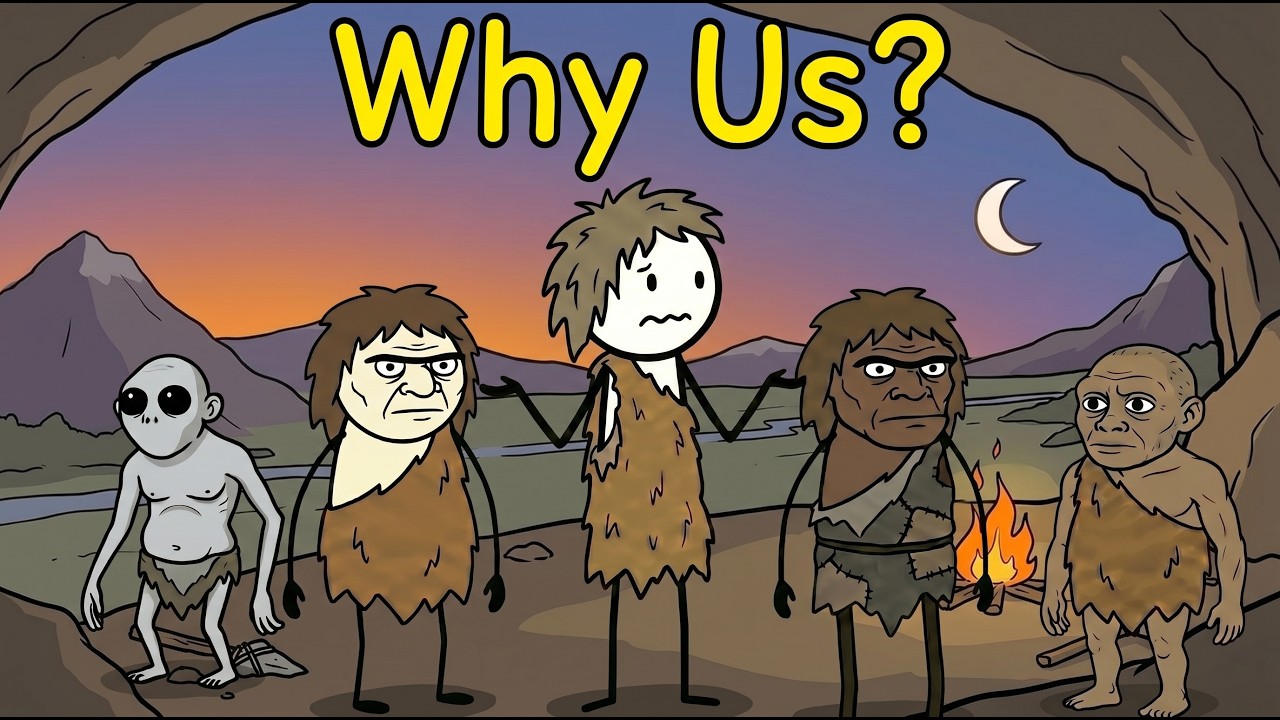 For nearly two million years, multiple human species walked the Earth simultaneously, sharing continents, competing for resources, and even interbreeding. Yet today, only Homo sapiens remains, a fact so extraordinary that scientists are still debating whether our dominance was due to superior cognition, environmental luck, or something entirely unexpected. The evidence suggests that our ancestors were not the strongest, nor the most numerous, nor the longest-lasting.
They were simply the ones who got the final roll of the dice.
The story begins 2 million years ago with Homo erectus, a species whose tenure on this planet dwarfs our own to an almost incomprehensible degree. Modern humans have built cities, invented writing, and launched probes to the outer planets within the last few thousand years. Homo erectus endured for nearly 2 million years, a span so vast that our entire recorded history is but a footnote to their long reign.
They were the first human species to venture out of Africa, adapting to environments they had never evolved for, wielding stone tools so effective that they remained virtually unchanged for hundreds of thousands of years.
Their bodies were built for endurance, with long legs and short arms designed for traversing open savannah. They were not the giants of our imagination but resilient survivors who withstood ice ages, shifting climates, and the constant pressure of predation. Yet, their downfall was not a single catastrophic event.
It was a slow, grinding decline. Their final populations became stranded on the island of Java, isolated from other groups with no room to escape as their forests shrank and prey became scarce. Their last fossils date to around 110,000 years ago, marking the end of a lineage that had survived nearly everything the planet could throw at it.
The Neanderthals, perhaps the most misunderstood of our cousins, tell a different but equally tragic story. For decades, they were caricatured as dim-witted brutes, but that image has been thoroughly dismantled by modern science. Neanderthals had brains that were, on average, larger than ours.
They were powerfully built, with wide chests and thick bones, adaptations that made them formidable hunters of dangerous megafauna at close range. Their skeletons show injury patterns similar to modern rodeo riders, testament to lives lived on the edge of violent encounters.
 They mastered fire, crafted sophisticated tools, and there is increasing evidence they buried their dead with ritualistic care. For over 300,000 years, they dominated Europe and Western Asia, weathering harsh ice age conditions that would break a modern human. But around 45,000 years ago, Homo sapiens began to stream into their territories, and the calculus of survival changed forever.
Both species competed for the same game, the same water, and the same cave systems. While Neanderthals lived in small, isolated groups, our ancestors forged vast social networks, exchanging goods, knowledge, and support across hundreds of miles. When a Neanderthal community faced a failed hunt or a brutal winter, they had nowhere to turn.
When a Homo sapiens group struggled, they could call on allies over the horizon.
DNA evidence confirms that the two species did not merely coexist but interbred, leaving a permanent legacy in our own genomes. However, this intimacy did not save the Neanderthals. Their genetic diversity was already dangerously low, a sign of a population in steep decline.
Climate oscillations compounded the pressure, fragmenting their habitats and isolating them further. By around 40,000 years ago, they vanished from the fossil record, not extinguished in a single war or pandemic, but absorbed and outcompeted by a species that was more adaptable, more interconnected, and just different enough to tip the balance of survival.
Then there are the Denisovans, a ghost lineage that has rewoven the fabric of human history from a single finger bone. In 2008, scientists extracted DNA from a fragment found in a Siberian cave, and the results shocked the world; it belonged to a previously unknown human species. We have so few of their fossils that a handful of teeth and a jawbone from the Tibetan Plateau is all we possess.
Yet their genetic shadow looms enormous. Modern Melanesian populations carry up to 6% Denisovan DNA, and Tibetans inherited the EPAS1 gene from them, which allows high-altitude populations to thrive where oxygen is dangerously thin.
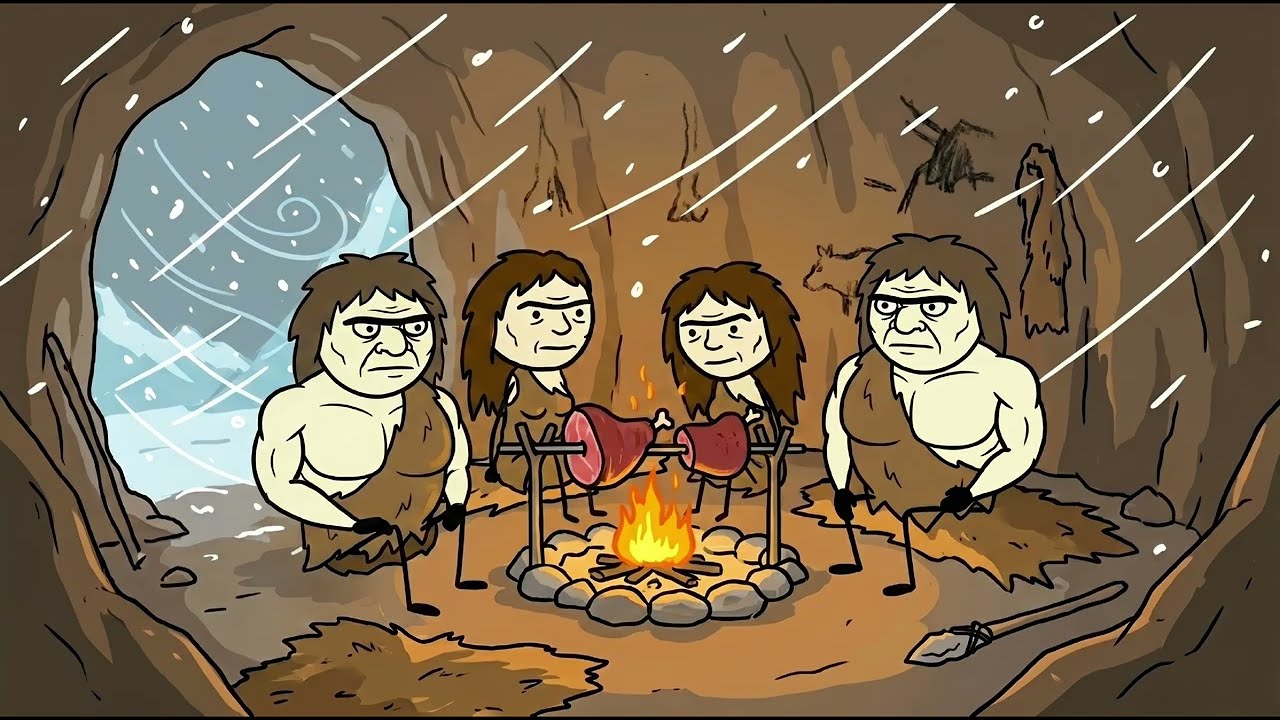 The Denisovans were not a minor offshoot but a widespread and adaptive group that interbred with both Neanderthals and our own ancestors. Their existence proves that our family tree is not a simple ladder but a tangled thicket of branches that crossed and merged. They faded out around 30,000 years ago, likely victims of their own low population density.
In the face of shifting climates and the growing presence of Homo sapiens, thin populations without extensive networks are the first to fracture and fall.
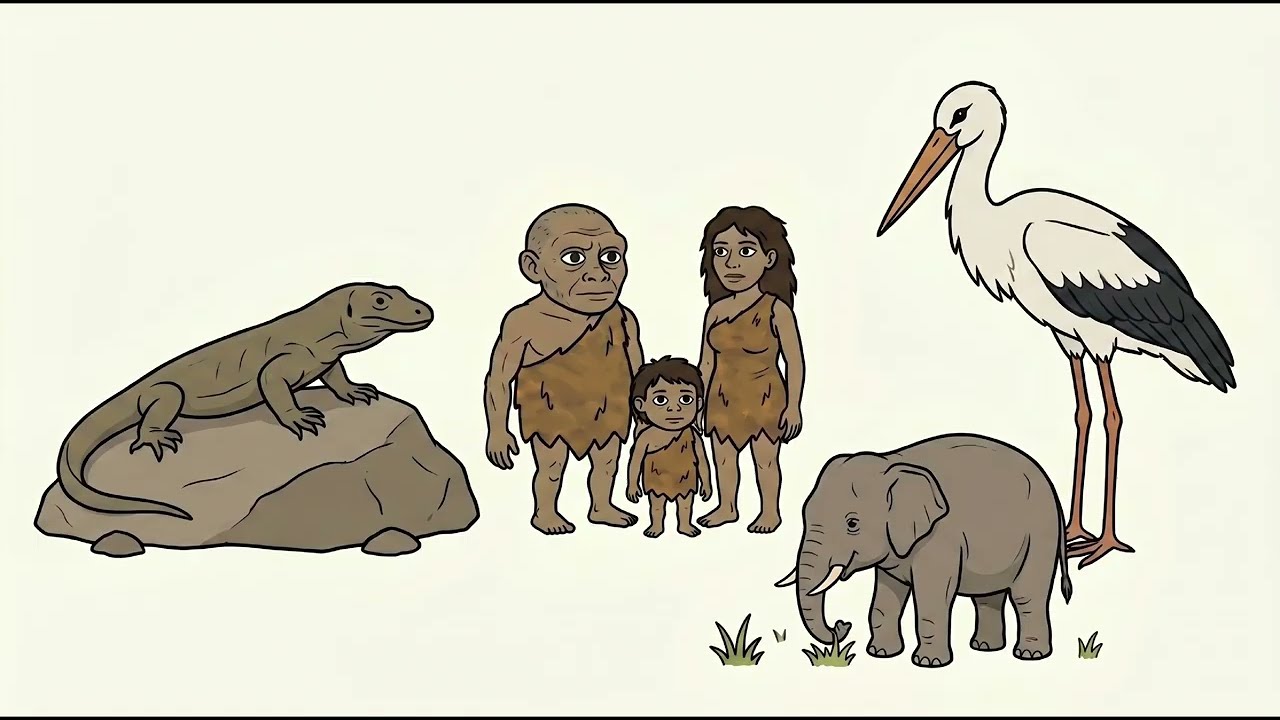
And on the island of Flores, scientists unearthed a mystery that defies all expectations. Homo floresiensis, standing just a meter tall with a brain the size of a grapefruit, lived alongside pygmy elephants and giant storks. This was not a malformed modern human, as skeptics initially argued, but a distinct species shaped by island dwarfism, a peculiar evolutionary process that shrinks large animals in isolated environments.
They survived for hundreds of thousands of years, adapting to a world that was both their paradise and their trap. Their fossils, dating from 100,000 to 60,000 years ago, suggest they were present exactly when modern humans were arriving in the region. On a small landmass, a tiny population does not need a major catastrophe to disappear; a few bad seasons, a new predator, or a loss of resources can be fatal.
They vanished around 50,000 years ago, a silent exit from the stage.
So, we must ask ourselves: what is the secret to our survival? The answer is not as easy as intelligence. Neanderthals were bright, Denisovans adapted to the highest peaks on Earth, and Homo erectus outlasted us in duration many times over.
The difference appears to lie in our ability to build networks of cooperation that spanned vast distances and allowed knowledge to persist even when individual groups failed. Our ancestors did not merely share tools; they shared ideas. When a group in one valley invented a better weapon, that technology could travel a thousand miles in a generation.
 When a community faced a crisis, the lessons learned did not die with them; they were carried by neighbors, traders, and kin.
This cultural transmission, this collective brain, gave Homo sapiens a resilience that no other human species could match. We were not locked into a single survival strategy. We could shift from hunting to fishing, from mountains to coasts, from forests to deserts, because we had the social flexibility to reorganize and adapt.
But even this is only a partial explanation. Luck played a hand; geography, climate timing, and sheer numbers all contributed. Our success was not written in advance.
It was a confluence of events, a storm of circumstances where we were the branch that happened to bend but not break.
The other human species were not our failures or our stepping stones. They were their own distinct kinds of humans, each with unique solutions to the brutal challenges of survival. Homo erectus endured for two million years and still disappeared.
Neanderthals thrived in ice-age extremes for hundreds of millennia and still vanished. The Denisovans left only fragments of bone but powerful traces of DNA that continue to protect living humans from altitude sickness. Homo floresiensis survived conditions that would terrify a modern person, only to be extinguished by the very smallness that made them unique.
Their stories are not cautionary tales but profound testaments to the diversity of life. For most of our history, we shared the Earth with others. Now we walk alone, the last of a long line, carrying within our cells the genetic echoes of all those who came before us, and the heavy responsibility of being the only ones left to remember them.