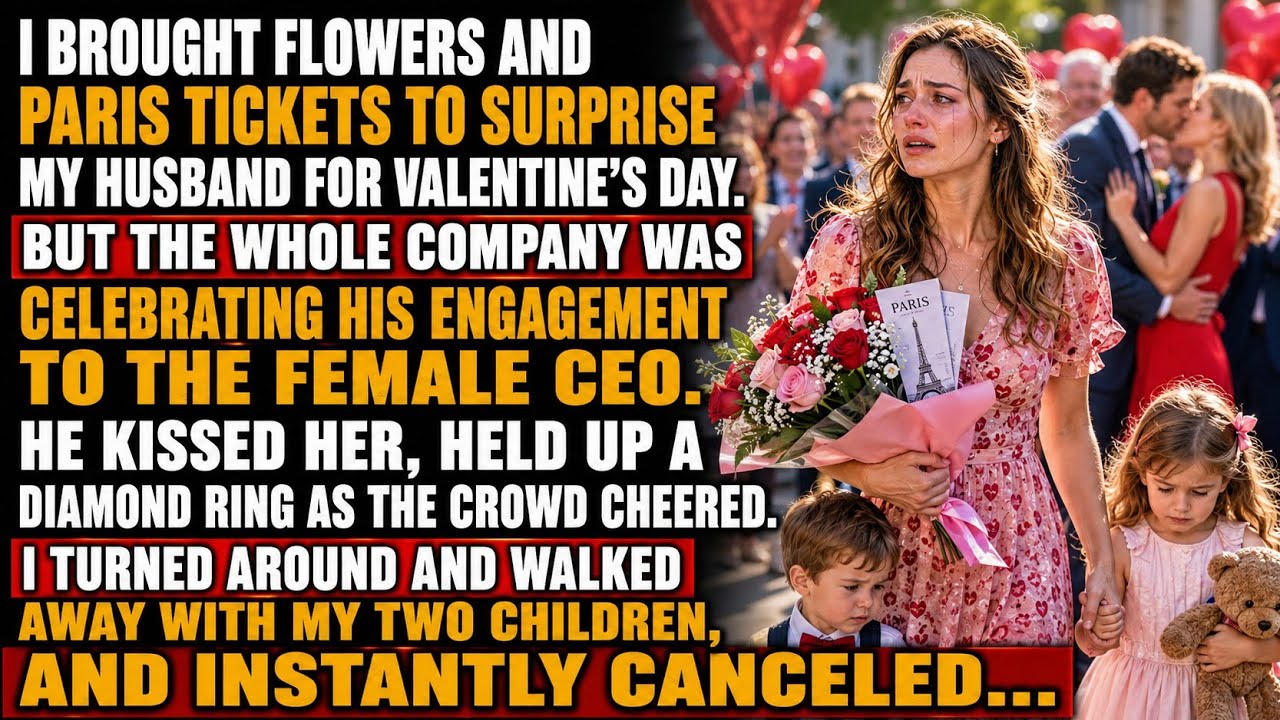
あの朝、私は花束とパリ行きの飛行機チケットを二枚、オフィスに持って行った。バレンタインデーに夫を驚かせるつもりだった。ところが、私は同僚たちで埋め尽くされた大広間へ足を踏み入れ、彼が皆の前で宣言するのを聞いた。妻とはもう数か月前に離婚届を提出し終えた、とうとう自由の身になった、別の誰かと未来を築ける、と。それから彼は、会社の上級副社長であるサビーヌの方を向き、彼女にキスをし、彼女の指にダイヤの指輪を滑り込ませた。拍手をする者もいれば、呆気に取られた顔をする者もいた。数人は明らかに戸惑いながら、祝うべきなのかどうか確信が持てずに周囲を窺っていた。部屋の中の全ての目が舞台に釘付けだったために、ドアの所で立ち竦み、突然馬鹿馬鹿しくなった赤い薔薇の花束を抱えたままの私に、誰も気付かなかった。私たちはまだ正式に夫婦だった。私は何も提出していない。家では二人の子供たちが、今夜は父が帰ってくると待っていた。その父は、彼の嘘を信じた目撃者たちで溢れる部屋の中で、別の女にプロポーズしていた。私は踵を返し、車に戻り、駐車場に着く前にパリのチケットをキャンセルした。その後の電話の後で起きたことは、彼が想像もしていなかった。私の名前はエヴァリー・ローズ。九年間、私はどんなものにも耐えられる人生を築いたと信じていた。そして今、たった一つの決断が、結局彼に何をもたらしたのかを話そうと思う。なぜなら、私が終わらせた頃には、彼は自分が何を捨てたのかを、痛いほど理解していたからだ。まず、すべての始まりに話を戻そう。私が何を捧げ、何を築き直したのかを、理解してもらう必要があるから。私がウェストン・アシュキンと出会ったのは二十四歳の時だった。ノースカロライナ州シャーロットの中規模建築事務所でフロントデスクに立ち、電話応対と設計図のファイリングをこなしながら、夜は会計の学位を取るために学校に通っていた。彼は当時アソシエイトで、彫りの深い顎、いつもグレーのスーツ、一度聞いただけであなたのコーヒーの注文を覚えてしまうような男だった。彼が私を食事に誘ったのは木曜日。日曜日には、もう私は自分がやばいと分かっていた。良い意味でのやばさだ。相手も自分のことを考えていると分かっていて、スマホを確認する手が止まるような、そんな種類のもの。私たちは十八か月後に、山の中の叔母の家の裏手で、小さな結婚式を挙げた。木々に吊るしたストリングライト、四十人のゲスト、着席ディナーではなくバーベキュー。それが当時の私たちにできる精一杯だった。ウェストンは誓いの言葉を述べる時に泣いた。覚えている。彼が泣くのを見たのはあれが初めてだったから。そして、自分の結婚式で泣く男は、言うことに誠実な男に違いないと思ったのを覚えている。最初の四年間、私たちの結婚生活は最高の意味で、ごく普通だった。郵便受けが傾いたままの二ベッドルームの家を借り、それはいつか直そうと言い続けていた。洗濯物のことで喧嘩をし、ピザを食べて仲直りをした。彼は事務所でどんどん昇進し、私はパートの経理から、ダウンタウンの物流会社の正社員の会計係に転職した。私たちはゆっくりと、しかし一緒に、何かを築いていた。結婚二年目の冬のことを、よく覚えている。レンタルハウスの暖房設備がクリスマスの二日前に壊れ、大家は祝日が終わるまで誰も送れないと言った。ウェストンは車で四十分かけて両親の家に行き、スペースヒーターを三台借りてきて、一晩中かけて廊下に延長コードを張り巡らせ、私たちが暖かく眠れるようにしてくれた。クリスマスディナーは、リビングの床に毛布を巻きつけて食べ、自分たちがどれほど間抜けに見えるかを笑い合った。そして、暖を取るためにそこまで必死になる男は、人生を共に築く価値のある男だと、その時思ったのだ。私はその記憶を、それが私が思っていた意味を持たなくなったずっと後まで、しっかりと胸に抱き続けた。その後、息子のソーヤーが生まれ、十六か月後には娘のマーロが生まれた。あの数年間は、何よりも疲労の記憶が強い。夜中の授乳、熱、ソーヤーを胸に抱いたまま立ったまま眠ってしまうウェストンの姿。彼は初期の数年、良い父親だった。存在感があり、子育てに参加していた。「子供たちは俺が設計したどんな建物よりも、俺が作った最高のものだ」と彼はよく言っていた。しかし、ソーヤーが三歳、マーロが一歳になる頃、何かが変わった。ウェストンの事務所がアトランタのより大きな会社と合併し、そこでサビーヌ・ウィットモアが登場した。彼女は合併地域の新しい上級副社長として迎えられた。三十六歳、仕立ての良いテーラードジャケット、部屋に入っただけで空気を変えてしまうような種類の女。ウェストンは彼女の名前を頻繁に口にするようになった。最初は小さなことだった。サビーヌがQ3の提案を再構成すべきだと言っている。サビーヌが俺を合併チームに入れたいらしい。サビーヌは、もっと時間を掛ければ俺に本当の可能性があると言っている。私は何も思わなかった。彼を信じていたから。今でも胸に重くのしかかるのは、その部分だ。今でも、私は彼を完全に信じていた。地面を疑わないように、椅子に座る前にそれが支えてくれるかどうか考えないように、ただ信じていた。残業は増え、顧客との夕食も頻繁になった。以前はビデオ通話で済ませていた地域サミットに出張に行くようになった。私は幼い二人の子供をほぼ一人で育て、自分の仕事もこなしながら、それでも彼の弁当を詰め、シャツにアイロンをかけ、夜遅くまで起きて彼の一日を尋ねていた。彼は、私たちの初期の頃に私が知っていた疲れとは違う種類の疲れを纏って帰ってくるようになった。仕事だけでない、どこか別の場所から来る疲れ。二年前くらいだったか、私は一度、彼に「私たち、大丈夫?」と尋ねた。彼は何かとんでもないことを聞かれたかのように私を見て、「エヴァリー、俺はただ家族を養おうとしているんだ。それが君の望みじゃないのか?」と言った。そして、私は彼を愛していたし、自分自身も疲れていたから、その答えで十分だと思ってしまった。押し問答はしなかった。強い結婚生活は忙しい時期を乗り越えられると、自分に言い聞かせた。これは一時的なものだと。今思えば、ひときわ鮮明に記憶に残る夜があった。マーロが少し熱を出した。深刻なものではなかったが、熱を確認するために夜中ほとんど起きていることになった。真夜中頃、二州離れた地域サミットにいるはずのウェストンにメッセージを送った。彼からの返信は、翌朝の七時近くになってもなかった。チームとの夕食中に電話のバッテリーが切れた、という短いメッセージ。当時は何も考えなかった。普通の言い訳の表面に、何かを探す理由がなかったから。しかし、すべてが崩れ去った後に、そのメッセージを頭の中で何度も再生するうちに、私は理解した。あんな夜を、私は何の疑いも持たずに何度も受け入れていたのだと。あの年、私はほとんどすべてのことを間違って理解していた。でも、先に進む前に、一つだけ分かってほしいことがある。私は努力を止めた女ではなかった。今でも彼がドタキャンするデートの夜を計画した。彼がかつて褒めてくれた香水をつけ続けた。彼がほとんど握り返さないのに、ダイニングテーブルの下で彼の手に触れ続けた。私たちの結婚生活を壊していた何かは、私が諦めたから壊れたわけではなかった。そして、それがバレンタインデーに繋がる。私は三か月前から計画していた。ウェストンの事務所はその年、大きなバレンタイン慈善ガラを開くことになっており、従業員とその配偶者が寄付者と交流する年次イベントだった。しかし、ガラが始まるその夜の前に、彼には午前中、立て続けにクライアントとの電話が入っていることを知っていた。だから、代わりに日中早い時間に彼を驚かせようと決めた。ソーヤーとマーロのためにベビーシッターを予約した。フィフスストリートの花屋で、ドアの上にベルが付いているあの店で、赤い薔薇を二十四本買った。翌週末に出発するパリ行きの搭乗券を二枚印刷した。五年目の結婚記念日からずっとお金を貯めていた旅行で、お互いに行こうと約束しながら、生活に追われて一度も行けなかった。あの朝、オフィスのロビーに立っていた自分の姿を覚えている。花束を片腕に、印刷したチケットをカードに折り込んでもう一方の手に。彼のオフィスに入ったら何て言おうか、練習していた。彼の顔が輝くところを想像した。新婚の頃のように、私を抱き上げ、くるっと一回転させてから降ろしてくれるところを想像した。ところが、受付嬢は、全員がメインの会議ホールに会社の発表のために集まっていると言った。合併の報告だろう、退屈で無機質なものだろうと思い、ドアの近くで待つことにした。終わったらすぐに彼を捕まえられるように。ドアの向こうから、彼の声を聞くまでは、何も見えなかった。途中の言葉が聞こえた。「ついに自由になって、本当の未来を築ける」のようなことを言っていた。それから私は、中を覗けるようにドアを少しだけ押し開けた。ウェストンは小さなステージの前に立っていた。ストリングライトが飾られたステージ。彼の横にはサビーヌ・ウィットモアがいて、彼の手は彼女の腰のあたりに添えられていた。彼はちょうど、私たちの離婚がもう数か月前に提出済みだと、部屋中の人々に伝え終えたところだった。あまりにも滑らかに語られた嘘に、聴衆の中の誰一人として疑おうとしなかった。私がドアの所に凍りついて立っている間、彼は彼女にキスをし、ジャケットのポケットに手を入れ、片膝をつき、そして彼女の指にダイヤの指輪を滑り込ませた。反応は、私が想像したような一様のものではなかった。すぐに拍手する人もいれば、まずお互いの顔を見合わせ、物事の進みの速さに明らかに驚き、本心からというよりは礼儀で拍手に加わる人もいた。誰もステージ以外を見ておらず、それが、私が立っているドアの方を誰一人として見なかった唯一の理由だった。あの瞬間、私の中で何が起きたのか、正直に話そうと思う。なぜなら、人々は派手な場面を期待するからだ。悲鳴、落とす花束、何か劇的な崩れ落ち方。実際はそうではなかった。私の中で何かが、一瞬のうちに静かになり、冷たくなった。肋骨の裏側でスイッチが入れ替わったかのように。私は腕の中の薔薇を見た。手の中のチケットを見た。そして、かつて感じたことのない明晰さで理解した。二百人の目撃者の前で跪いているあの男は、自分の逃げ道を綺麗にするためだけに、完全な嘘を築き上げていたのだ。そして、その部屋の中で真実を知っているのは私だけだった。私は一歩下がり、ドアをそっと閉め、涙を一滴も流さずに駐車場へ歩いて行った。車に座り、花束をまだ助手席に置いたまま、エンジンをかける前にスマホでパリのフライトをキャンセルしたのを覚えている。確認メールは九十秒もかからずに届いた。返金不可のチケット二枚が、あっという間に消えた。それは、自分の人生で、まだ完全に支配権を持っているたった一つのことのように感じられた。私は家に帰った。ソーヤーとマーロをシッターから引き取り、夕飯を食べさせ、お風呂に入れ、読み聞かせをし、いつもと同じ火曜日のように彼らを眠らせた。夫が勤務時間中に別の女にプロポーズした女になる方法を、まだ知らなかったから。子供たちが私を必要としていたから、私は正常に機能した。それから、階下のダイニングルームへ行った。そこは、その日の午前中ずっと、今夜のために二人きりのバレンタイン・ディナーを準備していた部屋だった。キャンドル、マントルピースに沿って吊るした小さなライトの列、オーブンで温めている彼の好きな料理、手書きのカード。私はそのドアの所に立ち、どこか別の場所で、別の誰かと、何か全く別のものを築いていた男のために私が築いたものすべてを見た。そして、その日の初めて、私は壊れた。それを決めた瞬間は覚えていない。テーブルクロスを一気に引き剥がし、キャンドルを床にガチャガチャと散らしたのは覚えている。マントルピースからストリングライトを払い落としたのを覚えている。誰も食べないディナーの残骸の中に立ち、父の葬式以来泣いたことのないような泣き方をした。醜く、大声で、ようやく正直な泣き方。私は片付けなかった。そのままにしておいた。なぜなら、彼に見せたいと思ったからだ。言葉を一言も発さずに、この家の何かが、その日、壊されたのだと理解させたかった。テーブルクロスじゃないものを。ウェストンが帰宅したのは、その夜の十時過ぎだった。鍵がドアに差し込まれる音、廊下で立ち止まる音が聞こえた。おそらく、ダイニングルームの床に散らばったキャンドルと割れたガラスの残骸を、呆然と見つめていたのだろう。私はその頃にはリビングのソファに座っていて、膝の上にスマホを置き、彼のオフィスの誰かがすでに公開していた写真を画面に映していた。二人がキスをしている中盤の写真で、指輪がはっきりと見え、キャプションには、会社のパワーカップルの新たな始まりについて何かが書かれていた。彼が入ってきても、私は叫ばなかった。ただスマホを彼に向けて、尋ねた。「あなた、どうして大広間で私たちはもう離婚したって言ったのか説明してくれる?それとも、私がキャプションを読み上げましょうか?」彼は否定しなかった。それが、否定するよりももっとひどかった。彼はリビングのドアのところに立ち、私たちが二人の子供を育てた部屋の中で、長い沈黙の後、こう言った。私が生涯忘れることのない言葉。「エヴァリー、君を愛している。でも、子供たちが生まれてから、何かが俺の中で変わってしまった。もう君に対して以前と同じ気持ちはない。サビーヌは、俺が本当に望む人生の姿を見せてくれる。」どれくらい前からか尋ねた。彼は、それは重要じゃないと言った。ソーヤーとマーロには何か言うつもりがあるのか、何か一言でも、と尋ねた。すると彼は、とても静かに、自分は少し時間をかけて考える方がいいかもしれないと言った。この話はまた今度にしよう、と。それから、彼はすべてを終わらせる言葉を口にした。しばらく、ほかの場所に住む場所を探した方がいいかもしれないと言ったのだ。自分の家にスペースが必要だ、と。自分の家。私が飾り付けた家。私たちの子供たちが眠る家。私がその日一日中、バレンタイン・ディナーを準備していた家。私は叫ばなかった。懇願もしなかった。立ち上がり、寝室へ行き、バッグに荷物を詰め始めた。彼に言われたからではなく、もしあと一夜でも同じ屋根の下で彼のそばにいたら、私の子供たちが来る嵐の中で目を覚ますことになるのを避けたかったからだ。ソーヤーとマーロを優しく起こし、おばあちゃんの家にちょっとした冒険に行こうと言い、三人で街から四十分離れた母の家へ、真夜中過ぎに車を走らせた。私はその十一日後に、離婚届を提出した。その後数か月に何が起きたかを話そう。人々は、妻がどん底に落ち、一年間枕に顔を埋めて泣き、元夫のSNSをストーキングする話を期待する。しかし、私が話すのはそういう話ではない。実際に起きたのは、私が非常に静かに、非常に集中したことだ。ソーヤーとマーロの学校から二マイルの小さなレンタルハウスに引っ越し、彼らの日常ができる限り変わらないようにした。フルタイムの仕事の合間に、個人経理のクライアントを集めて、ウェストンの不在で生じた家計の穴を埋めた。離婚調停の間、彼は養育費を最小限に抑えるために必死に争い、私はもっぱら自分の力で子供たちを養えると主張した。彼の弁護士は「自己充足的」「自立している」といった言葉を使った。まるでそれが侮辱であるかのように。しかし、それは彼が他の誰かと人生を築いている間に、私が自分の手で築いてきた事実だった。私は家も、彼の退職金口座の半分も争わなかった。権利はあったけれど。弁護士は、資産を全て折半する争う離婚は、ウェストンの事務所が雇った弁護士が審問を引き延ばすため、一年以上かかる可能性があると説明した。私はその代わりに、意図的な取引をした。彼に家と退職金口座を全額譲る代わりに、無争議での離婚成立、ソーヤーとマーロの完全な親権、彼の面会は構造化された制限付き、養育費は州のガイドラインが要求する最低限、それ以上でもそれ以下でもない。私はこれを数か月で終わらせたかった。数年はかけられない。そして、自分の人生をこれ以上長く、この男に絡め取られたくなかった。弁護士は、私がお金を残してきていると言った。私は、お金より大切なものもある、子供たちを早くあの家から出してやることの方が重要だ、と言った。調停の最中に、今でも思い出す瞬間が一つある。ウェストンの弁護士は、バレンタインデーの出来事は誇張されていると主張しようとした。婚約発表はサビーヌの考えで、ウェストンは深く考えずに時期に従っただけだと。私の弁護士は、印刷したSNSの投稿をテーブルの向こう側に滑らせた。「新たな始まり」というキャプションが付いた、その日の午後と同じタイムスタンプのもの。そして、ウェストンが同僚たちのいる部屋全体に、私たちの離婚がすでに成立したと言った一方で、記録上はそのような申請はどこにも存在しないと指摘した。計画性のない瞬間に、通常ステージ、ストリングライト、会社のカメラマン、存在しない書類に関する練習された嘘が付いてくるものだろうか、と彼女は尋ねた。ウェストンの弁護士はそれに答えられなかった。ウェストンは、そのセッションの残り時間、テーブルから顔を上げなかった。あの日、裁判所から車で帰りながら、予想していなかった感情を感じたのを覚えている。正確には、正義の勝利感ではなく、私に起こったことの規模を、私は想像していなかったのだという静かな確信に近いもの。時には、他の誰か、スーツを着た見知らぬ人たちが集まる部屋でさえも、「そう、それはあなたが感じていた通り、ひどいことだったんだ」と同意してくれる人が必要になることがある。二人の幼い子供を育てながら、フルタイムで働き、夜と週末はフリーランスという最初の一年は、ほとんど私を壊しかけた。あまり人には話さないような形で。子供たちが寝た後、バスルームの床に座り、力が尽きるまで泣き、かつて自分の結婚式で泣いた男が、どうして自分の子供たちを見て、私たちが築いた家族の代わりに他の誰かを選ぶことができるのかと考えた夜があった。しかし、毎朝、私は起き上がり、朝食を作り、弁当を詰め、カープールを運転し、仕事に行った。ソーヤーとマーロが、自分たちの母親がちゃんとそこにいる姿を見る必要があったから。たとえ、その日の「そこにいる」ということが、私のすべてを費やすことを意味しても。特に、その冬のある火曜日のことを覚えている。車が学校の迎えの列で故障した。エンジンがかからず、後ろの車の列がクラクションを鳴らす中。貯金には、車の修理代か、その月の保育所の預かり金のどちらか一方しかなかった。両方は無理だった。結局、その晩はレッカー車を呼び、寒い中を二マイル歩いて帰り、ソーヤーの手を私が握り、マーロを腰に抱えて、「冒険だよ」と言い、私が実際にはどれほど怖がっているか彼らに見せないようにした。車は整備工場との分割払いで直し、その差額を埋めるため、三週間、自分の昼食を抜いた。その週、誰も私のために大広間で拍手をしてくれなかった。誰も私に指輪をはめてくれたり、拍手喝采をくれたりしなかった。私はただ歩き続けた。冷たい歩道を一枚ずつ、その歩みが、いつかもっとしっかりしたものに変わるまで。二年目には、フリーランスのクライアントは安定した収入源に成長していた。二年足らずで、私は十分な顧客基盤を築き、フルタイムの仕事を辞めて、自宅で自分の経理ビジネスを経営できるようになった。それは、二度と学校の迎えやダンスの発表会、リトルリーグの試合を逃さないことを意味した。私の子供たちには、子供時代を形作るありふれた瞬間の一つひとつに、完全にそこにいる母親がいた。それは私にとって、どんな法廷での勝利よりも価値のあることだった。ウェストンは、私たちの離婚が成立してから八か月後に、サビーヌ・ウィットモアと結婚した。アッシュビル郊外のワイナリーでの大きな結婚式で、地域のライフスタイル誌に写真が載るようなイベントだった。写真を見たのは、誰かが知らせてやろうと思って転送してきたからだ。一度見て、メールを閉じ、マーロのスペリングの宿題を手伝うのに戻った。あの写真を見て、私は何も感じなかった。そして、自分がほとんど何も感じていないことに、ほとんど驚いたのを覚えている。悲しみには、結局、賞味期限があるのだ。ただ耐えるのではなく、実際に悲しむことを許せば、だけど。ウェストンの面会は、最初から一貫性がなかった。最初の一年は隔週末、それから月に一度、それから祝日だけになった。そして、それさえも減っていった。ソーヤーは、八歳の誕生日の頃、父がいつ迎えに来るのか尋ねるのをやめた。マーロは、より幼く、失望に対して優しかったが、しばらくは尋ね続けた。しかし、結局彼女も尋ねるのをやめた。私は彼らの前で、父親の悪口を決して言わなかった。彼の不在自体が語るままに任せた。なぜなら、子供たちは、どれだけ注意深く物語を伝えられたとしても、結局は誰が来て、誰が来ないのかを理解するものだから。それから年月が過ぎ、私のビジネスは着実に成長した。私は自分の小さな家を買った。何も贅沢ではないが、私の家だった。傾いていない郵便受けがあり、ソーヤーのバスケットボール用のフープと、マーロが毎年春に植えるのを主張する庭のための裏庭がある家。たまにデートもしたが、真剣なものはなかった。なぜなら、私自身の平穏が、私と子供たちのために築いた安定を乱すかもしれない何かに急いで飛び込むことよりも、価値があることを学んだからだ。私は何年かぶりに、心から満たされていると感じていた。そして、離婚からほぼ五年後、元ウェストンの事務所にまだいる共通の友人が、ウェストンの旧事務所の話をしてきた。彼はその後、合併が完了して別の地域オフィスに異動していたが。彼女が言うには、ウェストンとサビーヌの関係は、一年以上前から崩壊し始めていた。子供はおらず、彼女の知る限り、何度も不妊治療をしていた。そして、会社のイベントで人々が気付き、囁き始めるような、絶え間ない口論。かつてはオフィスの閉ざされたドアの裏で行われていた口論が、誰にでも聞こえる廊下や駐車場にまで溢れ出していた。結局、サビーヌは完全に他の誰かを見つけた。シカゴでの会議でビジネス上の繋がりを通じて知り合った人物で、彼女の方からウェストンに離婚を切り出した。その電話から六か月前に、友人は私に、他でもない、ずっと心に残ることを教えてくれた。前年の会社のホリデーパーティーで、誰かが軽口を叩いたらしい。ウェストンとサビーヌの関係が初期にどれほど速く進んだかについて、あのバレンタインデーの発表の前にもっと時間を取るべきだったな、と冗談を言った。友人の話では、サビーヌはしばらく黙り込んだ後、こう言ったらしい。「ある決断は、聴衆の前でなされるものよ。聴衆がいるからこそ、その決断は現実のものになるのだから。」その言葉を最初に聞いた時、どう扱えばいいか分からなかったが、結局は理解した。拍手のために作られたプロポーズは、拍手が止まれば、めったに生き残れない。その話を聞いて、私は喜びを感じなかった。それも正直に言いたい。私はむしろ、遠くからのある種の明晰さに近いものを感じた。山脈の上を通り過ぎる天気を、安全な距離から眺めるような。それは、何年も前にあの指輪が彼女の指にはまるのを見た瞬間から、静かに疑っていたことを確信させた。彼が彼女と築いたものは、私たちがかつて築いたような、実際の人生の重みに耐えられるだけの、しっかりした土台の上には、決して築かれていなかった。その電話から三週間後、ウェストンからほぼ二年ぶりに直接電話があった。私はほとんど出なかった。ようやく出ると、彼の声は以前より小さく聞こえた。かつて部屋に入った瞬間に満ちていたあの自信は、どこにもなかった。彼は謝った。あの五分間の電話で「ごめん」という言葉を、私たちの結婚生活の最後の一年間よりも多く言った。彼は、自分が何を捨てたのか、今なら分かると言った。サビーヌを失ったことで、自分が実際に私やソーヤー、マーロと持っていたものを自覚したと言った。そして彼は、関係を再構築したいと言った。私と恋愛的にではなく、彼はすぐに付け加えたが、自分の子供たちと、そしておそらくは、いつか、共同親としての私たちの間にも、いくらかの平和を取り戻したいと。私は彼に言い終わらせた。遮らなかった。なぜなら、彼自身に、すべての言葉を声に出して聞かせたかったから。一言一言の後に訪れる沈黙の中で、彼の声が、もはや彼から何も必要としない人間に届くために、どれほど遠くまで来ているのかを、理解させたかったから。それから、私は彼にこう言った。ソーヤーとマーロが、私に影響されることなく、自分たちで決める年齢になったら、彼らが望むならあなたとの関係を築くのは自由だと。それは彼らの権利であって、私が許可したり、差し控えたりするものではない。しかし、あの電話で彼が私から求めていたであろう許しは、存在しないと告げた。今後も存在しないだろう。憎しみからではなく、いくつかのドアは、完全に閉まってしまえば、たとえ向こう側の天気が変わったとしても、再び開かれることを意図されていないからだ。私は、いつか彼が平穏を見つけられることを願っていると言った。心から。彼に対する怒りを一生背負うことは、私が引き受けるつもりのない重荷だったから。しかし、平穏と許しは同じではない。その違いを、彼に理解させてから、電話を切った。彼はその後一か月の間に、あと二回電話をかけてきた。最初の留守電は短く、ただ話し合いを考え直してほしいというものだった。二回目はもっと長く、彼の声は今まで聞いたこともないほど震えていて、君が許さなくても分かっている、と。しかし、いつかソーヤーとマーロに、自分が事を正そうと努力したことだけは知ってほしい、と。私はそのメッセージを二つとも、食料品店の外の車の中で一度だけ聞いた。そして、削除した。怒りからではなく、最初の電話で私は言うべきことはすべて言っていたし、彼の後悔を記念品のようにスマホに入れて持ち歩く必要もなかったからだ。私は彼からもう何も必要としていなかったし、私が築いた人生が、良く、私のものであり、十分すぎるものであると知るために、彼の承認を必要とすることは、ずっと前になくなっていた。全てが剥ぎ取られた後にだけ現れる、特別な種類の強さがある。そして、私は、他の誰かに贈ることのできなかった花束を手に、別の種類のプロポーズで終わると思っていた日の、ある火曜日の駐車場で、それを見つけた。今日、ソーヤーは十二歳になり、同年代より背が高く、バスケットボールと、夕食時に必ず話したがるひどいジョークに夢中だ。マーロは十歳になり、今も毎春、自分の庭の手入れをしている。今では、かつて私が作ったものをはるかに超えるトマトを育てる、本物の才能がある。私の経理ビジネスには、今や三人の従業員がいる。母の家のキッチンテーブルでの一台のラップトップから、家計のすべてを支払う、彼からの一銭も受け取らないビジネスへと築き上げたチームだ。去年、私はもう少し大きな家を買った。子供たちが再び学校を変えなくて済むよう、以前の家に近い場所で、郵便受けは真っ直ぐに立っている。ドライブウェイに車を入れるたびに、私はそれに気づく。ウェストンは今も時々、子供たちに会っている。常に共同親用アプリを通して予定され、常に礼儀正しく、決して自分の領域ではない土足で踏み込むことはない。ソーヤーは彼に礼儀正しいが、警戒している。それは私が何か言ったからではなく、彼が長年にわたって自分の目で見てきたものから来ている、一種の警戒心だ。マーロは今でも父に会うと抱きつく。なぜなら、それが彼女だから。生まれつき優しい。しかし、彼女は訪問から帰ってくると、庭のこと、友達のこと、理科の展示会の計画について私に話す。時間を延長してほしいと頼むことも、訪問がなぜあんなに短かったのか尋ねることもない。子供たちは、大人が考えているずっと前から、部屋の空気を読むものだ。そして、私の子供たちは、ずっと前にあの部屋を読んでいた。あのバレンタインデーのことを、私は時々、頻繁ではないが思い出す。たいてい二月が近づき、花屋のウィンドウがまた薔薇でいっぱいになる頃だ。あのドアの所に、花束と、実際には決して起こらなかった人生への二枚のチケットを手に立っていた女のことを考える。もう、彼女を哀れみの目で見ることはない。感謝に近い気持ちで見る。なぜなら、彼女こそが、駐車場に着く前にあのチケットをキャンセルするほど強く、懇願する代わりにバッグに荷物を詰めるほど強く、そして、食べられることのなかった一つのディナーの残骸から、全く新しい人生を築き上げるほど強かったからだ。昨年の二月、あの日の記念日に、私は何年もぶりに何かをした。フィフスストリートの、ドアの上にベルが付いているあの同じ店で、自分自身のために赤い薔薇の花束を一束買い、自分の台所のテーブルに置いた。ソーヤーが誰に買ったのか尋ねた。私は、自分のために買ったんだと答えた。なぜなら、私はついに学んだからだ。私が何年もの間、誰かに与えられるのを待っていた愛は、最初からずっと、私自身が自分に与えるものだったのだと。マーロはそれが今まで聞いた中で一番ロマンチックなことだと言い、毎年これを続けると約束させた。かつて私を壊そうとしたものから完全に築き上げた、小さな新しい伝統。ウェストンが今、あのバレンタインデーについて人々に何を語っているのか、私は知らない。彼が今でも拍手を覚えているのか、それともその後起こったことだけを覚えているのか、私には分からない。私が覚えていることは分かっている。頭を高く上げて大広間を歩き出し、家に帰って、まだ訪れたことのない街への二枚のチケットをキャンセルし、彼が自分が失ったものを理解するかどうかに、その一片も依存しない、それほど安定した、彼のものでもない人生を築いた女のことを。もしあなたが、あのドアの所に私の代わりに立っていて、人生を共に築いた男が二百人の前で他の誰かにプロポーズするのを見ていたのなら、あなたは最初に何をしただろうか。