The laughter and clinking of glasses at Tyrone Power’s luxurious Hollywood estate came to a sickening halt on the night of May 19, 1946, when a playful game of hide-and-seek turned into a fatal tragedy that would haunt one of cinema’s greatest stars for the rest of his life.
David Niven, the debonair British actor who had survived the brutal battlefields of World War II, was hosting a star-studded gathering when his young wife, Primula, known to all as Primmy, decided to join a game of sardines, a party favorite where guests cram into hiding spots together.
 In the sprawling, dimly lit mansion, Primmy, a vivacious 28-year-old mother of two, sought a hiding place and opened a door leading to an unlit stone staircase. She misstepped in the pitch blackness, tumbling headlong down the unforgiving concrete steps with a sickening thud that silenced the room.
Niven, a war hero who had faced enemy fire with steely resolve, rushed to find his wife unconscious and gravely injured. He carried her fragile body to a sofa, her blood staining his dinner jacket, while repeating a desperate mantra to himself and horrified onlookers: “She’ll be all right. She’ll be all right.
Rushed to the hospital, Primmy underwent emergency surgery for a massive brain hemorrhage, but the vivacious young woman, who had just arrived in California to start a new life with her husband, never regained consciousness. She died in the early hours of May 21st, leaving Niven a widower with two infant sons, David Jr. and Jaime, and a heart shattered beyond repair.
The tragedy was a cruel twist of fate for a man who had cheated death on the beaches of Normandy and in the elite commandos, only to lose his beloved wife in the most mundane of circumstances. Friends recalled that Niven, known for his impeccable composure, stood dry-eyed and ramrod straight at her funeral, delivering a heartbreakingly gracious message to mourners, thanking them for making his wife’s final weeks so happy.
Behind that brave facade, however, the actor was utterly devastated. He rarely spoke of Primmy again, telling his young sons only that she had gone on a journey and wasn’t coming back. According to one sensational account, Niven grew so despondent in the weeks following her death that he placed a pistol to his head and pulled the trigger, only to find the chamber empty.
The tragedy defined Niven’s life, casting a long shadow over his subsequent career and personal relationships. He would later marry Swedish model Hjördis Genberg in a whirlwind romance just 18 months later, a union he admitted was partly an effort to mend his broken life, comparing himself to a drowning man clutching at a reed.
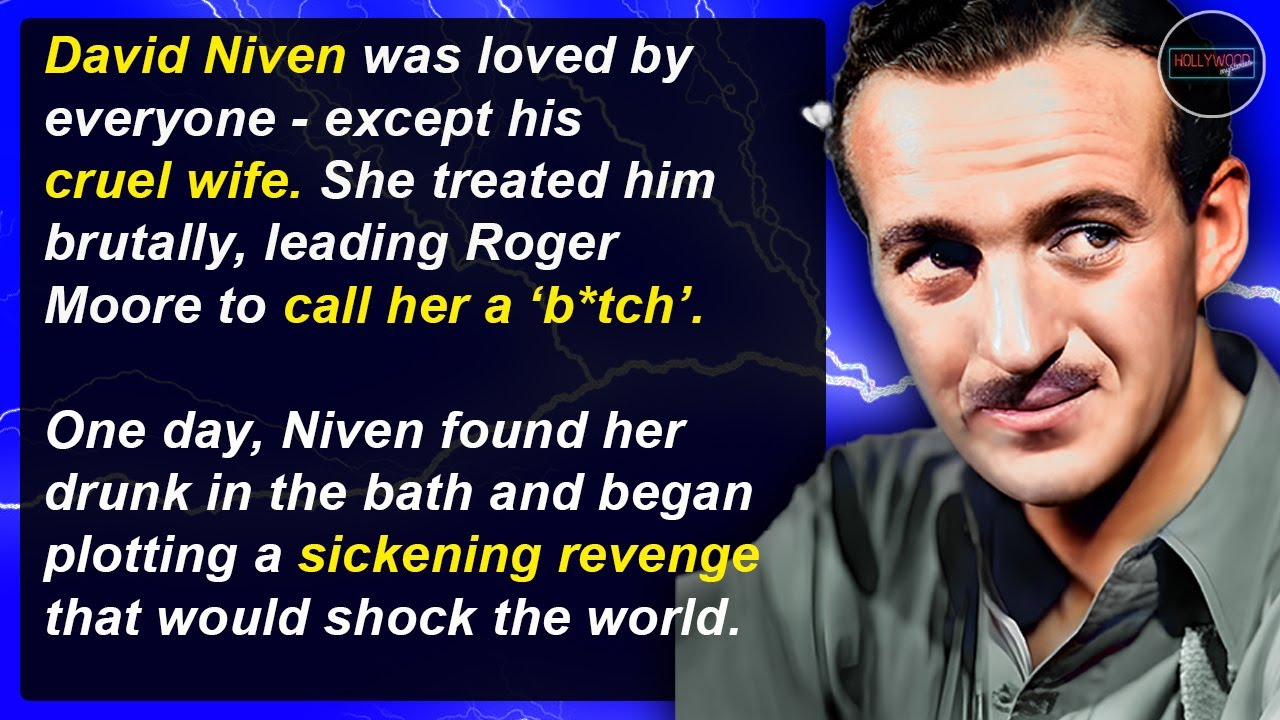
That second marriage, however, would spiral into a turbulent, often toxic relationship, plagued by Hjördis’ depression, heavy drinking, and her bitter resentment of living in the shadow of Niven’s sainted first wife. In his final years, as Niven battled the ravages of ALS, 𝓈𝒽𝓸𝒸𝓀𝒾𝓃𝑔 rumors emerged that he had plotted to murder his wife to escape the unhappy union, a dark footnote to a life filled with glittering highs and devastating lows.
Niven, who charmed millions on screen as the ultimate English gentleman, passed away at his Swiss chalet on July 29th, 1983, at age 73. The largest floral tribute at his London memorial service came not from royalty or studio bosses, but from the baggage porters at Heathrow Airport, whose note read: “To the finest gentleman who ever walked through these halls. He made a porter feel like a king.
The man who survived war, conquered Hollywood, and won an Oscar for Separate Tables, could never conquer the guilt and grief of that fateful night in 1946, a night when a simple party game destroyed his life and left an indelible scar on the golden age of cinema.