A string of beloved American history stories taught in classrooms for generations does not hold up under scrutiny, and a closer look at the record reveals a far more complicated—and often darker—reality. Take Christopher Columbus. The standard school narrative claims he sailed the ocean blue in 1492 and discovered America. In fact, Columbus never set foot on the North American mainland.
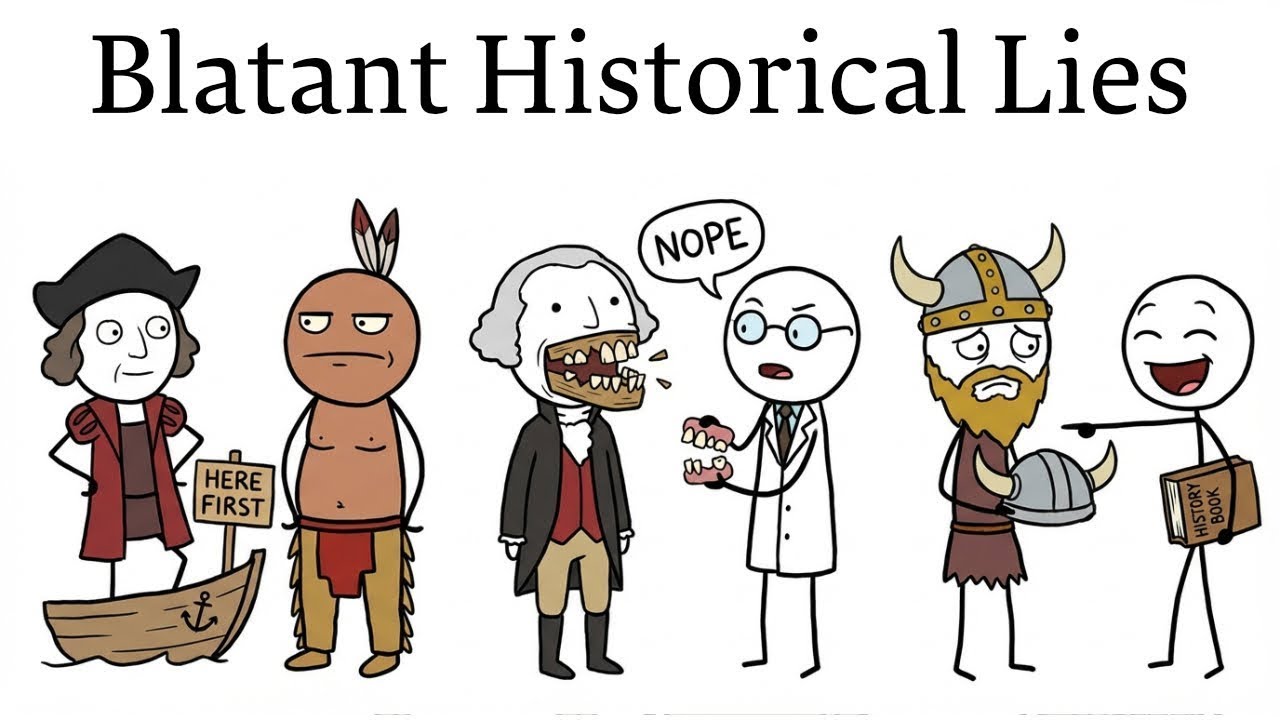
He landed in the Bahamas believing he had reached Asia, called the Indigenous people he met “Indians,” and spent his voyages exploring the Caribbean, including islands now known as Hispaniola and Cuba. Nor was he the first European to reach the Americas: the Viking explorer Leif Ericson established a settlement in Newfoundland around the year 1000, nearly 500 years earlier. Columbus’s own era documented the brutality of his rule. Spanish authorities arrested him in 1500 for his harsh treatment of Indigenous people and returned him to Spain in chains.
He died still believing he had reached Asia. Despite this, his legacy is marked by a national holiday each October. The first Thanksgiving is another tale that bears little resemblance to the event itself. The gathering in 1621 was a three-day harvest celebration, not a holiday called Thanksgiving.
There was venison, corn, and eel, but no turkey, pie, or cranberry sauce. The Wampanoag, led by Massasoit, arrived with around 90 men, likely because they heard gunfire and wanted to ensure they were not under attack. Massasoit had agreed to a peace treaty with the Pilgrims out of strategic necessity: European diseases had already devastated New England’s Native population, with up to 90 percent dying from smallpox, leaving the Wampanoag vulnerable to their enemies. The relationship deteriorated quickly.
Just 16 years later, in 1637, English settlers burned a Pequot village and killed more than 500 people, mostly women and children. Governor John Winthrop declared a day of thanksgiving to celebrate the victory. The modern holiday did not become official until 1863, when Abraham Lincoln proclaimed a national day of Thanksgiving during the Civil War. The story of Paul Revere’s midnight ride is also largely a work of fiction.
Revere never shouted, “The British are coming. ” Most colonists identified as British at the time, so the warning would have made little sense. He likely said something like, “The regulars are out. ” He also did not ride alone.
He was one of three riders sent to warn the militias, alongside William Dawes and Samuel Prescott. Revere was captured by British troops and released, but his horse was taken, ending his ride. Prescott, a local doctor, was the only one who completed the mission. The idea of Revere as a solo hero comes from an 1861 poem by Henry Wadsworth Longfellow, which omitted the other riders and Revere’s failure to finish.
The Declaration of Independence was not signed on July 4, 1776. On July 2, the Continental Congress voted to break from Britain. John Adams predicted that date would be celebrated with “Pomp and Parade” forever. Two days later, Congress finalized the text of the Declaration, and that is the date printed on the document.
No one signed it that day. The formal signing began in August, and some delegates signed months later. The famous painting by John Trumbull, showing Jefferson presenting the document to John Hancock in a crowded room, never happened. Half the people depicted were not even in Philadelphia at the time.
The large, ornate copy with John Hancock’s bold signature is the engrossed copy, written out later for display, not the original rough draft. Furthermore, many signers, including Jefferson, were slave owners; about one-third of the signers owned enslaved people. The history of slavery in America is also often misrepresented as a purely Southern institution. Northern colonies and states held enslaved people for more than 150 years.
New York, Rhode Island, Connecticut, and Pennsylvania all had slavery, and New Jersey legally held enslaved people until 1865. Gradual emancipation laws kept people in bondage for decades; in Pennsylvania, children born to enslaved mothers after 1780 were forced to serve until age 28. Northern wealth was deeply intertwined with slavery. New England textile mills ran on Southern cotton, while Wall Street banks financed plantations and insured slave ships.
Rhode Island alone was responsible for over 1,000 slave voyages. Many Northerners who fought in the Civil War did so to preserve the Union, not to end slavery. Lincoln himself wrote in 1862, “If I could save the Union without freeing any slave, I would do it. ”
Lincoln’s Emancipation Proclamation, issued January 1, 1863, declared enslaved people in Confederate states free, but it applied only to areas the US government did not control.
It freed no one on day one and did not apply to the loyal slave states of Kentucky, Delaware, Maryland, and Missouri. Slavery also continued in Union-occupied parts of Louisiana, Tennessee, and Virginia. The proclamation’s main effect was political, turning the war into a moral fight and keeping Britain and France from siding with the Confederacy. Slavery was not abolished nationwide until the 13th Amendment was ratified in December 1865.
After that, Black Americans were still forced into labor through black codes, vagrancy laws, and prison labor schemes. The Wild West was far less violent than Hollywood suggests. Public gunfights were rare. The famous shootout at the OK Corral lasted about 30 seconds and involved nine people.
Many frontier towns had strict gun laws; visitors had to check their weapons with the sheriff in places like Dodge City and Tombstone. Homicide rates in many frontier towns were lower than in modern cities. About one in four cowboys were Black, and many were Mexican or Native American. Most were livestock workers, not gunslingers.
Outlaws like Billy the Kid killed far fewer people than legend claims, and much of the myth was created by newspapers and dime novels seeking to sell stories. Thomas Edison did not invent the light bulb. Electric light had been developed in the early 1800s, with inventors like Humphry Davy and Warren de la Rue creating early versions. Joseph Swan filed a patent in the UK in 1878 for a working incandescent bulb, and he successfully sued Edison for patent infringement in British court.
Edison’s contribution was a longer-lasting, commercially practical version, developed by a team of more than 30 engineers at Menlo Park. He built the infrastructure to make electric light work in homes, but he did not invent the bulb from scratch. The 19th Amendment, ratified in 1920, did not give all women the right to vote. It prohibited denying the right to vote on the basis of sex, but said nothing about race, citizenship, or Jim Crow laws.
Black women in the South were blocked by poll taxes, literacy tests, intimidation, and violence. Native American women were not considered US citizens until 1924, and some states blocked them from voting until the 1940s. Asian-American women were largely barred from naturalized citizenship until 1952. Puerto Rican women gained limited voting rights in 1935 and full rights in 1937.
The US did not win the Vietnam War. The conflict lasted 20 years, killed over 58,000 Americans and millions of Vietnamese, and ended with Vietnam becoming fully communist in 1975. The US signed the Paris Peace Accords in 1973 and withdrew, leaving the South Vietnamese government to collapse two years later. The last Americans evacuated Saigon by helicopter under enemy fire.
The US dropped more bombs on Vietnam, Laos, and Cambodia than it did in all of World War II combined, and used Agent Orange, a chemical still causing birth defects today. Public support collapsed in the late 1960s, and returning soldiers were often blamed for the war. The US initially entered the conflict after France withdrew in 1954, backing a corrupt South Vietnamese regime, but ultimately could not defeat guerrilla forces and withdrew in defeat.