Madeleine Stowe was one of the defining film stars of the 1990s, known for her roles in The Last of the Mohicans and 12 Monkeys. At the height of her fame, she made a decision that puzzled Hollywood: she stepped away from the spotlight and moved to a cattle ranch in Texas. The choice was not a public breakdown or a dramatic exit, but a deliberate withdrawal from an industry she no longer trusted. Her path to stardom was shaped by a difficult childhood.
Stowe was born in Los Angeles and raised in the working-class neighborhood of Eagle Rock. Her mother came from a prominent Costa Rican political family, but the household was dominated by a far harsher reality. Her father, Robert Stowe, was diagnosed with multiple sclerosis in the early 1960s, a time when there were few treatments and little support for the disease. By the time she was six, her father was largely confined to a wheelchair.
By age eight, Stowe was helping care for him, tying his shoes and turning him over in bed to prevent sores. She has said she did not really know her father, only his needs. For years, she lived in a state of constant alertness, listening through the walls for signs that he had fallen or was struggling to breathe. The piano became her escape.
Beginning at age 10, she practiced for hours every day for a decade, aiming for a career as a concert pianist. It was, she later explained, the only thing in her life she could control. But in 1976, her instructor died, and at 18, Stowe stopped playing. The music that had been her sanctuary suddenly felt like a tomb.
Her father died in 1983, when Stowe was 25. By then, she had already spent years as a caregiver and had reinvented herself, studying cinema and journalism at the University of Southern California. Her first professional role came in 1980, on an episode of Little House on the Prairie, playing a blind painter. It was a modest start for someone who would soon become a major box office draw.
The breakthrough arrived in 1987 with Stakeout, opposite Richard Dreyfuss and Emilio Estevez. Stowe brought a sharp comedic presence to the action comedy and proved she could anchor a studio film. She followed it with a string of high-profile thrillers, including Revenge with Kevin Costner, The Two Jakes with Jack Nicholson, and Unlawful Entry, which grossed over $57 million. But the roles began to take a toll.
In films like Unlawful Entry and Blink, Stowe was repeatedly cast as the victim, a woman terrorized by men. She later said that prolonged exposure to that kind of material affected her nervous system, and she would carry the tremors of her characters home after filming. She also grew uncomfortable with the industry’s demand for nude scenes, which she came to see less as art and more as a way of making actresses interchangeable. The turning point professionally came in 1992 with Michael Mann’s The Last of the Mohicans.
Stowe played Cora Munro, opposite Daniel Day-Lewis as Hawkeye. The film was a critical and commercial success, and their on-screen chemistry became legendary. Day-Lewis remained in character throughout the shoot, living off the land in the North Carolina wilderness. Stowe was unfazed.
“A method actor playing dress-up in the woods was the least of her worries,” as the account of the production put it. In 1994, she was offered $1. 5 million to star in the all-female Western Bad Girls. It was a top-tier paycheck, but the experience left her disillusioned.
She found the production obsessed with how the actresses looked in tight leather and corsets instead of the story. She later described the experience as grotesque, feeling she was being paid not to act but to be a high-priced mannequin. The breaking point came during the filming of 12 Monkeys in 1995. The Terry Gilliam sci-fi thriller was a critical success and is considered by many to be her best work.
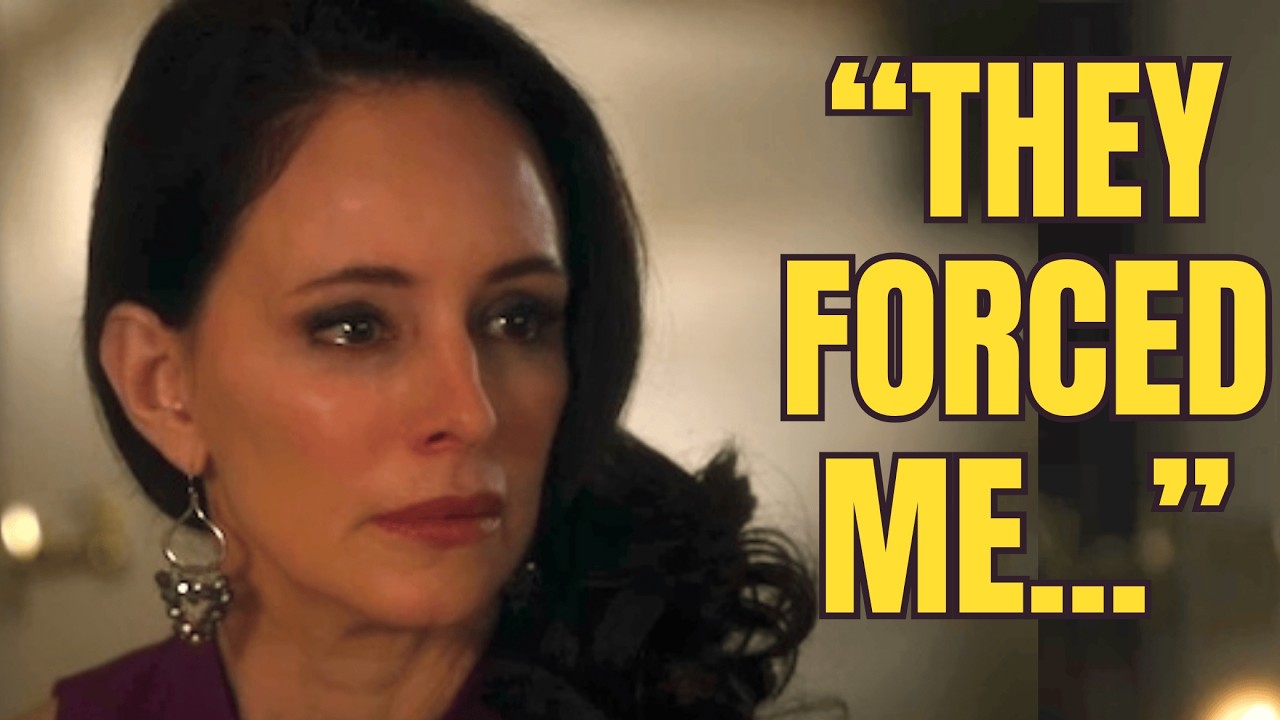
Stowe played Dr. Kathryn Railly, a psychiatrist drawn into a time-travel conspiracy, holding her own opposite Bruce Willis and a scene-stealing Brad Pitt, who earned an Oscar nomination. But the role took everything she had left. She later said, “Ultimately, it was unsatisfying to play a victim, and I realized I couldn’t do it anymore.
It had to stop. ”
By the mid-1990s, Stowe was at the summit of her career. She was named one of People magazine’s 50 Most Beautiful People in 1994, and Empire listed her among the 100 sexiest actors in cinema history in 1995. But privately, she was planning an exit.
In 1996, she gave birth to her daughter, Mae Theodora, and her priorities shifted sharply. She later explained that she refused to let her daughter become the caretaker for a mother hollowed out by the industry. Stowe did not simply move to a quieter neighborhood. She relocated to a 12,000-acre working cattle ranch outside Fredericksburg, Texas.
It was not a celebrity hobby farm. The Hill Country landscape of scrub brush and red dirt demanded real labor, and Stowe embraced it. She traded designer gowns for denim and spent her days in the mud, dealing with the unscripted chaos of the land. She was not alone in this new life.
Stowe had married actor Brian Benben, whom she met in 1981 on the set of The Gangster Chronicles. Their relationship has lasted more than four decades, an anomaly in an industry known for short marriages. Together, they built a life centered on the ranch, their daughter, and a definition of success that had nothing to do with the entertainment trade. Stowe did not disappear entirely.
In 1998, she appeared in Playing by Heart alongside Sean Connery and a young Angelina Jolie. The following year, she co-starred with John Travolta in The General’s Daughter, a film that grossed $150 million worldwide. By any measure, it was a major hit. But instead of staying in Los Angeles to capitalize on it, she took the paycheck and returned to Texas.
In 2002, she starred in We Were Soldiers as Julie Moore, the wife of a commander played by Mel Gibson, a role she understood deeply: the waiting, the watching, the quiet strength required to hold a household together. She delivered the performance with her usual steely grace, but her heart was no longer on the set. Her final notable return to sustained work came in the TV series Revenge, where she played Victoria Grayson from 2012 to 2015. She earned $75,000 an episode, a comfortable sum that allowed her to stay close to her family.
The role proved she could still dominate a screen, but for Stowe, it was about freedom, the ability to say no to the industry and yes to her life in Texas. Today, approaching 68, Stowe has done what few in Hollywood manage: she has allowed herself to age naturally. She has refused Botox, fillers, and cosmetic surgery, understanding that a face without lines is a face without history. The hypervigilance that defined her childhood remains in her eyes, but it is no longer the look of a frightened girl watching a dying father.
It is the steady gaze of a woman who fought for her own peace and won. Her career stands as a reminder that success does not always mean staying. Stowe walked away from the summit of her profession and built a life on her own terms.
In the end, the woman who spent years playing victims refused to become one, and pulled off the ultimate heist by taking her talent and her dignity and disappearing into a Texas sunset.