
What began as an ordinary workday ended with a life-changing surprise for one Florida couple after a first-time mother’s water broke unexpectedly just hours after a casual walk with her doula. By sunrise the next morning, she had welcomed her healthy baby girl during a swift, medication-free hospital birth that she says forever changed her understanding of motherhood.
For Diana, Tuesday, April 25, seemed destined to be another routine day as she prepared for maternity leave. She spent the afternoon organizing work responsibilities before meeting her doula, Dallas, for lunch and a long walk through the neighborhood. The pair talked about pregnancy, labor, and the birth experience Diana hoped to have, never imagining those conversations would become reality before the day was over.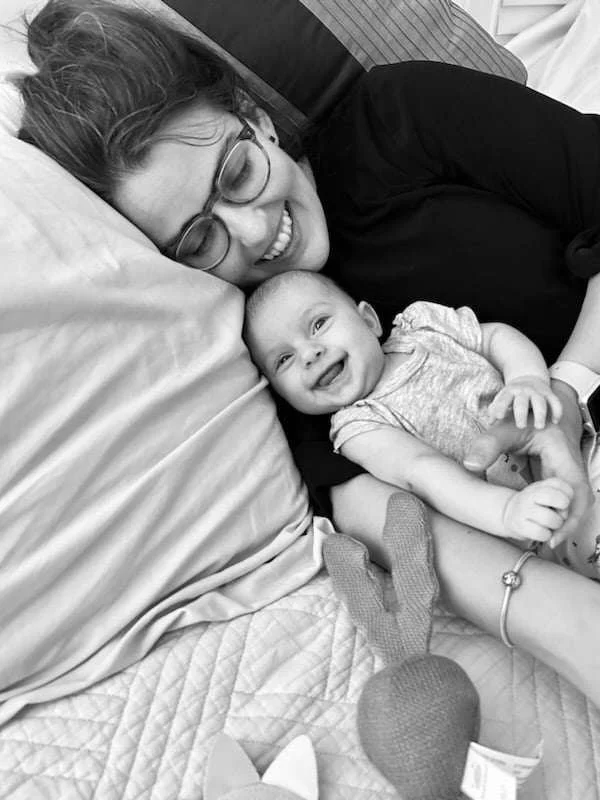
At 39 weeks pregnant, Diana assumed she still had plenty of time before meeting her daughter. Earlier that afternoon, a routine cervical examination showed she was two to three centimeters dilated, but as a first-time mother expecting a baby girl, she believed she would likely reach her May 5 due date.
That evening, while relaxing in bed with a snack recommended for her gestational diabetes and watching television with her husband, everything changed.
Around 9 p.m., she suddenly felt a gush of fluid and immediately realized her water had broken.
“I knew instantly it wasn’t anything else,” Diana later recalled. “I jumped out of bed telling my husband my water had broken.”
After contacting their doula, the couple was advised to call their obstetrician immediately because Diana had tested positive for Group B Streptococcus, making prompt hospital care important. Medical staff instructed them to head straight to St. Vincent’s Southside Hospital.
Fortunately, the couple had nearly finished packing their hospital bags and lived less than five minutes away. Before leaving home, Diana took one last look through her childbirth binder, reviewing breathing techniques she hoped would help during labor. The couple paused for a quiet moment, realizing it would be the last time they left home as a family of two.
Once admitted to the hospital, labor had not yet begun despite her ruptured membranes. Diana completed admission paperwork, changed into her hospital gown, and waited through the evaluation process while listening to a final guided birth meditation recommended during her prenatal preparation.
After being moved into a delivery room, she received intravenous antibiotics as part of her care plan. Her parents briefly visited before heading home around 1 a.m., allowing the couple to focus on the birth ahead.
As contractions gradually intensified, Diana’s doula arrived and immediately began helping her manage the growing discomfort through breathing techniques, movement, and position changes.
Rather than remaining confined to the hospital bed, Diana spent labor sitting on a birthing ball, lying on her side, walking, and even swaying with her husband in the shower. Throughout the night, calming hypnobirthing recordings and a carefully prepared playlist filled the room while her husband learned how to provide effective counter-pressure during contractions.
The contractions soon settled into a steady rhythm roughly two minutes apart.
Although Diana occasionally wondered whether she should request pain medication, her doula encouraged her to focus only on the next contraction rather than the hours ahead.
Instead of thinking about how much longer labor might last, every conversation returned to one simple goal: breathe through the next wave.
That strategy proved remarkably effective.
When medical staff performed another cervical examination, Diana was stunned to learn she had already reached full dilation.
“I didn’t even realize I had gone through transition,” she later said.
With labor advancing much faster than expected, nurses quickly called the physician, warning that the baby was arriving so rapidly the doctor might not make it in time.
As it turned out, they were nearly right.
The obstetrician reportedly hurried through the hospital parking lot while Diana’s baby was already crowning.
Without being instructed to push, Diana instinctively followed her body’s natural urges. Her doula tied a supportive scarf to the hospital bed so she could pull against it during contractions while her husband encouraged her every step of the way.
Moments later, after only a brief pushing phase, their daughter was born at 5:43 a.m.—almost exactly the time the couple normally woke up each morning.
Rather than tears, the delivery room filled with smiles and laughter as the exhausted new parents met their baby girl for the first time.
Because the umbilical cord was unusually short, the newborn was initially placed beside Diana before being transferred onto her chest after the cord was cut. Nurses congratulated her on completing an unmedicated birth, praising her strength and determination throughout labor.
As she held her daughter for the first time, Diana says she immediately felt an overwhelming wave of connection.
Unable to clearly see her newborn without her glasses, she instead relied on touch, recognizing the little life she had carried for nine months.
Hearing her baby’s first cries, she softly whispered words that would soon become a daily lullaby.
“Mama is here. Teya is safe.”
Those words also confirmed something else. According to her husband, hearing the nickname spoken aloud made them both realize they had chosen exactly the right name for their daughter.
Soon afterward, the new parents began calling family members to share the exciting news, while precious first photographs captured the joyful beginning of their life as a family of three.
Looking back, Diana says the experience reinforced one lesson she hopes other expectant mothers will remember: every birth is unique, but trusting your body, preparing thoroughly, and surrounding yourself with supportive caregivers can make even the most unexpected journey become an empowering and unforgettable beginning.
