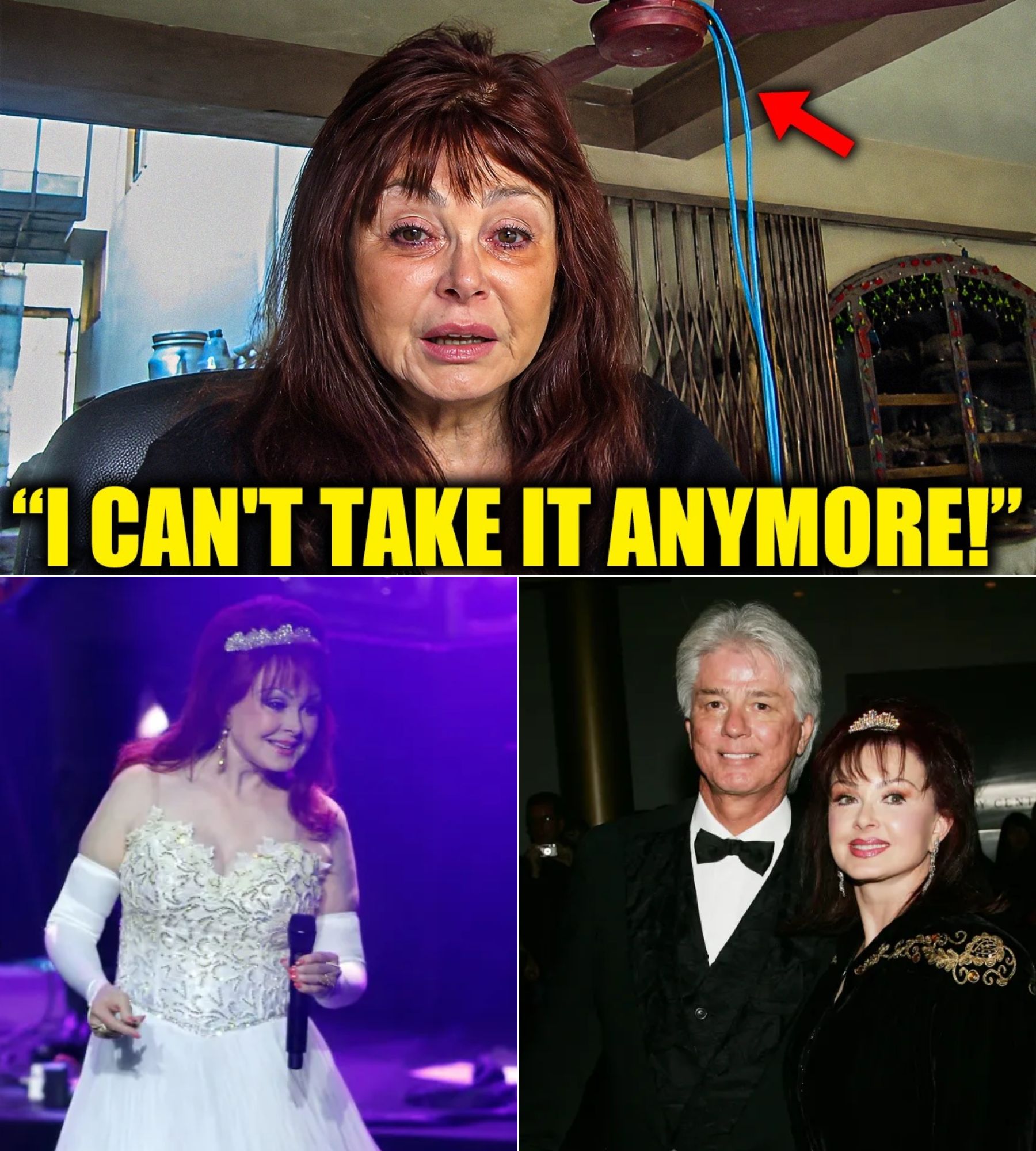
The woman standing on the red carpet in Las Vegas on April 11, 2022, was radiant, a vision in a royal blue jewel-encrusted pantsuit, her smile wide as she spoke about a dream she had carried for 31 years. Naomi Judd, then 76, was about to perform with her daughter Wynonna for the first time in over two decades, a moment she described as a miracle. Nineteen days later, she was dead by suicide, leaving a family shattered and a world struggling to reconcile the glittering image with the devastating reality of a mind at war with itself. This is the story of Naomi Judd’s final weeks, the interview that turned out to be her last, and the decades of brutal honesty about her own mental health that made her death resonate so differently than most public tragedies. It is a tale of triumph and torment, of a woman who spent years teaching the world that depression is a disease, not a flaw, only to lose her own battle on the eve of her greatest professional honor. Long before anyone called it her final interview, Judd had already done something most stars of her stature never risk: telling the truth about what was happening behind the glamour. In a 2016 interview with Robin Roberts on Good Morning America, promoting her memoir River of Time, she described a gap between the woman fans saw and the woman who existed at home. People met her expecting the rhinestones and glitter in her hair, she explained, and that persona was genuinely part of who she was. But there was another side entirely, one where she would disappear into her house for three weeks at a stretch, unable to get out of her pajamas or maintain basic hygiene, sunk into what she called life-threatening depression. She traced the onset back to 2011 during a Judds reunion tour and the filming of a reality series, a period when the pressure of being watched constantly collided with a mind already struggling. She didn’t stop at describing symptoms. Judd used those same interviews to talk about where the depression had come from, tracing it back to childhood trauma, including an incident of abuse at the age of three that she said had gone unaddressed for decades. In a 2017 essay for NBC News, she went further, explaining that she had never properly dealt with what had happened to her, so it had come out sideways instead, manifesting as depression and anxiety. She said the illness ran on both sides of her family, part genetic inheritance and part the accumulated weight of trauma that nobody had ever been given the tools to process. Confronting that history became part of her treatment, alongside years of intensive therapy that eventually got her, in her words, to a place of radical acceptance. By 2017, in that same interview with NBC News, she was describing what it actually felt like to live with what she called a dysfunctional brain, making the distinction that would come to define how her family talked about her illness for the rest of her life. This wasn’t a character flaw or a mood to be willed away. It was a disease, living in the exact organ she needed to fight it with. Judd’s openness wasn’t incidental to her fame. It became a second calling, one she pursued as deliberately as she had once pursued a music career. In 2016, she published River of Time: My Descent into Depression and How I Emerged with Hope, co-written with Marcia Wilkie, laying out in unflinching detail what she called hitting rock bottom and rising again just to be thankful for her next breath. Ashley Judd wrote the forward, describing watching her mother and stepfather wade through what she called the sucking mire of depression and expressing gratitude that help had existed for the family members watching from the outside too. The book became one of three Judd would eventually publish, and she went on to build a genuine second career as a keynote speaker on mental health, community activism, and humanitarian issues, appearing at conferences and events well beyond the world of country music. She media-trained other public figures on how to discuss their own struggles honestly, rather than hiding behind vague, careful language. The physical toll of both the depression and its treatment was severe enough that Judd spoke about it openly rather than hiding it. During her worst stretch, her muscles atrophied from prolonged inactivity, immobilized by the illness to the point that her family installed an elevator in their home just so she could move between floors. Medication trials left her face swollen and caused her hair to fall out, changes she discussed candidly during interviews promoting her book rather than letting anyone assume her struggle had been anything less than total. She told interviewers her doctors had tried her on every treatment available to them and that even then nothing fully worked, which was precisely why she insisted on using the phrase treatment-resistant whenever she described her own condition. For a public used to seeing celebrities discuss mental health in careful, sanitized sound bites, the specificity of what Judd was willing to share—the swelling, the hair loss, the elevator installed in her own home—went further than almost anyone in her position had gone before her. She told interviewers directly that she wanted people struggling the way she struggled to see that survival was possible, and she wanted the people around them to understand depression as a legitimate illness rather than a personal failing. For a woman who had built a career on rhinestone glamour and radio-friendly harmonies, spending her later years describing her own bipolar disorder and PTSD in granular public detail was its own kind of courage, one that would only be fully understood in hindsight. Naomi Judd was born Diana Ellen Judd on January 11, 1946, in Ashland, Kentucky, a small town tucked into the coal country of the Appalachian foothills. Her father, Charles Glen Judd, ran a local gas station. Her mother, Pauline, known to everyone as Polly, worked at times as a riverboat cook. By most accounts, Naomi’s early years were unremarkable in the best sense. She was an honor roll student, a regular piano player at her family’s Baptist church, and the oldest of four children in a household that for a while looked entirely ordinary. That changed when her younger brother Brian was diagnosed with cancer as a teenager. He died in 1965 at 17, a loss that reshaped the entire family and that Naomi later cited directly as the reason she pursued nursing, wanting to spend her working life caring for people the way she hadn’t been able to save her brother. Watching a sibling die young while she herself was still a teenager left a mark that outlasted the grief itself, becoming one of the formative experiences she would later point back to when trying to explain where her lifelong vigilance around illness and mortality came from. By then, her own life had already taken an unplanned turn. She became pregnant at 17, married Michael Ciminella shortly afterward, and gave birth to her first daughter, Christina Claire Ciminella, later known to the world as Wynonna, just two weeks before Naomi received her own high school diploma in the mail. A second daughter, Ashley, followed in 1968 after the family had relocated to California. For a few years, the Ciminellas lived what looked from the outside like a fairly conventional young family’s life on the West Coast, with Wynonna later describing her early childhood there as fairly typical for the era, eating packaged snacks and watching television like any other kid in the neighborhood. The marriage ended in divorce in 1972, and Naomi found herself raising two young daughters largely on her own, at times relying on welfare and going without basic comforts like reliable heat or even a working telephone. She eventually enrolled at the College of Marin to study nursing, working her way toward the ICU career that would occupy much of her 20s and 30s, all while raising Wynonna and Ashley in what both daughters have since described as a chaotic, creative, financially precarious, but deeply close household. Both girls would later talk about those years as formative in ways that went beyond simple hardship, crediting their mother’s resourcefulness and refusal to give up during that stretch as the model for how they would eventually handle their own careers and setbacks. Long before rhinestones or record deals, in other words, Naomi Judd had already survived a version of the hardship her music would later find its emotional core in. Music wasn’t a childhood dream chased in a straight line. It happened almost by accident, born out of singing together with Wynonna at home in Kentucky and then in California, where the two eventually landed a spot performing on Nashville’s WSM-TV. RCA label head Joe Galante caught that appearance in 1983 and signed them on the spot, launching a career that moved unusually fast, even by Nashville standards. Over six studio albums released between 1983 and 1991, The Judds became one of the most successful mother-daughter acts in the history of American music, landing 14 number one singles on Billboard’s Hot Country Songs chart and selling more than 20 million records worldwide. They won five Grammy awards and eight Country Music Association awards along the way. Naomi wrote or co-wrote a significant portion of their catalog herself, insisting on creative control at a time when that wasn’t always extended easily to women in Nashville, let alone a nurse from Kentucky with no formal music industry background at all. That first run ended abruptly in 1991 when Naomi was diagnosed with hepatitis C, a disease she had likely contracted years earlier through a workplace needle stick during her nursing career, long before reliable testing for the virus even existed. Doctors initially gave her a limited window to live, and for a woman who had spent her career on stages in front of tens of thousands of people, the diagnosis meant retreating from the exact life she had fought so hard to build. She underwent grueling interferon treatment, comparable in its side effects to chemotherapy, and supplemented it with what she called integrated approaches: biofeedback, aromatherapy, and meditation among them, crediting the combination with helping her survive an illness that was at the time still poorly understood by most of the medical establishment. She beat it. The Judds’ farewell tour that year became one of the most successful in country music history up to that point, a bittersweet victory lap for a duo few people expected to see perform together again, closing out what everyone assumed at the time would be the final chapter of Naomi Judd’s career on a stage. The reunion that made the CMT Music Awards possible didn’t happen in a vacuum. For years, Naomi’s very openness about her illness had put real strain on her relationship with Wynonna. During the promotion of River of Time in 2016, Naomi acknowledged publicly that she and her daughter were on a break, admitting that Wynonna had borne the brunt of mistakes made during the depths of her depression. Naomi said the two had been through a considerable amount of therapy together, trying to work through it, therapy that, by her own account, didn’t resolve everything overnight. Wynonna later described that period in blunter terms, calling closeness with her mother both a blessing and a burden, an admission that captured just how tangled affection and old wounds had become inside their relationship by that point. What brought them back together wasn’t a grand reconciliation so much as a crisis that demanded it. In 2021, Ashley Judd suffered a severe leg injury after a fall while working in the Democratic Republic of Congo, breaking the bone in multiple places and requiring an extended recovery. Naomi and Wynonna both stepped in to help care for her, and by most accounts, the shared responsibility of looking after Ashley did something that years of individual effort hadn’t quite managed: it pulled mother and daughter back into each other’s daily lives. By the time The Judds’ reunion was announced in early 2022, the closeness between Naomi and Wynonna looked to outside observers more solid than it had in years. That context matters for understanding what the CMT performance actually meant. It wasn’t simply two famous relatives getting back on a stage together for a paycheck. It was two women who had spent years navigating one of their family’s hardest chapters, drawn back together first by a shared crisis and then by the promise of a reunion tour, finally standing face to face and singing about a bridge built out of love. Wynonna’s unscripted words in the middle of that performance, telling her mother this was really happening, carried the weight of everything it had taken to get both of them back to that exact spot. By early 2022, there was real reason to believe Naomi Judd was heading into a good stretch. A 10-date arena tour was set to kick off that September, with Martina McBride joining as a special guest on select dates. Naomi told fans she was chomping at the bit to get back to the people she called her family of choice. Then came an honor that had been decades in the making: The Judds were selected for induction into the Country Music Hall of Fame, the genre’s highest tribute, official recognition of a catalog built on 14 number one hits, five Grammy awards, and eight Country Music Association awards, anchored by songs like Mama He’s Crazy, Why Not Me, and Love Can Build a Bridge. The induction ceremony was scheduled for May 1st, and everyone around Naomi described her as looking forward to it alongside the upcoming tour with genuine excitement. The CMT Music Awards set for April 11th in Las Vegas became the first public step in that comeback. It would be Naomi and Wynonna’s first performance together in years, and nobody watching that night had any reason to think it would also be close to the last time most of the world would see Naomi Judd alive. The performance itself has since taken on a different weight than anyone in that arena could have known at the time. Naomi and Wynonna sang Love Can Build a Bridge face to face, a pre-taped segment built around the emotional core of their catalog, joined partway through by a gospel choir. It marked the first time the two had appeared together on a major televised broadcast in over 20 years, a fact that made the moment feel significant to longtime fans, even before anyone knew how much more significant it would become. When Wynonna, overcome in the moment, said aloud to her mother on camera that this was really happening, the wind picked up around them as they sang, and Naomi raised a hand toward the sky. Everyone who was there that night has described the same thing since: it felt like magic, the kind of moment a family waits years to get back. A few days later, Naomi appeared in what a reporter working the red carpet that week would later realize was likely her final formal interview. She was luminous, talking about a reunion she said she had dreamed about every night for 31 years, both hopeful and visibly a little nervous about what came next. There was no hint in that conversation of what was coming. By every outward account, Naomi Judd was a woman looking forward to her future, not someone bracing for the end of it. Roughly two weeks after that interview, on April 30th, 2022, Naomi Judd died at her home near Franklin, Tennessee. She was 76 years old. Her daughters confirmed her death by suicide, and the family made clear from the very first statement how they wanted the world to understand what had happened. “Today we sisters experienced a tragedy,” Ashley and Wynonna wrote. “We lost our beautiful mother to the disease of mental illness.” It was a description chosen deliberately, an extension of the exact language Naomi herself had spent years asking the public to use. The Country Music Hall of Fame ceremony went ahead as scheduled the very next day, May 1st, transformed overnight from a celebration into something closer to a memorial. Wynonna and Ashley stood on stage to accept the honor on their mother’s behalf, both of them still in the earliest, rawest hours of their grief. Ashley, in tears, told the crowd how much Naomi had loved and appreciated the audience’s love for her in return, apologizing almost impossibly that her mother couldn’t hang on until that day. Wynonna kept her own remarks brief, saying only that her heart was broken and that she needed to move quickly through what she had to say, promising the audience that despite everything, she would continue to sing, because that was simply what the family did. In interviews afterward, Ashley Judd tried to help the public understand what had actually happened inside her mother’s mind at the end, drawing a hard line between the woman and the illness that killed her. “The disease lies,” she said. “It’s savage.” Even surrounded by the kind of professional adulation most performers spend a lifetime chasing, on the very eve of the biggest honor of her career, the version of reality her illness was showing her was apparently more convincing than any of it. Ashley has spoken about knowing for years that her mother was fragile, and about trying to stay fully present in every embrace they shared because she understood a day might come when she couldn’t anymore. News of her death spread through the country music community within hours, and tributes poured in from artists across generations. Dolly Parton, a longtime friend who described the two of them as being like sisters, posted a heartfelt note expressing her shock and grief, adding a sorrowful line about wishing she could have been at the induction ceremony in person. The Oak Ridge Boys, Carrie Underwood, Reba McEntire, Maren Morris, Tim McGraw, and dozens of others shared their own tributes within the same news cycle, many of them expressing a similar disbelief that a woman who had seemed in her public appearances just weeks earlier so full of life and anticipation could already be gone. The scale of the response reflected not just Naomi’s musical legacy, but the personal warmth she was known for throughout the industry, the same quality her family had spent decades insisting was every bit as real as the glamour. Two weeks later, on May 15th, Nashville’s Ryman Auditorium hosted a public memorial called Naomi Judd: A River of Time Celebration, broadcast live on CMT and hosted by Robin Roberts, the same interviewer Naomi had confided in back in 2016. Ashley Judd delivered a eulogy that traced her mother’s path from a working-class childhood in Kentucky to the height of American stardom, describing her in a line that captured why so many fans felt they had genuinely known her: as every woman, a nurse, a single mother who had relied on public assistance, someone who had survived early trauma and gone on to build one of the most beloved careers in country music. The eulogy didn’t soften the harder parts of that history either, naming the abuse and hardship as plainly as Ashley named the eventual success, insisting that both halves of the story belonged together if anyone was going to actually understand who her mother had been. Wynonna performed The Rose alongside Brandi Carlile, pausing partway through to restart a section she wasn’t satisfied with, unwilling to let the moment be anything less than what her mother deserved. Naomi’s husband of over three decades, gospel singer Larry Strickland, sat in attendance as the audience joined together for a final rendition of Love Can Build a Bridge, the same song that had closed out Naomi’s very last performance five weeks earlier. Brandi Carlile, Emmylou Harris, Allison Russell, Little Big Town, and Ashley McBryde also performed that night. Oprah Winfrey, Morgan Freeman, Bono, and Salma Hayek were among the friends in attendance. At the close of the service, Wynonna made an announcement to the crowd: after a great deal of thought, she had decided to go forward with the tour her mother had been looking forward to, alone. In the years since, both daughters have continued talking publicly about their mother, not to dwell on the details of her death, but to keep pushing the same message Naomi had spent the better part of a decade trying to get across while she was alive. Wynonna went forward with the tour that fall, performing many of the same songs she and her mother had planned to sing together, often bringing out guest artists to fill the space her mother would have occupied, and describing the experience afterward as something closer to a form of grieving in public than a traditional concert run. Ashley has continued to speak at mental health events and in interviews, drawing the same distinction her mother spent years trying to teach the public: that depression is an illness, not a choice, and that it can end up looking nothing like what people expect it to look like from the outside, including in a woman who by every external measure had every reason left to stay. That’s the part of Naomi Judd’s story that makes her final interview land so differently than it otherwise would. It isn’t remarkable because of anything she said in it. It’s remarkable because of everything she had already said in the years leading up to it, on camera, by name, about a disease she knew was still trying to kill her even in her best moments. She spent the better part of a decade trying to make sure the public understood that mental illness could hide behind glitter and rhinestones and an arena full of people singing along. In the end, her family made sure the world heard that same message one final time in their own words at the hardest possible moment to say it. Three years later, in May 2025, Wynonna and Ashley sat for a four-part Lifetime documentary called The Judd Family: Truth Be Told, directed by Alexandra Dean, going even further than they had in any single interview, sharing home videos, unreleased recordings, and voicemails the three women had left one another over the years. The film didn’t shy away from the harder parts of their history, describing a relationship that was, in Wynonna’s own words, both a blessing and a burden, and featuring appearances from close family friends, including Reba McEntire and Naomi’s widower, Larry Strickland, who had been married to her for over three decades by the time she died. Even that, though, functioned as an extension of the same instinct Naomi had modeled for both of her daughters years earlier: that the only way through something this painful was to talk about it honestly in public, rather than let it stay buried. If you or someone you know is struggling, the 988 Suicide and Crisis Lifeline is available by call or text anytime at 988.