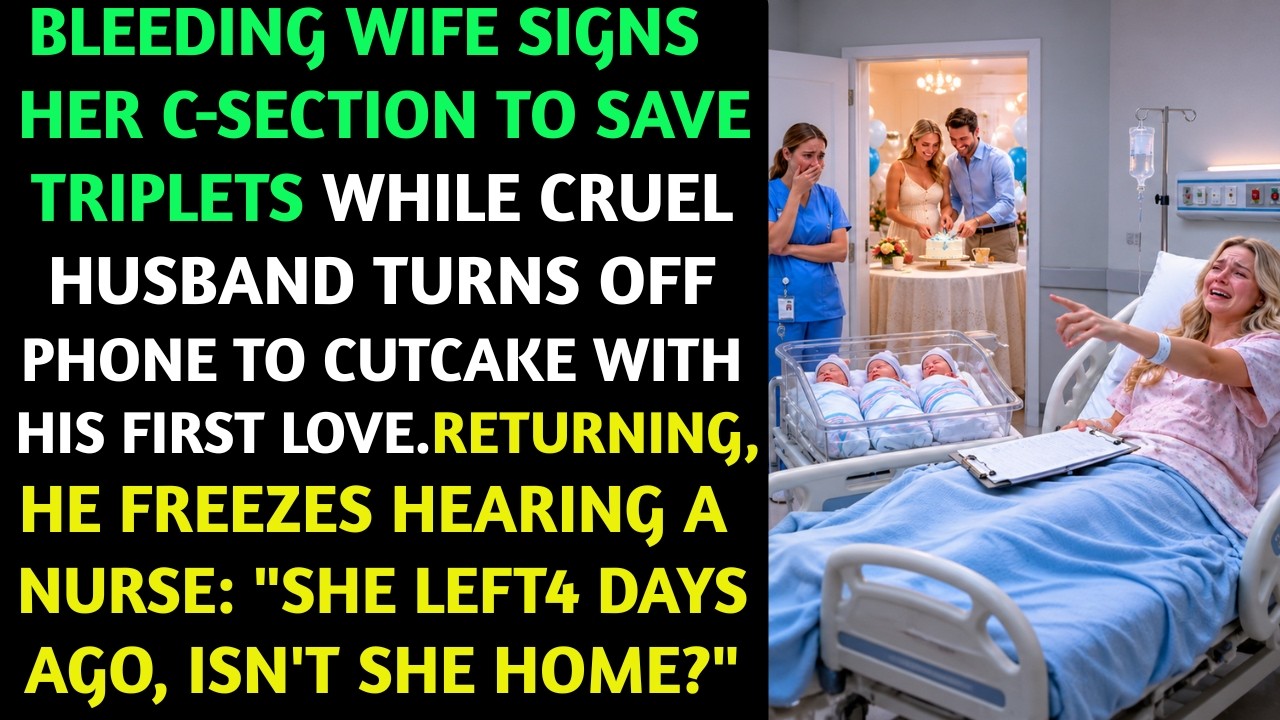
Als Anna die Augen aufschlug, hörte sie nur das gleichmäßige Piepen der Herzmonitore. Sie lebte. Ihre Drillinge – drei winzige, aber kämpferische Wunder – lagen sicher im Brutkasten. Doch in Annas Herz herrschte Stille. Die Worte ihres Mannes, die er ihr vor dem Kaiserschnitt an den Kopf geworfen hatte, waren wie Gift in ihre Seele gesickert. Sie wusste, dass er jetzt bei seiner Ex-Frau war. Sie wusste, dass sie für ihn nur eine Last gewesen war.
In dieser Nacht traf Anna eine Entscheidung. Nicht aus Hass, sondern aus reiner Liebe zu ihren Kindern und zu sich selbst.
Vier Tage später stand Markus im Krankenhausflur. Er wirkte gehetzt, ein schlechtes Gewissen plagte ihn kaum – er erwartete, dass Anna wie immer weinen, ihm verzeihen und alles ertragen würde. Doch am Empfangstresen schüttelte die Krankenschwester, eine ältere Frau mit gütigen, aber bestimmten Augen, den Kopf.
„Sie sind zu spät. Ihre Frau ist gegangen… und hat beschlossen, nie wieder zurückzukommen.“
Markus lachte nervös. „Was soll das heißen? Wo sind meine Kinder?“
„Sie sind an einem sicheren Ort“, erwiderte die Schwester ruhig. „Ihre Frau hat die Entlassungspapiere unterschrieben. Sie hat begriffen, dass ein Mensch, der im Moment des Todeslabyrinths über das Unglück des anderen lacht, keinen Platz in der Zukunft dieser Kinder verdient.“
Anna war nicht geflohen, um sich zu verstecken. Sie war gegangen, um neu zu beginnen. Mit der Unterstützung ihrer Familie und einer unbändigen Löwenkraft zog sie in eine kleine Stadt am Meer. Die ersten Jahre waren unvorstellbar hart. Schlaflose Nächte, die Sorge um drei Kleinkinder, die Einsamkeit. Doch jedes Lächeln ihrer Drillinge heilte ein Stück ihres gebrochenen Herzens. Anna machte sich selbstständig, baute ein kleines Unternehmen auf und schuf für ihre Kinder ein Zuhause voller Wärme, Musik und Respekt.
Zwanzig Jahre später.
Markus saß einsam in einer spärlich möblierten Wohnung. Seine Ex-Frau hatte ihn verlassen, als sein Geld aufgebraucht war. Seine Arroganz war längst verflogen, zurück geblieben war nur ein verbitterter, alter Mann.
Eines Tages erhielt er einen Brief. Kein Anwaltsschreiben, sondern eine Einladung zur Abschlussfeier der Universität. Beigefügt war ein Foto von drei jungen, strahlenden Erwachsenen – einem Arzt, einer Lehrerin und einem Architekten. Auf der Rückseite stand in Annas Handschrift:
„Du dachtest, ich sei eine Belastung. Aber in Wahrheit warst du der Schatten, der uns das Licht nahm. Ich vergebe dir, Markus. Nicht, weil du es verdienst, sondern weil wir es verdienen, frei von Hass zu leben. Unsere Kinder wissen, wer du bist. Sie hassen dich nicht. Sie spüren nur tiefes Mitleid für einen Mann, der das größte Glück des Lebens gegen ein Stück Geburtstagstorte eingetauscht hat.“
Als Markus das Bild betrachtete, verstand er endlich die bitterste Wahrheit: Annas größte „Rache“ war es nicht, ihn zu zerstören – sondern ohne ihn glücklich, stark und erfolgreich zu werden.