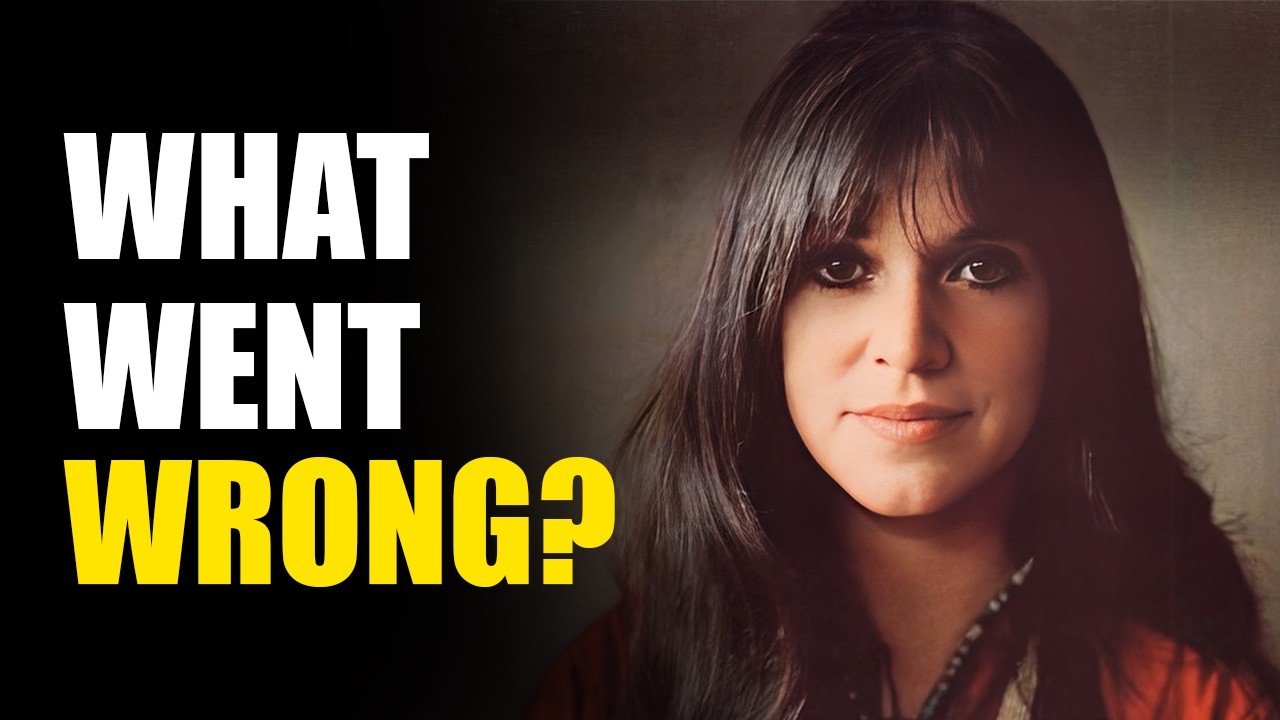
The rain fell in sheets over Max Yasgur’s farm in Bethel, New York, on the night of August 15, 1969, and a 22-year-old woman from Queens named Melanie Safka sat alone in a folding metal chair, her acoustic guitar in hand, facing half a million people. She was terrified. She had arrived by helicopter, separated from her mother, and descended into a scene of overwhelming scale that no one had ever witnessed before.
The crowd stretched across the hillside, a sea of humanity that seemed to have no end, and the air was thick with rain and the particular energy of something unprecedented. She later told the Associated Press that the terror built and built as she waited, and when the rain started, she felt relief, genuinely believing the crowd would go home and she would be spared. They did not go home.
 She walked onto the stage, sat down, and began to sing, her voice cutting through the storm without amplified backup, without a band, without anything except her raw talent and the guitar in her hands.
That night, members of the Hog Farm commune distributed candles through the crowd, and people began lighting them in the darkness. The hillside flickered with hundreds of thousands of small flames, a gesture of communion between performer and audience that had never happened before at a concert. It became the template for every lighter-in-the-air moment that followed, a legacy that traces directly back to that single performance.
Melanie was so moved by the experience that she wrote a song about it, “Lay Down (Candles in the Rain),” recorded with the Edwin Hawkins Singers, which reached number six on the US Billboard chart and became her breakthrough hit. But the world paid attention, and then, somehow, it moved on. What really happened to Melanie Safka, the girl from Queens who stood alone at Woodstock and changed concert history, is a story of extraordinary talent, industry neglect, and a legacy that burned bright but was never fully recognized.
Melanie Anne Safka was born on February 3, 1947, in the Astoria neighborhood of Queens, New York City, to Frederick Safka, of Ukrainian ancestry, and Pauline, known as Polly, an Italian-American jazz singer who performed in local clubs. Her mother’s voice filled whatever room she was in, and Melanie grew up with that sound in her ears from the beginning. By the time she was four years old, she was performing publicly, appearing on a radio program called “Live Like a Millionaire,” singing and playing the ukulele.
Her mother entered her in local talent contests, encouraged her constantly, and took her along to clubs where blues and jazz musicians played. Billie Holiday, Bessie Smith, and Lotte Lenya shaped young Melanie’s ear long before she could fully explain what she was absorbing. When she was still a teenager, her family relocated to Southern New Jersey, where she attended Long Branch High School before transferring to Red Bank High School, graduating in the mid-1960s.
By 16, she was already working, singing at a local coffeehouse called The Inkwell on Monday nights, performing folk songs for four or five hours straight for $20 a night. She described those nights as genuinely formative, with nobody watching her as a future star, just a young girl with a guitar learning her craft one song at a time.
After graduating, her parents insisted she attend college, so she enrolled at the American Academy of Dramatic Arts in New York City to study acting. But the music kept pulling her. She began making her way down to the folk clubs of Greenwich Village, The Bitter End and others, performing wherever she could get a stage, staying out late, absorbing the scene building around her.
She was barely 20 years old and already exactly the artist she would always be, raw, unclassifiable, and entirely her own. Her entry into the recording industry happened by a kind of accident. She had gone to a Broadway building for an acting audition and, through a mix-up, ended up in the office of a music publisher instead.
Rather than leave, she sat down and sang. The publisher was impressed enough to help get her in front of the right people. In 1967, she signed with Columbia Records and released two singles, “Beautiful People” and “Garden in the City,” but when Columbia’s head, Clive Davis, declined to allow her to record a full album, the relationship ended.
She moved on to Buddha Records, where things began to change. There, she was paired with a producer and arranger named Peter Schekeryk, who recognized something in her that the industry had not quite known what to do with. Their professional relationship deepened into something more personal, and they married on December 31, 1968.
Peter would remain her producer, her manager, her collaborator, and the center of her personal life for the next four decades.
Her debut album, “Born to Be,” was released on Buddha in late 1968, a mixture of styles that some critics found confusing, but it contained songs that would remain in her live repertoire for the rest of her performing life. “Beautiful People” was already a modest hit in the Netherlands. Things were moving slowly but unmistakably in the right direction.
Then Woodstock happened. She was not on the original lineup. She arrived by helicopter, separated from her mother, and descended into a scene of overwhelming scale.
Half a million people spread across the hillside, the stage an enormous structure in the distance, the air thick with rain and the particular energy of something none of them had ever experienced before. She was terrified. She told the Associated Press in 2019 that the terror kept building and building as she waited, and that when the rain started, she actually felt relief.
She genuinely believed the crowd would go home, and she would be spared. They didn’t go home, and she went on. The act originally scheduled to follow Ravi Shankar, the Incredible String Band, refused to perform in the rain, and so Melanie Safka, along with her acoustic guitar, walked onto the Woodstock stage on the night of August 15, 1969, at around 11:00 p.
m. , and played to the largest audience she had ever faced or would ever face. She sat in a folding metal chair, wearing a loose red tunic, and sang without amplified backup, without a band, without anything except her voice and her guitar.
She played “Close to It All,” then “Mama Mama,” then “Beautiful People,” a song that had radio play in Europe but was barely known in America. She could hear the small smattering of recognition from the audience when she began it. Then she finished and laughed nervously into the microphone, and something between performer and audience loosened and opened.
She later described the experience to Rolling Stone as her first out-of-body moment, watching herself walk across the bridge to the stage and begin to sing from somewhere outside her own body. The crowd, she said, was the most astonishing thing she had ever seen or would ever see. At some point during her set, members of the Hog Farm commune had distributed candles through the crowd.
 People began lighting them. In the darkness, the hillside flickered with hundreds of thousands of small flames. It was the first time that kind of moment had happened at a concert.
Candles held aloft in the dark, a gesture of communion between performer and audience. And it became the template for every lighter in the air moment that came after it. Melanie was so moved by the experience that she wrote a song about it.
“Lay Down (Candles in the Rain)” was recorded with the Edwin Hawkins Singers, the gospel group behind the hymn “Oh Happy Day,” and released in 1970. It reached number six on the US Billboard chart and became her breakthrough hit. The album it anchored, “Candles in the Rain,” charted in both the United States and reached number five in the United Kingdom.
She had arrived.
The years between 1970 and 1973 were the peak years, and they were remarkable. “What Have They Done to My Song, Ma” became a signature piece, partly sung in French, with a quality that set her apart from the other folk pop women of the era. Nina Simone covered it, Ray Charles covered it, The New Seekers covered it.
It reached the UK top 40 and remained a standard. Her live album, “Leftover Wine,” recorded at Carnegie Hall in New York, was released by Buddha in 1970 and peaked at number 33 on the US charts. Her cover of the Rolling Stones’ “Ruby Tuesday” was a top 10 hit in the United Kingdom.
In 1970, she was also the only artist to defy a court injunction banning the Powder Ridge Rock Festival in Connecticut, a festival that had been shut down at the last moment while thousands of people were already on site. She played anyway, performing on a homemade stage powered by Mr. Softee ice cream trucks.
It was a genuinely eccentric moment, and it was completely in character. That same summer, she played the Isle of Wight Festival, where she was introduced by Keith Moon of The Who, and received four standing ovations. In June 1971, she performed at the very first Glastonbury Fair, the forerunner of what became the Glastonbury Festival, singing to welcome the summer solstice.
By 1971, she and Peter had left Buddha Records. The label had been pressuring her to produce albums on demand, and she refused and formed their own label, Neighborhood Records. The first major release on that label changed everything again.
“Brand New Key” was written in about 15 minutes one night. It was a light, rolling song about a girl on roller skates, or so it seemed. When it was released in late 1971, some radio stations banned it, suspecting sexual innuendo in the imagery of keys and locks.
Melanie acknowledged the double reading was possible but maintained the song was innocent. The controversy, if anything, only added to its momentum. It went to number one on the US Billboard chart.
It sold over 3 million copies worldwide. It was her biggest hit, the one that most people knew, and in 1972, Billboard named her the year’s top-selling female artist in the United States. She was 24 years old, and she had just become one of the most commercially successful female singer-songwriters in the world.
But the commercial peak did not last, and the reasons were partly about the industry, partly about timing, and partly about who Melanie was as an artist. After “Brand New Key,” the follow-up singles, “Ring the Living Bell” and “The Nickel Song,” both hit the top 40 simultaneously, which set a record for the first female performer to have three top 40 hits on the charts at the same time. But the critics had never quite known what to do with her, and the success of “Brand New Key” made them more dismissive, not less.
The cheerful roller skating song struck many of them as beneath someone with her voice and her range. Reviews of her subsequent work grew lukewarm. Audiences, following the lead of critical consensus, began to drift.
Her last top 40 hit in the United States was “Bitter Bad” in 1973. After that, the American charts largely closed their doors to her.
She did not disappear. She had never been a purely commercial artist to begin with, and she continued to record and tour, particularly in Europe, where she had always had a devoted following. Germany, the Netherlands, France, these markets had been loyal to her since before Woodstock, and they remained loyal long after the American mainstream had moved on.
But the era of the big American hit was over. She released “Photograph” on Atlantic Records in 1976, an album that critics praised and the public ignored. She released “Phonogenic – Not Just Another Pretty Face” in 1978 on Midsong International.
 She kept making records, kept performing, but the commercial machinery had let her go. Part of what made her story particularly complicated was the attitude of her male peers and the industry toward her kind of femininity. She was too cheerful, too unguarded, too openly emotional, and none of those qualities were considered serious in the male-dominated folk rock world of the early 1970s.
She once told The Guardian that she hadn’t been given her due as an artist, partly because it wasn’t the age of smiling women.
In 1989, something unusual happened. Melanie Safka, whose name had largely disappeared from American pop culture since the mid-1970s, won a Primetime Emmy Award. The song was “The First Time I Loved Forever,” which she wrote the lyrics to as the theme for the CBS Television series “Beauty and the Beast,” the fantasy drama starring Ron Perlman and Linda Hamilton, not the Disney version.
The Emmy was for outstanding main title theme music. It was a reminder that her songwriting gifts had not diminished in the years since “Brand New Key.” They had simply been operating in spaces most people weren’t looking.
That same year, she went on the road with the Woodstock Reunion Tour, which traveled through the United States and Europe and introduced her original music to a new generation of listeners who knew the festival as mythology rather than memory. In 1993, she released “Freedom Knows My Name,” her first domestic US album in years, recorded on Peter’s Lone Star Records label with backup vocals from all three of their children. The album received a divided critical response, but its existence was a signal that she had not retreated.
She continued performing, continued writing, continued touring. Their three children, Laila, born in 1973, Jordy, born in 1975, and Beau Jarred, born in 1980, had all grown up to become musicians. Laila and Jordy had, at the ages of 7 and 6, released a cover of “There’s No One Quite Like Grandma” that had reached number 27 on the Canadian charts.
In later years, they joined their mother on stage and in the studio, creating a family musical continuity that was genuinely moving to observe.
On October 26, 2010, Peter Schekeryk died of a heart attack. He was 68 years old. He and Melanie had been together for over 40 years, since she was 21 and he was the young producer at Buddha who had recognized what she was before anyone else had.
He had produced almost every album she had ever made. He had built Neighborhood Records with her. He had been on the road with her for four decades, had raised their children with her, had remained her creative partner through every shift and turn the industry had taken.
He had been present for Woodstock, for “Brand New Key,” for the lean years in between, for every comeback and every quieter season. He was, in almost every meaningful sense, the architecture of her professional life. Melanie was at a Whole Foods in Nashville when two police cars pulled into the parking lot.
She wrote about the moment in devastating detail on her website afterward. The disbelief, the instinctive denial, the moment the officer said her name and she already knew. She wrote, “Peter, where are you?”
She had been living in the Nashville metropolitan area by then, having relocated there in her later years. Peter’s death was, by every account, the most profound loss of her life. She told interviewers in the years that followed that she had not fully recovered from it and perhaps did not expect to.
But she kept going. The music was still there, and the music was the thread she held.
In the years after Peter’s death, Melanie continued to release music and perform live, often touring with Beau Jarred, who played guitar and accompanied her on stage. In 2004, she had released “Paled by Dimmer Light,” co-produced by Peter and Beau Jarred, which included original compositions that demonstrated her voice had lost none of its distinctive power with age. In 2007, she was invited by Jarvis Cocker, the frontman of Pulp, to perform at his Meltdown Festival at the Royal Festival Hall in London.
The performance was sold out, and The Independent wrote that it was hard to dispute that she had earned her place in the pantheon of iconic female singers of her era, alongside Joan Baez, Judy Collins, Joni Mitchell, and Marianne Faithfull. For those who knew her music, the review stated only what had always been true. For those who had forgotten, it was a long overdue correction.
In 2012, she wrote the music for a stage musical called “Melanie and the Record Man,” which told the story of her early career and her relationship with Peter. The show was a way of honoring what they had built together and of working through the loss in the way she knew best, by turning it into something that could be shared with an audience. In 2015, Miley Cyrus invited her to perform a duet of her song “Look What They’ve Done to My Song, Ma” during a television appearance.
It was an unexpected intersection of generations, and it introduced Melanie to listeners who had been born decades after Woodstock. Her final tour in late 2022 took her back to the Netherlands, the country that had loved her since “Beautiful People” charted there in 1969, before Woodstock, before “Lay Down,” before any of it. She was 75 years old, and the Dutch audiences who had followed her for over 50 years came out to see her one more time.
 In the opening weeks of January 2024, Melanie Safka was in a recording studio in Nashville working on a new album of cover songs for Cleopatra Records. The album was going to be called “Second Hand Smoke.” It would have been her 32nd album, a number that says something about the sheer persistence and dedication with which she had approached her craft across six decades.
She was 76 years old and still working, still showing up, still singing. On January 23, 2024, 11 days before her 77th birthday, Melanie Safka died. Her children announced her passing on Facebook.
They wrote that she had passed peacefully out of this world and into the next. No cause of death was formally disclosed, though her representatives mentioned an illness. Her children asked fans around the world to light a candle at 10:00 that night in her memory, a gesture that went back, as so much in her life did, to that hillside at Woodstock, the night the audience lit their candles in the dark and changed what it meant to be at a concert.
Laila, Jordy, and Beau Jarred wrote, “She was one of the most talented, strong, and passionate women of the era, and every word she wrote, every note she sang reflected that.”
Melanie Safka was one of only three solo female performers at Woodstock. She played without a band, one of only a handful of performers at the entire festival to do so. She was not included in the 1970 Woodstock documentary film, a decision that shaped how subsequent generations understood who had been there and who had mattered.
She appeared in the 1990 compilation “Woodstock: Lost Performances,” but the damage to her place in the official narrative had already been done. The critics of the early 1970s had never quite made peace with her. She was too warm, too unguarded, too willing to be cheerful in an era that prized brooding above nearly everything else.
Her voice was extraordinary, raw and flexible and capable of genuine power, but it came packaged in a personality that the male gatekeepers of the folk-rock world did not take seriously. And yet she had a number one hit in America. She had a top 10 hit in the United States and a top five album in the United Kingdom.
She had an Emmy Award. She wrote songs that Nina Simone and Ray Charles chose to cover. She performed at the first Glastonbury.
She toured continuously for over 50 years and was still recording in the final weeks of her life. In 1972, she had become the first female performer ever to have three simultaneous top 40 singles on the US charts. That record did not receive the attention it deserved when it was set, and history has largely failed to return to it.
She was, as The Independent put it, “in the pantheon.” She had simply never been given the place she had earned there.
The candle lighting at concerts, now so familiar it barely registers as a gesture, traces its origin to that August night in 1969 when Melanie Safka sat alone on a stage and the audience lit their candles in the dark. The song she wrote about it became an anthem that reached across decades. It is still played.
It still moves people. And most of those people have no idea it began with a 22-year-old woman sitting alone on a folding chair in the rain, terrified and singing anyway. “Brand New Key” appeared in Paul Thomas Anderson’s “Boogie Nights” in 1997, introducing it to a generation that had not been born when it hit number one.
“Look What They’ve Done to My Song, Ma” has been covered so many times by so many artists across so many decades that it has long since taken on a life entirely its own. Her children, all musicians, carried her voice and her spirit into their own work. Beau Jarred was by her side on stage and in the studio until the end.
Laila and Jordy made music of their own. The family continuity she and Peter had built was real and lasting. She was not famous the way some of her contemporaries remained famous.
She did not have the institutional recognition, the catalog reissues with major label backing, or the constant critical reassessment that has surrounded Joni Mitchell or Joan Baez. What she had instead was something perhaps more durable, the loyalty of the people who had actually heard her. Audiences in Europe who had followed her since 1969, fans in America who found their way back to “Candles in the Rain” and felt something shift, a legacy built song by song, performance by performance over more than five decades.
Melanie Safka wrote her first song as a small child and her last in the final month of her life. In between, she recorded 31 albums, performed at Woodstock at 22, started her own record label, raised three children who became musicians, won an Emmy award, toured five continents, and never once stopped being exactly who she was. She was an artist who didn’t fit the molds the industry needed her to fit, who was too cheerful for the brooding 1970s, too folk for the rock critics, too pop for the purists, and too much herself for any of the boxes they kept trying to put her in.
She outlasted them all. She was still in the studio when she died. That is what really happened to Melanie.