A grey October morning outside Hereford, and a figure stands alone at a bus depot, kit bag at his feet. He is 18 years old, and he has not slept. He is about to begin a journey that will take him from a nameless recruit to the pinnacle of the world’s most feared special forces unit, a journey measured not in years, but in the weight of decisions made in the dark.
This is the trajectory of a life spent in the SAS, a path defined by a brutal selection process that filters out the merely exceptional, leaving only the relentless. It is a story of 32 years, a story of what it truly takes to earn the right to be called one of the few.
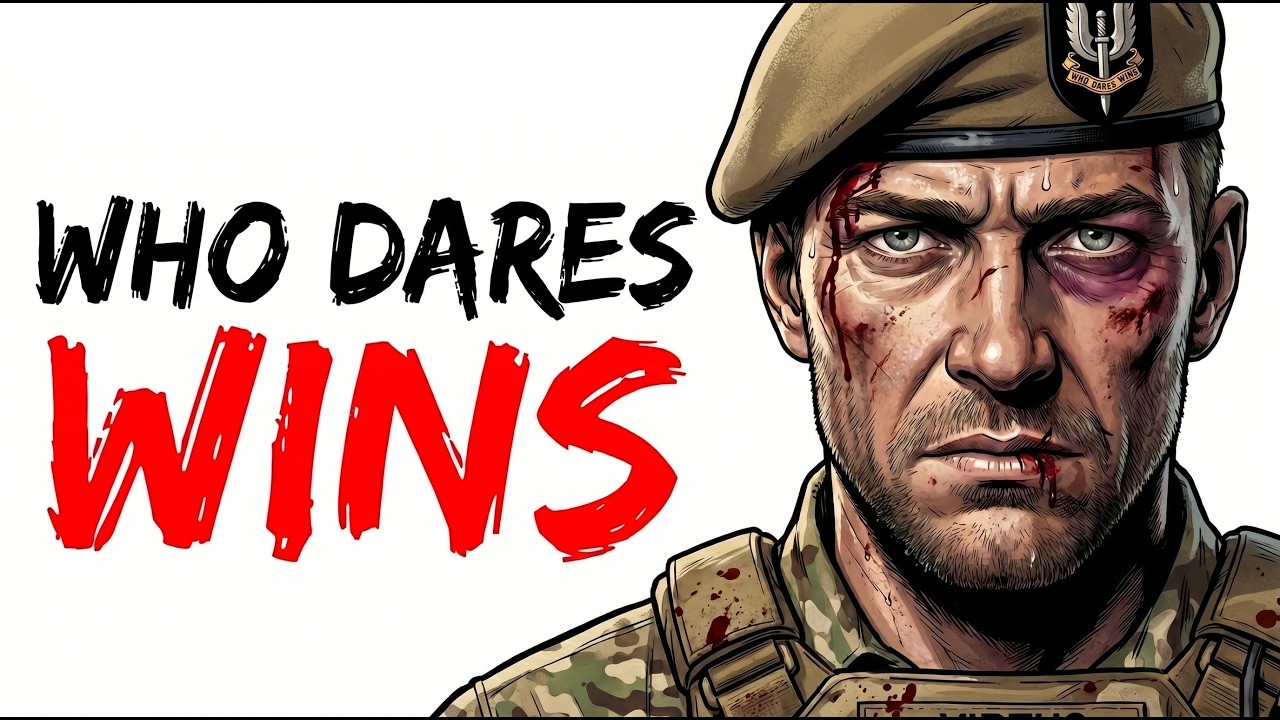 The first step begins not with a grand parade, but a simple, brutal instruction from a staff sergeant in civilian clothes. A map reference is handed over, along with a Bergen packed to 25 kilograms. The order is stark: the Fan Dance, a 24-kilometer route march over Pen y Fan in the Brecon Beacons, to be completed in 4 hours and 10 minutes, in full kit, in the unforgiving Welsh autumn weather.
The wind howls from the northwest as the recruit starts running, the path turning to bog within the first kilometer, the boots pulling with every step. The instructors call it Hills Phase: three weeks of increasing distances, heavier weights, and shrinking time windows, all with zero encouragement. The recruits are assessed constantly, but informed never; every morning, they check a notice board to see if their number remains.
By week two, feet are bleeding inside boots, but the man on the bunk above, a marathon-running para named Granger, weeps quietly on Thursday night. By Friday morning, he is back on the hill, but by Friday evening, his number is gone. The candidate does not weep, unsure if it is strength or the absence of anything left to feel.
On the final day, a 30-kilometer solo navigation is conducted in fog so thick one can see but 4 meters ahead. He reaches the finish point 17 minutes under the cut-off, but the instructor says nothing, marking only in a waterproof notebook. Passing is affirmatively communicated not with a handshake, but with orders for continuation training.
This is the SAS’s first lesson, a step in the climb: survival is rewarded with more of the same.
At 20, the rank of Trooper is earned, a title that holds weight precisely because it is never enough. After passing selection, the soldier moves into the unceasing continuation training, 22 weeks of combat survival, interrogation resistance, and emergency medicine, all taught with a severe pragmatism. The interrogation phase tests him mentally, hooded and sleep-deprived for four days as he yields only name, rank, number, and date of birth.
He is assigned to B Squadron, Boat Troop, and the first specialist course is combat diver qualification at Fort William, where the water of Loch Linnhe is 7 degrees Celsius in February. His instructor’s first lesson is that being comfortable is a liability; you must learn that high risk and high pain are different.
The first operational deployment is a garrison rotation to the Falkland Islands in 1986, not combat, but a long stretch of precise, professional silence. Patrolling the coastline with the threat of a war that never comes, a four-man team watches the empty sea, reinforcing the truth that the majority of the SAS is about long thorns of nothing executed with precision. One night, a patrol partner, Walsh, asks if he ever thinks about the other lads, to which he offers a flat “No.”
It is the encapsulation of the professional patience that keeps a man alive. It is the willingness to live in the monotony that precedes the seconds of chaos that defines the job.
Becoming a Lance Corporal at 24 means everything shifts; he is now responsible for three men. In the SAS there is no partial authority, only total responsibility. In 1990, deployed to the Gulf ahead of the coalition response to the invasion of Kuwait, the patrol is inserted by helicopter into southern Iraq to find a hidden observation post.
 On the second night, a Bedouin goat herd walks through the position, sees them, and then simply walks on, a moment of immense strategic, diplomatic, and deceptive possibility. The decision is made to hold, to assess, and the suppression of any instinct to act on the lurking fever of the compromise was the first test of control.
By 1993, as a Corporal, he commands his own four-man patrol, the smallest unit that was the brainchild of David Stirling in 1941 to function as a self-sufficient combined arms team. The defining trait here is patience and precision, operating in plain clothes in North Ireland conducting close target reconnaissance on suspected Provisional IRA farmhouses. He sits in a pub for 45 minutes, not drinking the Guinness, setting his mind to observe the patterns of a man at a payphone and the cars that pass.
He uses a cover identity for granted, and when a man in his 50s probes his story, he is ready with a real company and a cover weaver; this steadiness is not courage, it is clarity.
The ascent to Sergeant at 31 brings the official role of the operational backbone, the link between intention and execution. Under the shadow of the Dayton Agreement in Sarajevo, the job is not to fight but to offer sustainable security. A convoy carrying medical supplies is stalled after a threat of an unverified checkpoint run by a drunk, a veteran of the war.
The Sergeant decides to talk, they go to the checkpoint, and it is not the weapon but the word that manages the armed 12 men. When a colonel remarks on the ability to manage, the response is humble, the summary is that the hope of the rescue is measure in the seed of the calm that stops the risk.
At 35, as Staff Sergeant, his mission becomes the builders of men, not just the actions. Tasked with the assessment of gender within a selection cycle, the test is to spot the true nature of a candidate. Sergeant Pemberton is not athletic but is one in every condition, a rock that is not performative.
Then comes the operation that defines the Regiment’s credibility, Operation Barras in Sierra Leone. Disaster with an unavenged threat, the 2006 operation, the initial entry and execution is seamless, but the ending is not without cost. One solder lost, and the weight of the loss is metabolized in quiet, not in ceremony, a lesson in enduring.
For the 48 hours, the cleanup and debrief becomes the standard.
Reaching Warrant Officer Class 2 at 39 is a landing on the other side of the table. As Squadron Sergeant Major, the sanctioned authority is assumed over a royal warrant. In Iraq in 2004, the operational cycle has shifted entirely to close quarter ambushes that follow the IED and siege warfare.
 After a raid, a Trooper, Holloway, makes an error that turns him into a fire position. The world is heavier when the logic is reviewed; in a debrief, the precision is held, and the full weight of the event is explained to him, but never destroys him. The mind has shifted; he manages the project but with crucial context, he’s the ideal test case for the art of telling the truth without wrecking the vessel.
The focus is on the mistake, not the man.
The apex of the NCO corps, the Warrant Officer Class 1, is singular. There is only one Regimental Sergeant Major in 22 SAS, the pinnacle of non-commissioned service. In 2007, he is watching the seams of a relentless load show under the pressure of a back-to-back war machine.
There is no visible impairment, but he spots a change in memory and decision condition. He goes to the Commanding Officer with a warrant of fact, not complaint. The data shifts a rotation, a schedule that affects the entire military.
The feedback loop is slow, but the effect is felt. A late evening, a trooper asks when he knows if he belongs. The answer is in the acceptance of responsibility, the shift to not think.
It is the recognition of something.
The end of the non-commissioned path comes at 46, with an unexpected offer: a direct commission to Lieutenant. The acceptance is a new start, a re-earning of respect as he is now, at once, a captain over those who once had his equals. In 2009, in Helmand, he commands a troop operating the working with Afghan commandos.
At the height of a compound breach, his partner freeze, the threat is high, and the instinct is to act. He holds the air for 4 seconds, offers only the words, “Your call.” He yields the agency to the partner, trusting the build.
The compound is cleared with a success, the partnership forged. The 4 seconds cost time with a heavy saving, they invest in a future.
 The final frontier is command. At 50, the Squadron Commander, he stands above the structures he was built to serve. Leading B Squadron, a unit of 64 men, 4 troops, and the performance of maneuvers brings him to Gaza, Iraq, and Afghanistan.
Decision time is the best test. A target pack arrives in 2017, the intelligence is strong, but not definitive. The pressure is to authorize within a time variance.
He reads three times, but the flaw is a single vulnerability in the secondary access point. He sends the intelligence team back to the field, a 40 minute assessment that raises the confidence to authorize. The mission is successful, and he returns home, the margin of the effort was the difference that made the case.
The static is sometimes the better call.
On a day in the autumn, leading the men, he stands in regimental installation to allow a ceremony to hand anniversary awards. A trooper asks him if the medal was worth it. He looks at the man on the edge of his own ultimate test, and answers with a gesture.
The walk out of Stirling Lines is the handover. The Welsh valleys are always dark to them, a sign that more is gathering there. There is a man at the bus depot in Hereford, contemplating the unknown.
The memory of the unknown years has been the essence, and the example of the ultimate line of service. For those who do it, the true battle is internal and longest. The test isn’t one to the next level, it’s the recognition that the biggest, unrelenting reward is to what one has already survived.
It’s not a journey to further status. It’s a lifetime of attention to those positions, and the discipline to pursue only the standard, not the platitude.