Frank DeVita was 17 years old when he dropped the ramp of a Higgins boat onto Omaha Beach, and more than eight decades later the memory of what he saw through that opening still wakes him in the dark. The Coast Guard veteran, born and raised in Brooklyn, New York, has become one of the most searing voices of the D-Day invasion, recounting in vivid and often tearful detail how he lowered the ramp in the first wave and watched the men in front of him cut down before they could take a single step onto French sand.
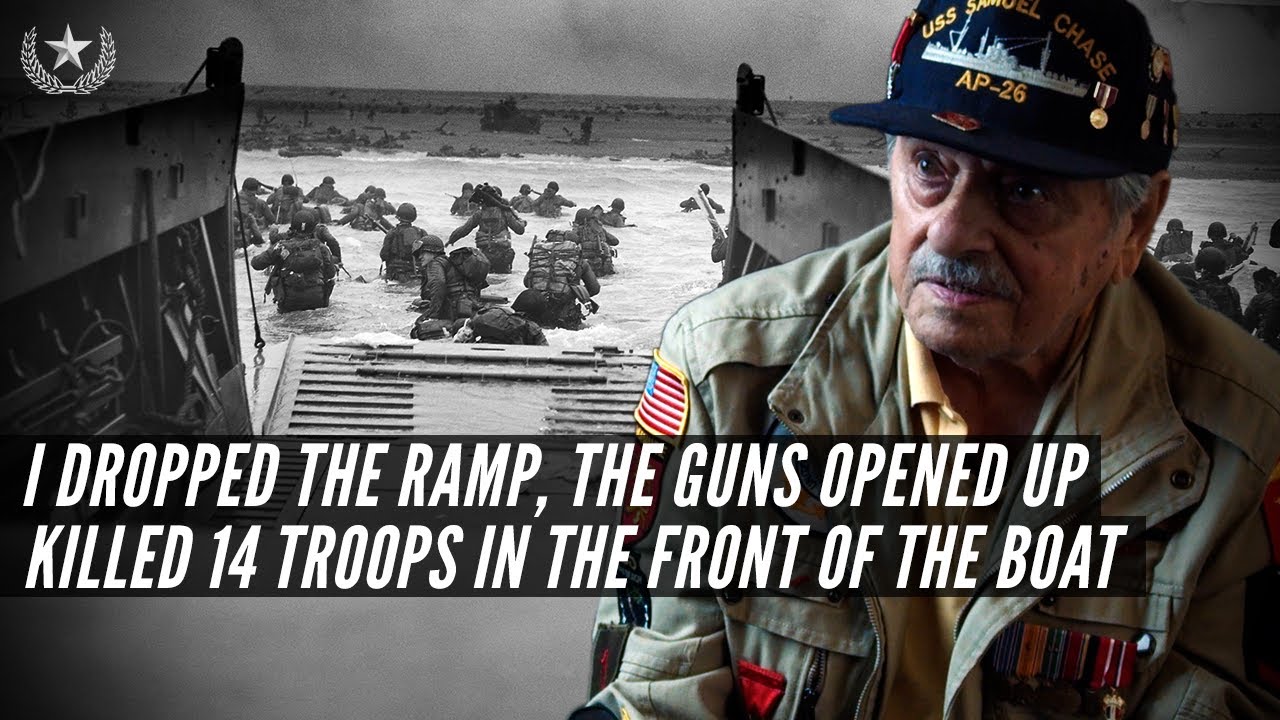
His account, preserved in a widely viewed oral history interview, offers an unflinching window into the bloodiest of the five Allied landing beaches on June 6, 1944. DeVita does not describe himself as a hero. He calls himself a survivor, and he insists the real heroes are the 9,400 young men buried in the cemetery at Normandy that overlooks Omaha Beach.
DeVita was a senior in high school when Japanese forces bombed Pearl Harbor. Like millions of Americans, he felt the pull of duty immediately. Seventeen students from his school left that year, volunteering for the Army, the Navy, the Coast Guard, whichever branch would take them.
DeVita first tried the Army Air Forces, hoping to become a belly gunner, but failed the vision test because of peripheral vision. He passed the Navy’s tests, but was told to come back in six weeks. He did not want to wait.
The Coast Guard recruiter was next door, and that is how a Brooklyn teenager ended up in the amphibious service that would carry him across the Atlantic and into the mouth of the German defenses.
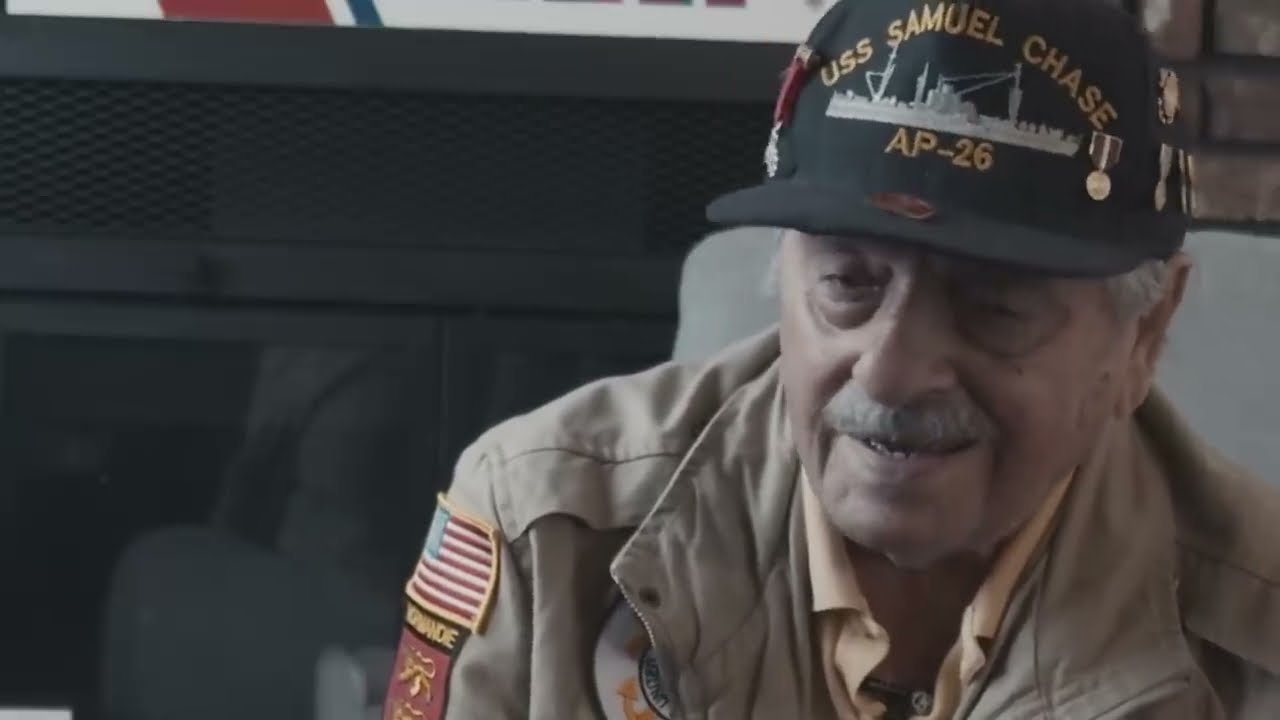
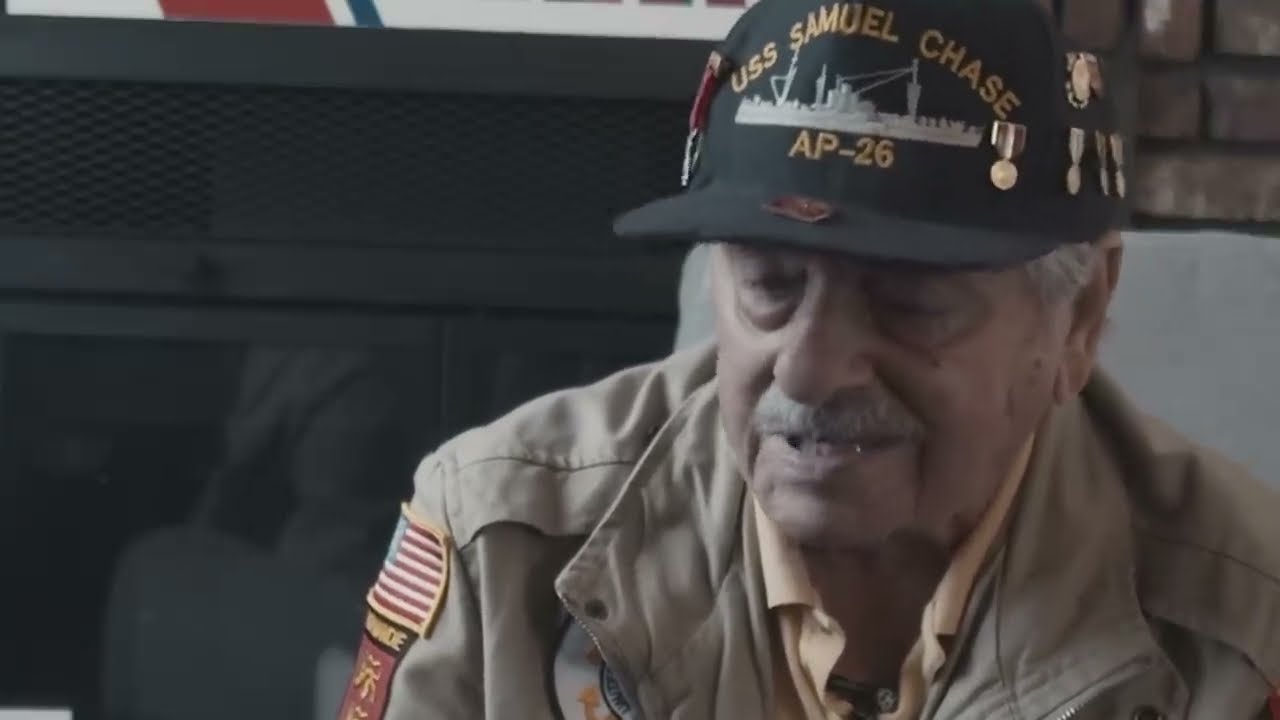
His mother was delighted at first, believing her son would spend the war patrolling beaches. Six weeks after boot camp at Manhattan Beach in New York, he was on his way to Europe. He was assigned to the USS Samuel Chase, a transport ship, where he served as a gunner’s mate in charge of four 20-millimeter anti-aircraft guns on the stern.
But during invasions, his post changed. He was reassigned to the Higgins boats, the flat-bottomed landing craft that ferried troops from the transports to the shore.
The training in England was relentless. DeVita recalls maneuvers day in and day out, including exercises off the Virginia coast near Norfolk. His ship carried 1,200 troops from the 1st Infantry Division, the famed Big Red One.
On the morning of the invasion, the crew made what DeVita still calls a terrible mistake. They fed the soldiers bacon and eggs and everything else they could think of. Anyone who knows anything about going into battle, he says, knows that was wrong.
The Russians used to go into battle with a heart attack and a glass of water. The Americans overfed their troops, and every one of them got seasick.
DeVita remembers being scared, and he is blunt about why. He knew there would be heavy casualties on the beach. Omaha Beach would end up with 2,000 casualties, the worst of the five landing beaches.
The transports stopped 11 miles offshore because the Germans had the 88, a gun DeVita calls the best weapon of the war, with a range of about 10 miles. That distance was good for the transports and terrible for the men in the small boats. It took two hours to reach the beach.
At four o’clock in the morning, the boats were lowered into the water. Twenty-six tank landing craft and additional Higgins boats circled the ship once, a tradition meant to bring good luck, then headed for the French coast. In the darkness and the churning water, some boats struck mines.
Men died before the battle even began.
Inside DeVita’s boat, the mood among the soldiers was almost casual at first. They sang, talked, laughed, and told jokes. They did not realize they were heading to their deaths.
Then the German guns opened fire, and everything changed. The ramp at the front of the Higgins boat was made of two- or three-inch metal, strong enough to stop a rifle or machine gun round. Bullets bounced off it as the boat pushed toward shore.
DeVita knew that eventually he would have to drop it, and that when he did, the boat would be 𝓮𝔁𝓹𝓸𝓼𝓮𝓭.
His job was supposed to be different. As a gunner’s mate, he was meant to man a machine gun on the boat. But three or four weeks before the invasion, the gun was taken away.
He was never told why. Instead, he was given the job of dropping the ramp. It was a task that placed him at the mechanical heart of the landing, the moment when the metal door falls and the enemy fire pours in.
The coxswain, a young man from Brooklyn named Thurman, shouted at him to drop the ramp. DeVita could not hear him over the roar of the two big diesel engines at the back of the boat. The coxswain shouted again.
DeVita froze. He did not want to die, and he knew that once the ramp went down, he would be a target. Then the coxswain cursed at him and ordered him again.
He had no choice. He dropped the ramp.
The machine guns opened fire immediately. About 14 or 15 troops in the front of the boat were killed. DeVita was about three-quarters of the way back, near a crack where the ramp was lowered and raised.
He compares his position to a basketball pick. The soldiers in front of him absorbed the bullets. Two stragglers, men who did not want to die, stayed with him instead of moving forward.
They believed they would be safer near the back. Instead, they drew fire.

One of those men was about four feet away. He was hit and his stomach was ripped open, his intestines spilling out. He survived.
The other was about two feet away, a redheaded kid. A machine gun round tore off his helmet and part of his brain. He cried out for help, over and over.
DeVita had no morphine. He had nothing in his kit to ease the boy’s suffering. The only thing he had was the Lord’s Prayer.
He began to pray, “Our Father, who art in heaven,” and never finished. The boy slumped down. DeVita knew he was going to die.
He reached down and squeezed his hand so that he would not die alone. Then the boy was gone.
DeVita’s voice breaks when he describes him. He was just a little boy, he says. Just a little boy.
The coxswain then ordered him to raise the ramp because the boat was taking flak from the hills. DeVita pulled the handle. The ramp would not move.
He pulled again. Nothing. He put it on automatic.
Still nothing. About 15 men were still alive on the boat, and his job was to protect them with the ramp. He could not see the ramp because of the dead bodies piled in front of him.
He had to do something he did not want to do. He crawled over the dead, asking their forgiveness as he went. “I’m sorry, I’m sorry,” he said, moving across the bodies of men who had been alive minutes earlier.
When he reached the ramp, another man appeared, a crew member or a soldier, DeVita never knew which. Together they discovered why the ramp would not rise. Two dead soldiers were on it, and their weight, combined with the weight of their 90-pound backpacks, had jammed the mechanism.
DeVita pointed to the belt of one of the dead men, and the two of them pulled the bodies, step by step, back into the boat. Then he raised the ramp. Without the extra weight, it came up on its own.
The Germans, DeVita says, were diabolical. They knew how to 𝓀𝒾𝓁𝓁. Along with the mines and machine guns, they had planted mines atop telephone poles.
The mines were not screwed or nailed in place. They simply sat there. If a boat tapped a pole, the mine would fall into the boat.
The Americans were terrified of the telephone poles.
The coxswain turned the boat around and headed back through the minefields toward the transport. But on the way, they spotted a white hospital ship with a large red cross. Instead of returning to their own ship, they went to the hospital ship because they had many badly wounded men aboard.
A ramp extended from the back of the hospital ship, and two men jumped down into the Higgins boat. They did something DeVita and his crew could not do. They peeled the dead off the wounded to reach the men who were still alive.
DeVita does not remember how many they saved. He was in shock. But he remembers the wounded being taken aboard the hospital ship, where there were wheelchairs, morphine, and proper care.
He was happy they would live.
The two hospital men jumped back to their ship, and the Higgins boat pulled away and headed for the Samuel Chase. A sled, like a large garage door, was lowered from the back of the transport. The dead and wounded were placed on it and cranked aboard.
Then a klaxon sounded, calling for one man from each boat to come up and be interviewed, so that the information could help the next wave.
DeVita climbed aboard the sled and went up. He was interviewed by a Navy officer and a large Army man with hands as big as baseballs. The Army man did something DeVita never forgot.
He tapped him on the shoulder and said, “It’s all right. It’s all right, son.” It felt like a hug.
Then the man taught him something that would save his life. The German machine guns could only fire for so long before they overheated and had to change barrels. When they changed barrels, that was the moment to drop the ramp.
DeVita asked how much time he would have. Two to three seconds, the man said. That is what he did.
By then, his boat had already pulled away. He waited for another boat. He stood on deck alone because no one would come near him.
 He stank to high heaven. His uniform was covered with blood and vomit. And he asked himself a question that would define the rest of his service.
Did he want to go back into the belly of the beast, into the face of the machine? He did not want to die. He thought about it for a while.
Then he told himself that if he did not go, they would send a replacement. Suppose the replacement got killed. How could he live with himself?
He made up his mind. He went back. Fourteen more times.
Fifteen trips in all.
The Germans owned the beach that day, not the Americans. They were cutting down troops from the hills and from the ground. The men on the beach had no chance.
It was flat, like a pool table, with no place to hide. You cannot dig into sand. They were being killed so fast.
DeVita was in shock.
He remembers the destroyers. Five were along the beach, but the lead ship was the USS Frankford. Other destroyers, including the USS McCook, came in at the same time.
The Frankford did something DeVita had never seen before. The captain was willing to sacrifice his ship and his men to help the troops on the beach. He turned his destroyer sideways, exposing his beam to the German 88s, so that all four of his five-inch guns could fire at once.
The Germans were hidden in the grass and foliage on the slope, invisible to the Americans. The Frankford put round after round from its five-inch guns into the German positions and took them out. Right then, DeVita says, the battle began to change.
By the fifth wave, the Americans had run out of troops from the 1st Division. They began taking men from the 29th Division, which had landed at Utah Beach and was thought to be clean. The 29th swung over to help the 1st Division.
But the boats were no longer carrying only soldiers into the beach. They began taking the dead and wounded off it. DeVita weighed 125 pounds.
He could not lift a man by himself. Two or three men worked together to get the wounded into the boat. He does not know how many wounded they carried to the ship, but he knows they took 308 dead bodies.
He knows because his friend John Ola, a quartermaster, was responsible for the body bags and dispensed 208 of them.
When DeVita’s boat was brought up again, he did not recognize it. It looked like Swiss cheese. The machine guns had decimated it.
He asked himself how anyone could have lived on that boat. He went aboard his ship and waited. The captain, a man named Fresh, understood what the crews had been through.
After they had taken the dead and wounded aboard, they headed back to Southampton, their home base. DeVita wanted to be alone. An announcement came over the loudspeaker that there were cheese sandwiches and coffee for the crews that had gone into the beach.
Everyone went down to the mess. DeVita did not want to go. He stank, and he did not want anyone to see him cry.
He walked back to his 20-millimeter guns and sat down. He reflected on what had just happened. “What the hell just happened,” he said to himself.
“And how come I’m still alive? How come I’m still alive?”
It was late, perhaps 10 or 11 o’clock. He was alone. He looked around for his mates.
No one was there. But when he turned around, he saw the dead. All 308 bodies, stacked like cordwood.
He started to cry. He cried himself to sleep. The next morning, when the ship pulled into Southampton, someone tapped him on the shoulder.
It may have been Lieutenant Gruber. “DeVita, get up,” the man said. “We have to unload the dead, and then the wounded.”
That, DeVita says, is the end of his story. That is the end of his story.
But it was not the end of his war. His home base was Glasgow, Scotland, and after Southampton, he made two more invasions. He went back to France for the invasion of southern France, and then to the Philippines.
He earned three battle stars. The Philippines was not as bad as D-Day, he says, but after the horror of two invasions in France, he thought he was going home. Then the loudspeaker announced that they should get their gear in order because they were going to the Pacific.
He did not make the actual invasion of the Philippine Islands, but his ship brought replacement troops in, and they received credit for an invasion. From there, they went to Okinawa.
 DeVita was at Okinawa when the kamikazes came. The Japanese suicide planes were sinking ship after ship. They did not want his transport.
They wanted the destroyers and the aircraft carriers. He was there twice during the kamikaze attacks. Then the ship headed back to Pearl Harbor.
On the way, it struck a coral reef and put a 17-foot gash in the hull. The crew closed the hatches where the water was coming in, and the ship tilted. Two destroyers escorted them to the Philippines, where a dry dock was available.
They waited their turn, and the ship was patched. They could not repair the entire hole, so they left and started for Pearl Harbor, with the destroyers still in escort. After more repairs, they headed home to the United States and arrived in San Diego.
DeVita tells a story about going absent without leave to see a friend near the shipyard, asking him to call if the ship came out of dry dock. The train did not leave from San Diego, so he took a bus to San Diego and then to San Francisco, where he boarded a troop train called the Silver Streak. It was full of Army and Navy men, many of them wounded.
He had no papers, but thankfully no one asked for them. He ran the mile and a half from the subway to his house. His father was at work, his brother was away, and his younger brother was in school.
He went next door to a woman named Mrs. Barsher and asked where his mother was. She was at the church, rolling bandages.
He ran another mile and a half to the church, opened the door to a large gymnasium, and faced a circle of women. His mother had her back to him, but the women looking at him began to gesture. His mother turned around, saw him, and fainted.
He thought he had killed her.
He was home for two weeks. His father, a veteran of the First World War, asked to see his papers. DeVita admitted he did not have any.
His father drove him to Grand Central Station and put him on the first train back. While they waited for the federal train, two military police officers approached. DeVita’s father walked over to them and said, “You see that kid over there?
That’s my son. He’s AWOL, but he’s going back.” He threw his own son on the train.
The MPs told DeVita that if he got on the train, nothing would happen. If he did not, they would pull him in. He got on the train.
He went back to the dry dock and back to his ship.
Seventy-six years later, DeVita relives D-Day every day of his life. Not the other battles. D-Day was the worst.
When he left after the 15th trip, there were 2,000 dead bodies on the beach. He is asked what he is most proud of. He says he helped get rid of Hitler, and he was there because the Germans were so bad.
But he refuses the label of hero. “I’m not a hero,” he says. “A lot of people call me a hero.
I’m not a hero. I’m a survivor.” He points to the cemetery in Normandy, overlooking Omaha Beach, where 9,400 young men are in the ground.
“Those are my heroes,” he says. “They gave their life for their country. They were my heroes.”
His message to those who ask whether the war ever ends is simple and devastating. “If you think it’s over, it’s never over.” He was asked by an interviewer who served in Iraq whether he thinks about the war often.
The interviewer described a medic whose vehicle was blown up, and how the war never leaves you. DeVita agreed. “You leave the war, but the war never leaves you.”
He is proud of what he did. He probably did more in the three years he was aboard that ship than a lot of people ever did. Two invasions in France, the Philippines, Okinawa, and then Japan.
He was in the occupation of Japan for about eight months. While he was there, a little Japanese woman about five feet tall walked up to him, bowed, and said she wanted to thank him. He asked why she was thanking him.
The war was over. “It’s the big people who make wars,” he says, “not the common people. They’re the ones who get hurt.”
DeVita’s account is not only a record of one man’s war. It is a reminder of what the first wave at Omaha Beach cost, and of the ordinary Americans who found themselves in the belly of the beast. He was a 17-year-old from Brooklyn who failed a vision test, joined the Coast Guard because the Navy made him wait, and ended up dropping the ramp on the deadliest beach of the deadliest invasion in history.
He crawled over the dead asking forgiveness. He held the hand of a redheaded boy who called for help he could not give. He went back 14 more times because he could not live with himself if a replacement died in his place.
And when it was over, he sat alone among 308 bodies and asked how he was still alive.
He still does not call himself a hero. He calls himself a survivor. The heroes, he says, are the ones who never came home, the 9,400 buried above the beach where he lowered the ramp.
They are the ones he thinks about. They are the ones he remembers. And on the anniversary of D-Day, as the world marks the courage of the Greatest Generation, Frank DeVita’s voice carries a warning and a witness.
The war never leaves you. And the men who died at Omaha Beach, the little boys who never had a chance, must never be forgotten.