For decades, Yul Brynner was one of the most unforgettable figures in Hollywood.
The shaved head.
The deep voice.
The commanding presence.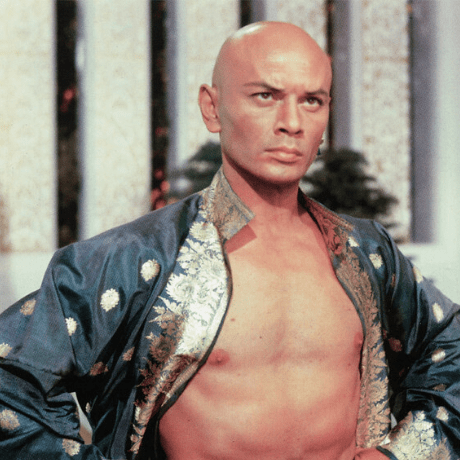
From the moment he appeared on screen, audiences knew they were watching someone completely different.
He became famous as King Mongkut in The King and I, a role he performed thousands of times and turned into one of the most iconic characters in musical theater and film history.
But behind the powerful image was a much more complicated man.
A performer filled with contradictions.
A person who carefully created his own mythology while carrying private struggles, painful memories, and a constant desire to reinvent himself.
Years after his death, his daughter Victoria Brynner helped reveal more about the person behind the legend.
The story was not simply about a Hollywood star.
It was about a man who spent his life searching for identity, control, and meaning.
Yul Brynner was born in 1920 in Vladivostok, Russia, although many details about his early life remained surrounded by mystery.
Throughout his career, Brynner often told different versions of his childhood, adding to the sense of intrigue that followed him.
He created an image of himself as someone from everywhere and nowhere.
A man with a mysterious past.
But behind that carefully crafted story was a childhood marked by instability.
After his father left the family, young Yul experienced uncertainty and major changes.
Those early experiences shaped the personality he carried into adulthood.
 Independent.
Determined.
Always in control.
Before becoming a Hollywood star, Brynner explored many different paths.
He worked as a performer, photographer, and musician before finding his place in acting.
His unusual appearance immediately made him stand out.
At a time when Hollywood often favored traditional leading men, Brynner’s shaved head and intense presence made him unforgettable.
Then came the role that changed his life.
The King and I.
Originally a Broadway production, the musical became one of the defining performances of Brynner’s career.
His portrayal of King Mongkut was powerful, intelligent, and commanding.
The role earned him an Academy Award for Best Actor when he appeared in the 1956 film adaptation.
But Brynner did not simply play the character.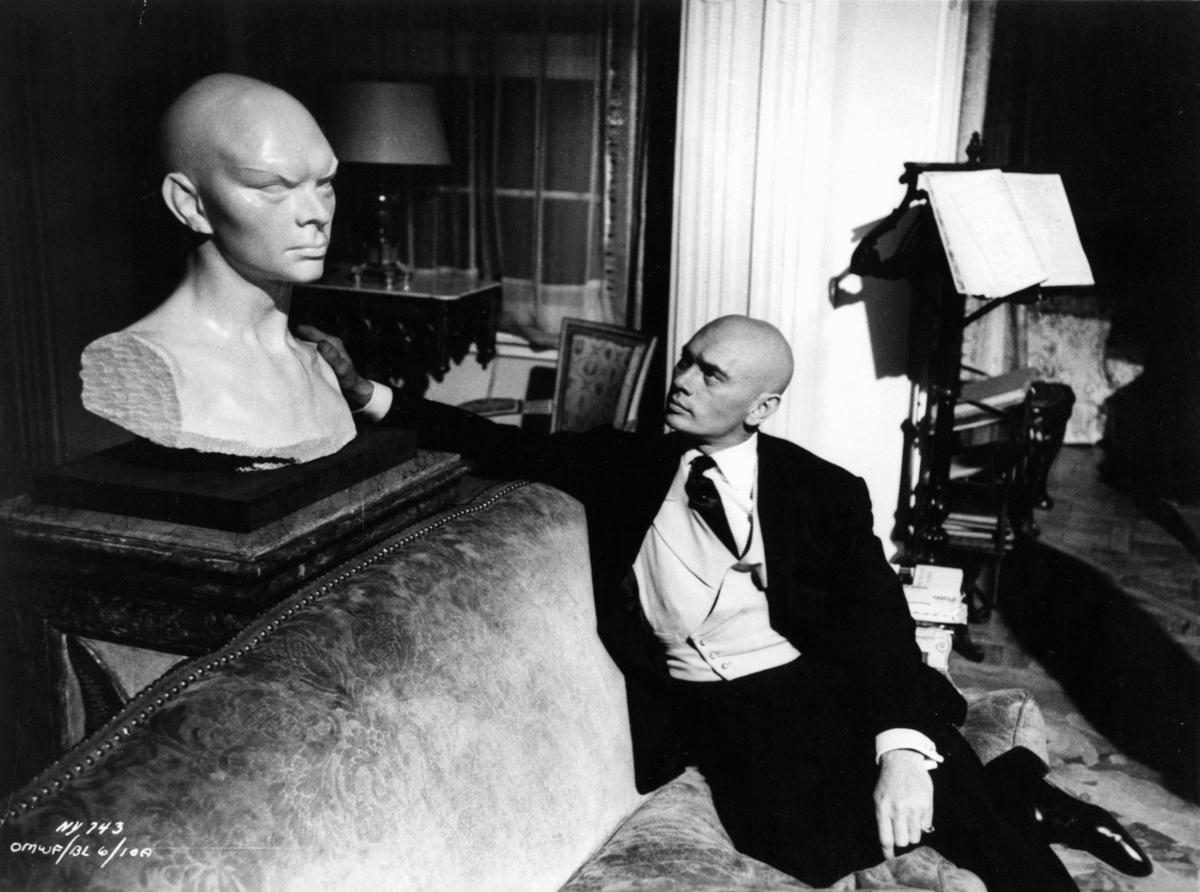
He became the character.
He performed the role more than 4,600 times on stage, creating one of the longest-running relationships between an actor and a single role in entertainment history.
However, the same confidence that made him a star also created challenges.
Brynner developed a reputation for being demanding and intensely focused.
Some colleagues described him as difficult.
Others admired his dedication and professionalism.
He expected excellence from himself and from the people around him.
His strong personality sometimes created tension with co-stars, including Steve McQueen during the filming of The Magnificent Seven.
The two actors reportedly had very different personalities and approaches to their work.
Brynner was experienced and commanding.
McQueen was young, ambitious, and determined to make his own mark.
Their professional rivalry became one of the most discussed stories from the production.
Brynner also worked with legendary performers such as Ingrid Bergman, and his relationships within Hollywood were often described as intense.
He was admired.
He was respected.
But he was not always easy to work with.
Beyond his public image, Brynner lived a life filled with many interests.
He was not only an actor.
He was also a talented photographer, a skilled cook, and someone deeply interested in philosophy and intellectual discussions.
Those who knew him personally often described a person far more complex than the intimidating figure audiences saw on screen.
His private life also contained aspects that he kept away from public attention.
Like many celebrities of his era, he carefully controlled what the public knew about him.
His personal relationships and identity were subjects he rarely discussed openly.
For much of his life, he maintained a carefully protected private world.
But perhaps the greatest challenge of his final years came from illness.
Brynner was diagnosed with lung cancer after decades of smoking.
Rather than hiding the consequences, he decided to use his experience to warn others.
Before his death in 1985 at the age of 65, Brynner recorded a powerful public service announcement for the American Cancer Society.
In the message, he directly addressed his smoking-related illness and encouraged people to avoid the habit that had contributed to his condition.
The recording became one of the most memorable moments of his later life.
The man who had spent decades portraying strength and authority used his final public message to show vulnerability.
It revealed another side of Yul Brynner.
Not the king.
Not the movie star.
Just a human being trying to leave behind something meaningful.
Yul Brynner’s legacy remains fascinating because he was never only one thing.
He was a Hollywood icon.
A Broadway legend.
A photographer.
An intellectual.
A man who created mystery around himself.
But he was also someone shaped by hardship, ambition, and the need to control his own story.
His daughter’s reflections remind fans that behind every legendary performer is a person with struggles and contradictions.
The greatest stars are not always the simplest people.
Sometimes their complexity is what makes them unforgettable.