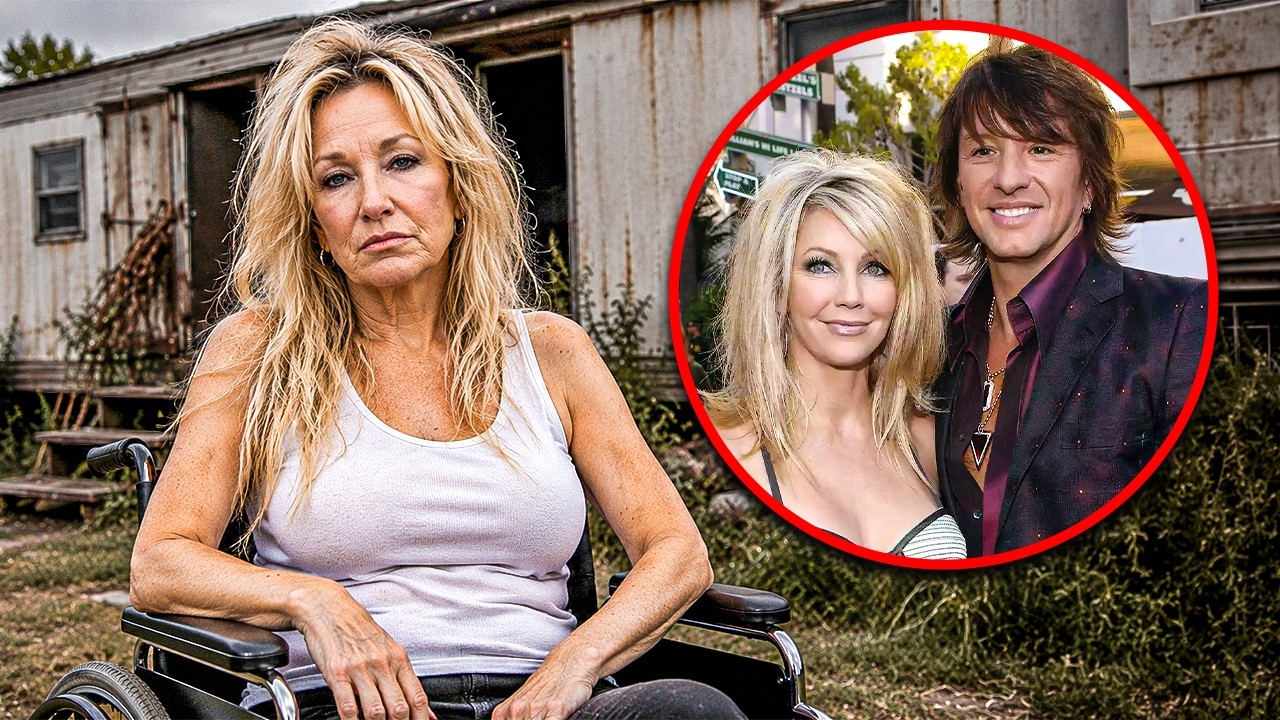
Heather Locklear, the actress who once defined 1990s television as the ruthless Amanda Woodward on Melrose Place, has spent nearly two decades in a very different kind of spotlight—one that began the moment her 11-year marriage to Bon Jovi guitarist Richie Sambora ended on Christmas Day 2005.
The divorce filing, dated December 26, 2005, marked a fracture that would send Locklear into a spiral of anxiety, depression, prescription medication dependency, and repeated hospitalizations. Now, at 64, she has emerged with one year of sobriety, a renewed acting career, and a story that reveals far more about resilience than tabloid headlines ever captured.
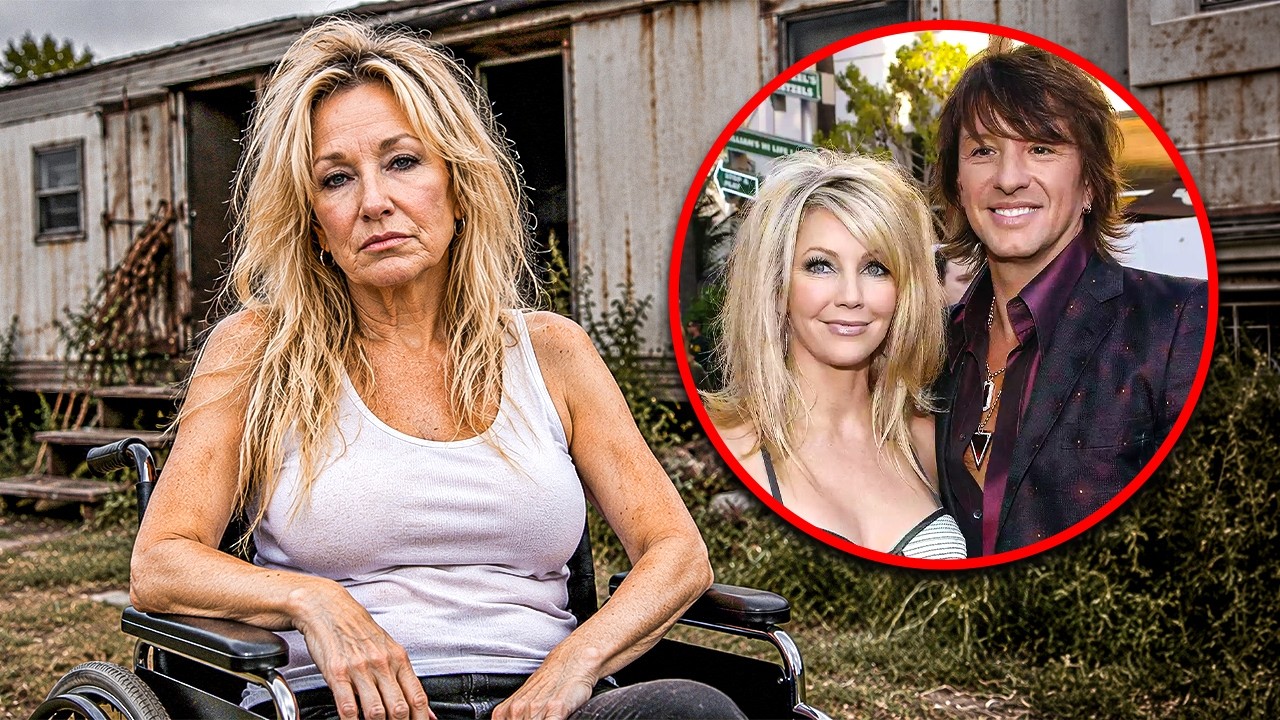 Locklear’s rise was meteoric. By her early 20s, she was a regular on both T. J.
Hooker and Dynasty. Then, in 1993, Aaron Spelling brought her to Melrose Place for what was supposed to be a short arc. She turned the struggling spin-off into a phenomenon, playing Amanda Woodward for all seven seasons—yet was credited as a “special guest star” the entire time.
Her marriage to Sambora in 1994 seemed stable. They had a daughter, Ava, in 1997. But the separation date—December 26, 2005—remains shrouded in silence.
Neither has fully explained what happened that Christmas. What followed was a public unraveling.
Within months, Sambora was photographed with Denise Richards, then going through her own divorce from Charlie Sheen. The tabloids exploded. Locklear’s private heartbreak became magazine fodder.
She began taking medication for anxiety and depression after filing for divorce in February 2006.
 By March 2008, a friend called 911 mistakenly believing Locklear was suicidal. Her representative denied it. That summer, she entered an inpatient psychiatric facility.
In September 2008, she was arrested for DUI involving prescription medication, not alcohol.
The pattern continued: hospital stays in 2010 and 2012, then the darkest chapter in 2018. In February, she was arrested for domestic violence against her then-boyfriend Chris Heisser and for battering three deputies. Her daughter Ava, then 20, begged her to go to rehab.
Locklear agreed. Ava left with her father to get distance.
In June 2018, Locklear was arrested again, heavily intoxicated, kicking an EMT. Hours after posting bail, she was hospitalized for a suspected overdose. The woman who once saved a television show was now a headline in every newspaper.
 Then came the gesture that still surprises people. Richie Sambora, blindsided by the divorce and humiliated in the press, could have stayed silent. Instead, he helped arrange medical specialists for Locklear and their daughter.
And he went up in a fighter jet with Locklear’s initials painted on the side—a public, dramatic show of support.
Sambora had already proven his priorities. In 2013, he left Bon Jovi mid-tour because Ava needed him. “He had every reason to walk away,” the transcript notes.
“Instead, he did something so unusual that people still talk about it.”
Locklear’s recovery was not linear. In November 2018, she was placed on a psychiatric hold. She reached a plea deal on battery charges, entering treatment and probation.
 In January 2019, she ended her relationship with Heisser and moved in with her elderly parents—a move that may have saved her life.
On April 21, 2020, she posted on Instagram that she had been sober for one year. “Even when she had pains, she did not have to become one,” she wrote. She later reunited with Heisser, who proposed.
Her family supported her happiness.
In 2024, she returned to acting with a lead role in a feature about the Ruby Franke case. In 2025, she appeared on a podcast, laughing and talking about praying for her family, her daughter’s happiness, and her dog’s health. “She wanted God to guide her toward the person she was supposed to be with,” the transcript says.
The question remains: Was Heather Locklear never the same after the divorce? The timeline shows the visible collapse began around 2006. But the roots ran deeper—decades of fame, two failed marriages to rock stars, and the pressure of being judged by an industry that never fully credited her.
What is clear is that Locklear spent 15 years breaking down where everyone could see her. And the people around her—her daughter, her ex-husband, her parents—kept showing up. Today, she is 64, engaged, sober, and working again.
The woman who saved Melrose Place has finally saved herself.