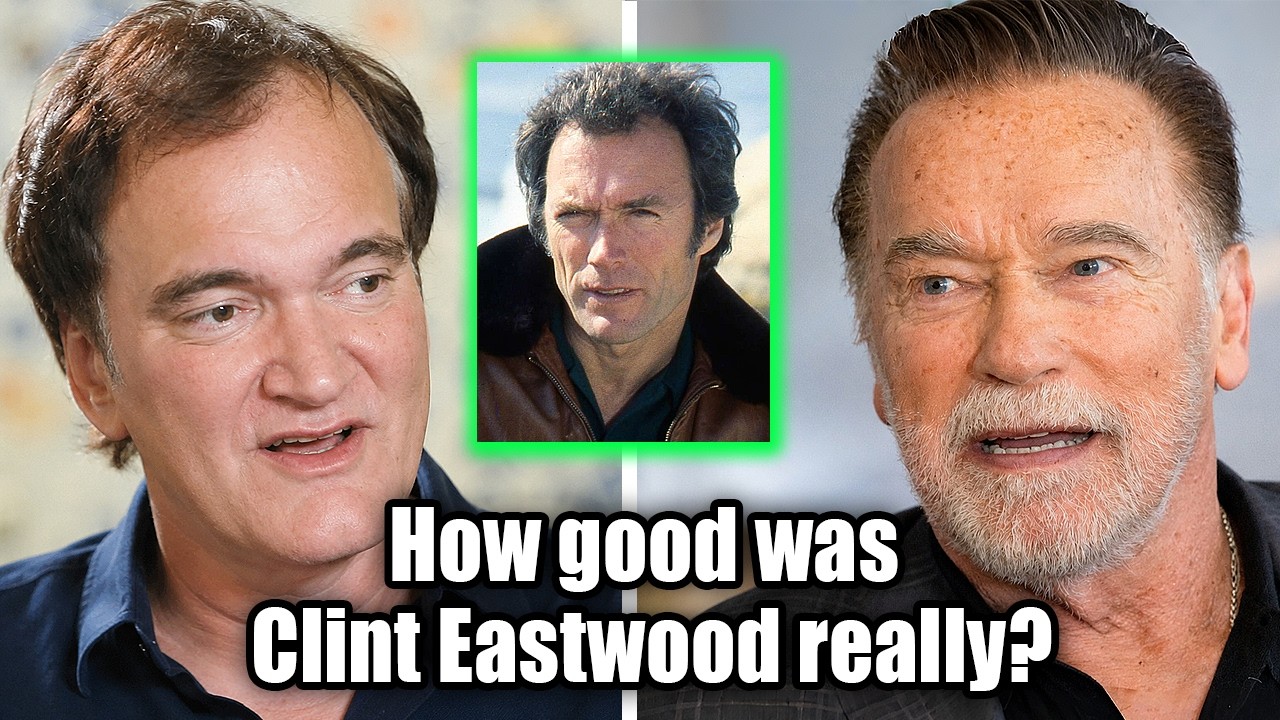
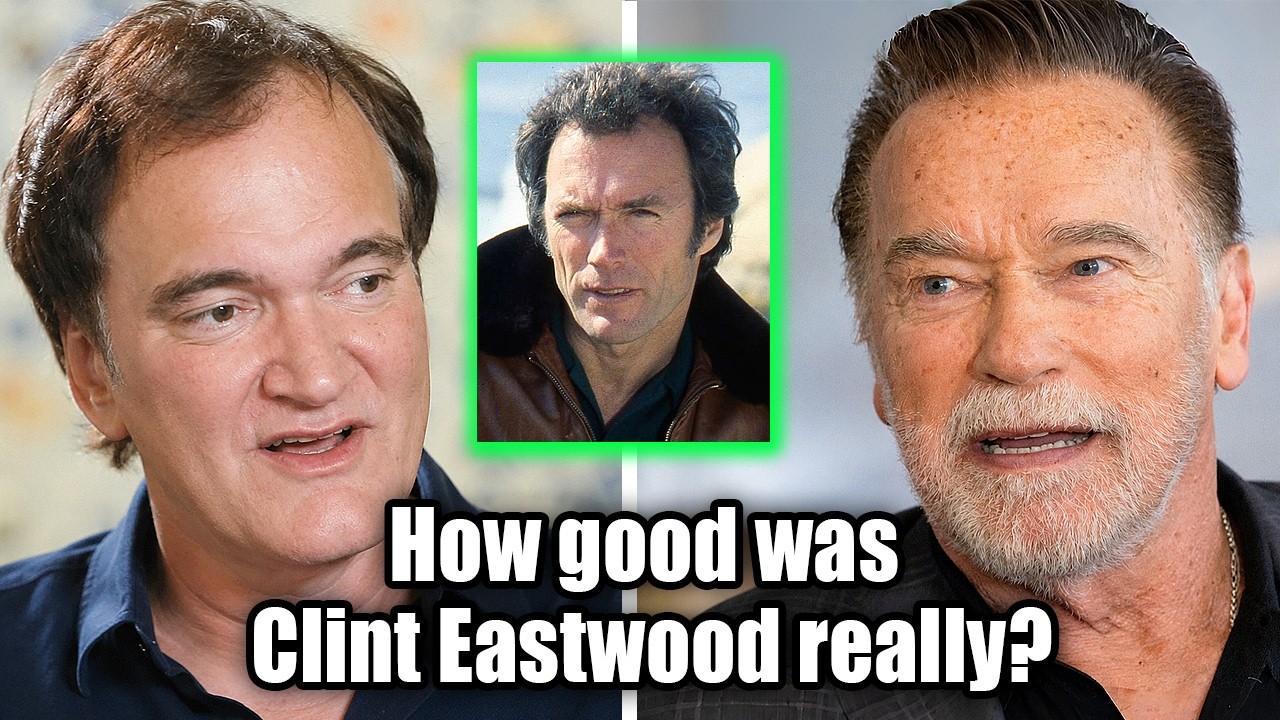
The legend of Clint Eastwood, a man who has shaped American cinema for over six decades, is not built on grand speeches or endless takes, but on a quiet, almost dismissive efficiency that has left an indelible mark on every actor and director who has ever shared a set with him. At 96, he remains a figure of mythic proportions, a living monument to a bygone era of filmmaking, yet those who have worked closest with him describe a man who operates with a Zen-like calm, a minimalist approach that has produced some of the most celebrated films in history. The question that has haunted critics and fans alike—how good was Clint Eastwood really?
—is answered not by his own words, but by the collective testimony of those who have witnessed his process firsthand.
 The stories begin with a simple, almost jarring fact: Clint Eastwood does not direct like anyone else. He does not shout “Action!” or “Cut!”
Instead, he offers a quiet “Okay, go,” and the scene unfolds. This is not a stylistic quirk, but a lesson learned from the dusty plains of spaghetti westerns, where a sudden yell would spook the horses. The result is a set that breathes, a space where actors are not jarred from their concentration.
One actor recalled the shock of his first take on an Eastwood film, where he had prepared multiple interpretations of a scene, only to hear the director say, “Cut, print, move on.” When he asked for another take, Eastwood’s response was legendary: “Why? You want to waste everybody’s time?”
The lesson was brutal and immediate: trust your first instinct, or don’t bother.
This philosophy extends to every aspect of production. Eastwood works with a skeletal crew, sets are pre-lit, and scenes are often wrapped by lunch. Actors arrive expecting the most decorated filmmaker alive—a man with two Best Picture Oscars, two Best Director Oscars, and a career that has outlasted every single peer he started with—and instead find a man who seems barely interested in making the movie.
Yet, this disinterest is a masterclass in trust. He hires people he trusts, stays out of their way, and goes home early. One actor described the experience as “playing jazz,” a process where you simply trust the story and the audience.
Eastwood himself once told a young actor, “Don’t think too much. Just do. Just feel it.”
 It is a philosophy that has worked for 60 years, producing films like “A Fistful of Dollars,” “Dirty Harry,” “Unforgiven,” and “Million Dollar Baby.”
The stories of his legendary efficiency are almost too numerous to count. Matt Damon once famously asked for another take, only to be met with the same question: “Why you want to waste everyone’s time?” Kevin Costner, on the set of “A Perfect World,” failed to show up for some coverage, and Eastwood simply grabbed a stunt double, put him in Costner’s wardrobe, and filmed the scene.
When Costner protested, Eastwood’s reply was a masterclass in directness: “We’re making a movie. What are you doing?” Leonardo DiCaprio, on the set of “J.
Edgar,” asked for another take, and Eastwood’s response was to turn off the lights and announce lunch, leaving the star sitting in the dark. Yet, for all this apparent ruthlessness, there is a deep respect for the craft. One actor, who asked for more takes on a $40 million biopic, was granted three of five requests, a rare concession from a man who believes in the power of the first take.
The most revealing stories, however, come from the personal moments. One actor recalled a dinner at Nobu with Eastwood and his then-wife Dina. The conversation turned to a hairdresser who had made a crude claim about Eastwood’s anatomy.
Dina, with a mischievous smile, told the story, and the actor, mortified, asked, “Don’t we have any secrets?” Eastwood, without missing a beat, replied, “He was an inch off.” The room erupted in laughter, and the actor realized that the icon was also a man with a sharp, dry wit.
 Another actor, who had always dreamed of being a cowboy, received a call from Eastwood asking him to “ride along” on a project. The phone call itself was a surreal experience, with the actor stammering about how much he liked the script, only for Eastwood to deadpan, “You like it so much, I guess I’ll have to read it.”
The most profound lesson, however, came in a simple piece of advice. When asked about the secret to aging, Eastwood offered four words that have become a mantra for those who know him: “Never let the old man in.” It is a philosophy that has kept him directing films into his 90s, a man who, at 80, lamented that he was “just a kid.”
His latest film, directed just two years ago, is a testament to a will that refuses to yield. The actors who have worked with him describe a set that is “conducive to doing good work,” a place where the day does not have to be a 17-hour drudgery. One actor, who went from a Robert Eggers film with 30 takes to an Eastwood film with one, described the transition as “a wonderful thing,” a trust in the process that allows the actor to simply be.
The critics who spent decades arguing that Eastwood wasn’t acting at all, that he found one face in 1964 and rented it out for the next 60 years, were silenced by “Unforgiven” in 1992. That film, which he directed and starred in, took the genre he had built everything on and pulled it apart, playing a killer who couldn’t stand himself. It won Best Picture and Best Director at 62.
Then he did it again 13 years later with “Million Dollar Baby.” The argument that he was a one-note actor became impossible to sustain. Yet, even now, the actors who work with him do not describe a genius.
They describe a man who is a “believer in the story,” a man who trusts the audience, a man who puts it out there and moves on.
 The legacy of Clint Eastwood is not just in the films he has made, but in the way he has made them. He has proven that a film can be a work of art without being a labor of agony. He has shown that a director can be a leader without being a tyrant.
He has demonstrated that a career can last 60 years without burning out. The stories of his one-take wonders, his quiet sets, and his dry humor are not just anecdotes; they are a blueprint for a life in cinema. As one actor put it, “He treats us like horses,” meaning he does not startle them, he does not overwork them, he simply lets them run.
And in that freedom, they have produced some of the most memorable performances in film history.
The question of how good Clint Eastwood really is has been answered by the people who know him best. They do not speak of his genius, but of his trust. They do not speak of his effort, but of his ease.
They do not speak of his ego, but of his humor. He is a man who, at 96, has outlasted everyone, and he has done it with less visible effort than anyone in Hollywood history. The stories of his career are not just a testament to his talent, but to his character.
He is the man who spilled coffee in a scene and left it in because it was real. He is the man who gave a young actor the advice to “just feel it.” He is the man who, when asked about a hairdresser’s crude joke, delivered the punchline with a straight face.
He is Clint Eastwood, and the legend is real.