The laughter stopped long before the heart did. Tim Conway, the comedic genius who spent five decades reducing audiences and castmates to helpless tears of joy, spent his final years in a silence so profound that his own daughter described him as almost entirely unresponsive, a shadow of the man who once turned the simplest sketch into an unforgettable moment of television history.
Kelly Conway, Tim’s eldest daughter, has now revealed the heartbreaking truth of her father’s last days, painting a portrait of a man whose extraordinary vitality was systematically erased by a devastating neurological condition. The man who could make Harvey Korman break character with a single improvised line could no longer speak, could no longer walk, and could no longer recognize the family he had devoted his life to entertaining.
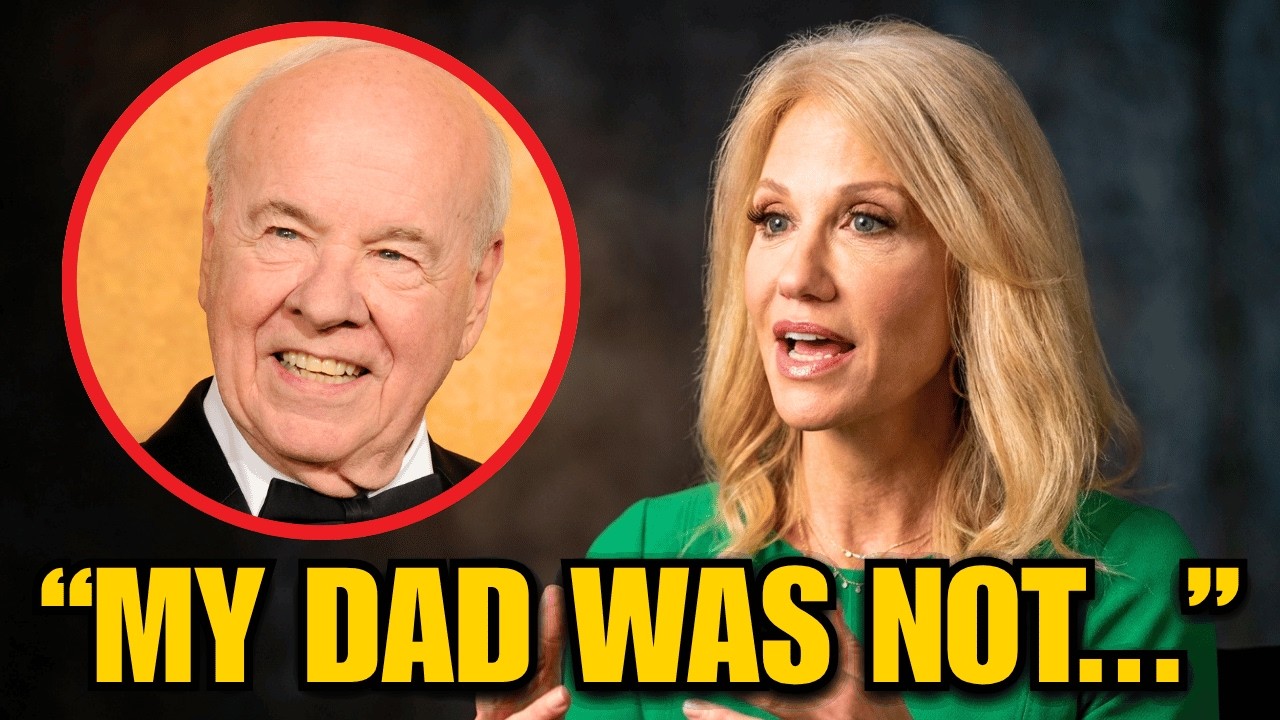 The diagnosis was normal pressure hydrocephalus, or NPH, a condition in which cerebrospinal fluid builds up in the brain’s ventricles, creating pressure that mimics the symptoms of Alzheimer’s disease. For a performer whose entire career was built on physical control, precise timing, and the ability to hold an audience with nothing but a well-placed pause, the disease was particularly cruel. It attacked the very instruments of his craft.
Tim Conway was born on December 15, 1933, in Willoughby, Ohio, a small town northeast of Cleveland. From the very beginning, there was something in him that pushed toward humor. He grew up with undiagnosed dyslexia that caused him to misread words aloud in school, turning serious classroom moments into accidental comedy.
His classmates laughed, and something clicked. If people were going to laugh, he decided, he might as well lean into it on purpose.
After graduating from Bowling Green State University and completing a tour of duty in the United States Army, Conway returned to Ohio and landed a job at a local television station in Cleveland. Working alongside broadcaster Ernie Anderson, he began developing comedic bits that would air during movie intermissions. The pair built a small but loyal audience, and Conway was sharpening the instincts that would eventually carry him to national television.
His break came through an unlikely connection. Rose Marie, the actress known for her role on The Dick Van Dyke Show, happened to see Conway’s local television work and recognized something worth developing. She arranged for him to audition for the Steve Allen Plymouth Show.
Allen was so impressed that he gave Conway a regular spot on the program in the early 1960s, and it was during this period that Allen also advised him to change his name from Tom to Tim.
From The Steve Allen Show, Conway moved into his first major television role. The ABC sitcom McHale’s Navy ran from 1962 to 1966 and starred Ernest Borgnine as the title character. Conway played Ensign Charles Parker, a completely incompetent officer whose well-meaning blunders provided the show’s comic engine.
Audiences loved watching Parker fumble through the simplest assignments while Captain Binghamton reached ever greater levels of exasperation.
When McHale’s Navy ended in 1966, Conway attempted several solo television projects, none of which lasted. He launched Rango, a Western parody, in 1967. It was canceled quickly.
He returned with The Tim Conway Comedy Hour in 1970. Same result. His car license plate famously read 13 WKS, a self-aware joke about the fact that most of his solo television series were canceled within 13 weeks of premiering.
But the greatest showcase of his career arrived not as a starring role, but as a supporting one. The Carol Burnett Show premiered on CBS in 1967 and ran until 1978. Conway began appearing as a frequent guest during the early years before becoming a full regular cast member in 1975.
What made Conway extraordinary on the show was not just his ability to perform scripted material well, but his genius for improvisation within a live audience taping environment.
His primary target and greatest foil was Harvey Korman. The two men formed a comedy partnership that became one of the most celebrated in television history. Korman was tall, classically trained, and gifted with precise comic timing.
Conway was short, deceptively nondescript, and operating almost entirely on instinct. When Conway went off script, Korman would fight desperately to maintain his composure. He almost never won.
Several Conway sketches became iconic pieces of American television comedy history. The dentist sketch, in which Conway played a novice dentist who repeatedly injected himself with Novocain rather than his patient, left Korman so incapacitated by laughter that he could not complete the scene. Another enduring character was the oldest man, a creeping, shuffling elderly gentleman who moved at the pace of cold molasses and delivered each line with the maximum possible delay.
 His work on The Carol Burnett Show earned him four Emmy Awards, three as a performer and one as a writer. He also won a Golden Globe Award during his time with the program. After the show ended in 1978, Conway and Korman toured together for years in a live comedy show called Together Again.
The tour drew large audiences and demonstrated that the chemistry between the two men was not confined to a television studio.
By the mid-1980s, Conway had figured out something that most performers of his generation had not. The home video market was exploding, and consumers were actively looking for content to fill their VCR players. In 1987, he created a character named Dorf, a short-statured, heavily mustachioed sports enthusiast with a thick Swedish accent.
The trick was purely physical. Conway performed on his knees with shoes attached to them, creating the illusion of a character who stood perhaps four feet tall.
The first Dorf video, Dorf on Golf, sold close to half a million copies at around $30 each through mail order and video store distribution. Conway had bypassed Hollywood entirely, produced the video himself, and delivered it straight to the living rooms of middle America. More Dorf videos followed, and Conway had essentially invented a direct-to-consumer comedy model two decades before the internet made such distribution commonplace.
In 1999, Conway began voicing a character on a new animated program that would introduce him to an entirely different generation of fans. Nickelodeon’s SpongeBob SquarePants featured Conway as Barnacle Boy, the elderly sidekick to Mermaid Man, voiced by his old McHale’s Navy co-star Ernest Borgnine. For children born in the 1990s and early 2000s, Tim Conway was not primarily the man from The Carol Burnett Show.
He was Barnacle Boy.
Sometime around 2010, people close to Tim Conway began noticing changes. He was in his late 70s and still active professionally, but something was shifting. His balance was not quite right.
Conversations would wander. His recall slipped in ways that went beyond ordinary age-related forgetfulness. The signs were gradual, the kind that can easily be explained away in the early stages because they do not look alarming in isolation.
The eventual diagnosis was normal pressure hydrocephalus. The symptoms it produces look almost identical to Alzheimer’s disease. Memory loss, difficulty walking, confusion, loss of bladder control.
Many patients with NPH are initially misdiagnosed with Alzheimer’s or another form of dementia because the presentations overlap so completely. The critical difference is that NPH can sometimes be treated through surgical placement of a shunt.
Kelly Conway later revealed in her 2021 memoir, My Dad’s Funnier Than Your Dad, that she and her siblings watched their father’s condition progress with growing alarm. The man who had filled every room he entered with energy and laughter was becoming increasingly unreachable. The disease was working methodically, taking things away one at a time, and there was nothing anyone could do to hurry a diagnosis or a treatment plan.
By 2018, Conway’s condition had deteriorated to the point where he required full-time professional care. He had become almost entirely unresponsive. He could not communicate reliably.
He could not make decisions about his own welfare. According to court documents that would later become public, a court-appointed attorney who visited Conway to assess his condition reported that he showed no ability or willingness to speak and no apparent awareness of what a conservatorship even was.
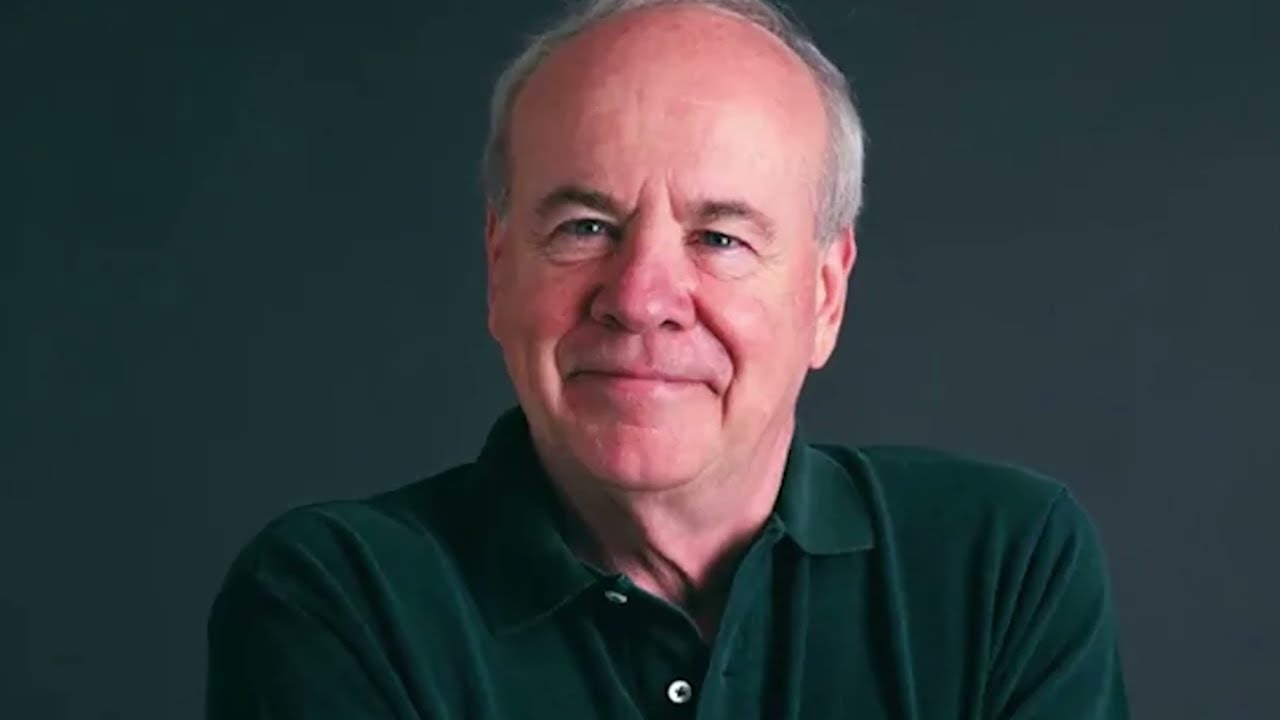 The medical situation created a legal question with no easy answer. Someone needed to hold legal authority over Tim Conway’s medical decisions. His second wife, Charlene Fusco Conway, whom he had married in 1984, had been his primary caregiver throughout his decline.
She had power of attorney and healthcare directives designating her as his caregiver, documents that Conway had signed before his condition deteriorated.
Kelly saw it differently. She and her brothers were watching their father’s condition progress, and they had specific concerns about the medical decisions being made on his behalf. The shunt procedure that could potentially alleviate the symptoms of NPH had, in Kelly’s account, been recommended by neurologists, but had not been approved by Charlene.
From Kelly’s perspective, a treatment option that doctors believed was worth attempting was being blocked.
In August 2018, Kelly Conway filed court documents with the Los Angeles Superior Court seeking conservatorship over her father. The filings laid out her case in direct terms. She stated that Tim Conway could not properly provide for his own personal needs, including food, clothing, and physical health.
She described him as almost entirely unresponsive. She also alleged that Charlene was planning to move Conway to a facility she believed was inferior.
A week after the initial filing, the court granted Kelly a temporary restraining order that prevented Conway from being moved to any new facility. Charlene responded firmly. She denied that she had ever planned to move Conway to an inferior facility.
She argued that she was already providing for all of her husband’s needs and that no conservatorship was necessary. She pointed to the power of attorney and healthcare directives that Conway had executed while he was still capable of making such decisions.
In September 2018, while the case was still proceeding, Tim Conway underwent brain surgery. The surgery was related to his NPH, involving a shunt procedure to attempt to address the fluid buildup. Following the surgery, he was released to the Beachwood Post-Acute and Rehabilitation facility on October 15th for recovery.
Judge Robert Wada rejected Kelly’s petition for a temporary conservatorship at this point, reasoning that the immediate medical concerns she had raised were addressed by the hospitalization and surgery.
In March 2019, People magazine reported that the dispute had been settled through an agreement between Kelly and Charlene. The Los Angeles court found clear and convincing evidence that a conservatorship of Tim Conway was necessary. Charlene was appointed as Conway’s conservator, having been found suitable and qualified by the court.
Kelly consented to the appointment.
Kelly’s publicist, Roger Neal, released a statement to USA Today following the resolution. He said that Kelly was very happy with the outcome after more than a year of fighting to keep her father safe. The statement also confirmed that Kelly retained the right to visit her father and to meet with his healthcare professionals if she wished.
Kelly later addressed the conservatorship battle directly in her memoir. She described the experience as a mess, a word that captured the emotional and logistical chaos of having family grief turn into courtroom procedure. She had acted out of love for her father and deep concern about the medical decisions being made on his behalf.
 Charlene had acted out of love for her husband and a belief that she was the appropriate person to make those decisions.
On May 14th, 2019, Tim Conway died at a care facility in Los Angeles. He was 85 years old. The cause of death was listed as complications from normal pressure hydrocephalus.
According to reports from his publicist Howard Bragman, Conway’s wife Charlene Fusco and his daughter Jackie were at his side when he passed.
Kelly Conway released a statement to Fox News later that day. She spoke for herself and her six siblings, including Tim Jr. , Patrick, Jamie, Cory, and Seanne.
The statement was direct and grief-filled and reflected the complexity of the years that had just passed. Kelly said her father was at peace. She said the love he had given his family and the laughter he had given the world would never be replaced, but would be remembered forever.
Carol Burnett responded the same day. She told reporters that she was heartbroken. She described Conway as one in a million, not only as a brilliant comedian, but as a loving human being.
She said she cherished the time they had shared both on screen and off, and that he would remain in her heart forever. Vicki Lawrence, who had worked alongside Conway for the full run of The Carol Burnett Show, described working with him as pure joy.
Tim Conway was buried at Westwood Village Memorial Park in Westwood, California. In lieu of flowers, his family requested that donations be made to the Lou Ruvo Brain Center at the Cleveland Clinic in Las Vegas, a choice that reflected the nature of the disease that had shaped his final years and the hope that research might eventually give other families a different outcome.
Kelly’s memoir, published in 2021 through Lions Press, gave the public its most complete picture of what Tim Conway’s final years actually looked like from the inside. She wrote about a childhood spent in a house full of laughter, about a father who brought the same creative energy home that he brought to the television studio, about the ways he used humor as a genuine expression of love rather than simply a professional tool.
But the memoir also spoke directly about the later years, about watching a man of extraordinary vitality slowly lose his ability to speak, to walk, to recognize the people he loved. It spoke about the courage it required to file legal papers against a stepmother, knowing the relationship damage that would follow. It spoke about the loneliness of fighting for someone who could no longer fight for himself.
Tim Conway’s legacy is ultimately held in the recordings. The sketches from the Carol Burnett Show have been watched millions of times on YouTube and streaming platforms by people who were not born when the show originally aired. The dentist sketch, the elephant story, the oldest man shuffling across a studio stage while Harvey Korman disintegrated into helpless laughter beside him.
These moments have proven genuinely timeless.
The story of his final years, the disease that took his voice, his mobility, and eventually his life, and the family conflict that surrounded his care, adds a dimension to the public legacy that cannot be ignored once it is known. It does not diminish what he achieved. If anything, it makes the achievement feel more valuable.
He gave enormous amounts of joy to the world while carrying a private life that was complicated and ultimately very hard.
What normal pressure hydrocephalus does to a person is particularly cruel in the context of who Tim Conway was. The disease attacks, among other things, the ability to move and to speak. For a man whose entire life’s work depended on physical performance, on the precision control of a shuffling gait, on the split-second decision to add one more beat before a punchline landed, losing control of his own body was not simply a medical loss.
It was the erasure of the very instrument through which he had communicated with the world for 60 years.