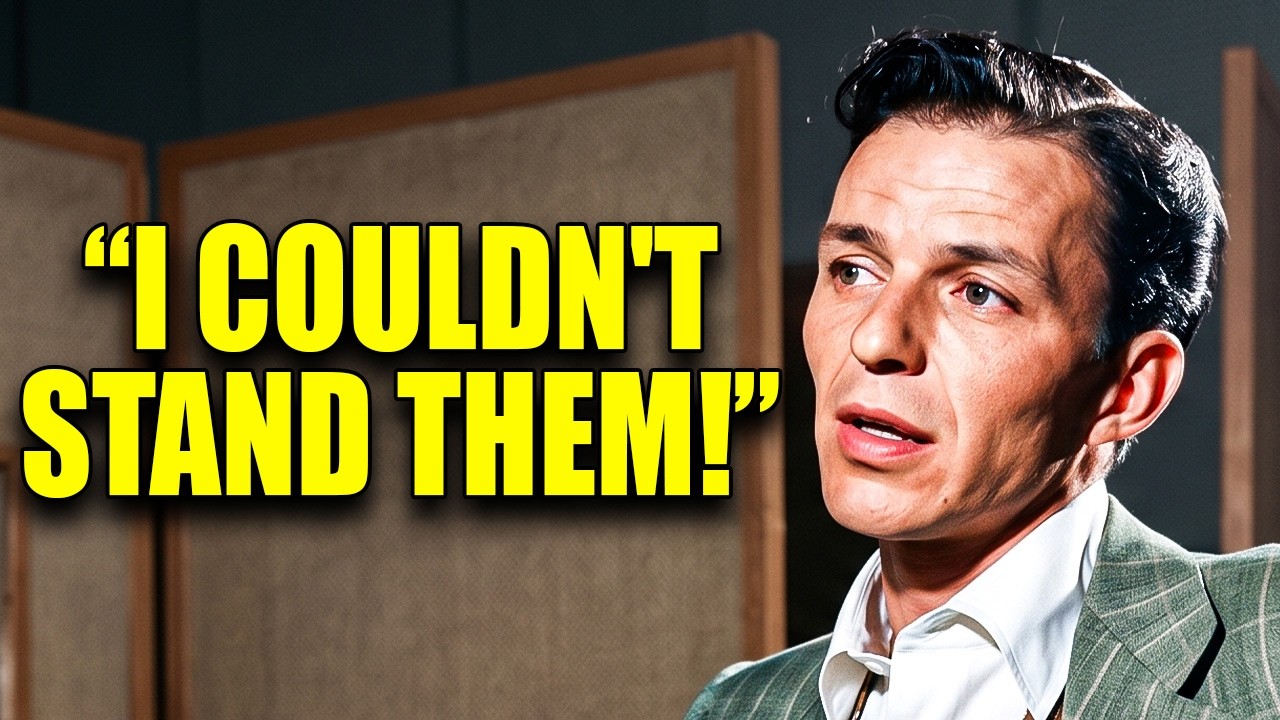
Frank Sinatra, the most powerful man in Hollywood, was famous for lifting careers with a single phone call —and destroying them just as quickly. Yet few knew that one of his closest brothers, Peter Lawford, spent more than two decades under a silent sentence of exile,never forgiven until Sinatra’s final breath. -a punishment reserved for a man who had once shared his life, his secrets, and his ambitions. The bond between Sinatra and Lawford began in the 1940s, when both were rising young stars in the movie capital.
While Sinatra charmed the world with his voice, Lawford brought the polish of an original British aristocrat. Their unlikely chemistry soon made them inseparable in elite entertainment circles, and by the mid-1950s, Lawford was an indispensable core member of the legendary Rat Pack, alongside Sinatra, Dean Martin, and Sammy Davis Jr. The biggest turning point came in 1954, when Peter Lawford married Patricia Kennedy, the younger sister of John F. Kennedy, a rising young politician.
Sinatra, hungry for elite recognition and political power, saw in Lawford a perfect bridge to the White House,eturned his closest friend into his official intermediary with the Kennedy family. Thiswas a symbiotic relationship: Lawford secured his position within his wife’s powerful clan, while Sinatra gained access to the highest corridors of American power. During the 1960 election campaign, Sinatra mobilized enormous resources to support Kennedy, donating money and organizing lobbying performances, with Lawford standing beside him at every turn. By the time Kennedy was elected president, Sinatra believed he had reached the pinnacle of recognition, and their friendship seemed unbreakable.
They appeared together in films like Ocean’s 11 and shared private vacations, secrets, and absolute loyalty-that core value both claimed to live by. But in March 1962, a single political decision shattered everything. Sinatra invested more than $40,000 upgrading his Palm Springs residence, building a helipad, installing communication systems, and preparing a suite for Secret Service agents, all to host President Kennedy during his California tour. The event was supposed to be the milestone of his political career.
However, FBI Director J. Edgar Hoover had submitted secret files to Robert Kennedy, the Attorney General, proving Sinatra’s links to organized crime figures, including Sam Giancana. Robert Kennedy fiercely opposed the president staying at the singer’s house, fearing the associations would become a political vulnerability. The task of delivering this news fell to Peter Lawford, who was pushed into the agonizing position of telling his closest friend that Washington had changed the plans.
Instead of staying at Palm Springs, Kennedy diverted to the estate of Bing Crosby-a supporter of the opposition party, which only deepened the humiliation. When Sinatra received the call from Lawford, he fell into an extreme rage. According to witnesses, he took a sledgehammer and personally smashed the newly built helipad, pouring all his hatred onto the friend he felt had betrayed him. To Sinatra, Lawford had chosen loyalty to politics over brotherhood, and had lacked the courage to protect his honor.
He had mobilized millions of dollars for Kennedy’s election, only to be sidelined once power was secured. Sinatra immediately cut off all contact with Lawford, declaring thename would never appear in his life again. The previous absolute trust turned into a ruthless determination to destroy his old brother’s career. He ordered his staff and associates to eliminate all traces of Lawford, canceled joint projects, and pressured casinos in Las Vegas to blacklist him.
Other Rat Pack members, pressured by Sinatra, were forced to minimize contact with Lawford, shattering the bond of the most powerful artist group in America. The punishment escalated. In 1963, Sinatra removed Lawford from the Rat Pack film 4 for Texas, replacing him instantly. Next, in Robin and the Seven Hoods, Lawford’s intended role was transferred to Bing Crosby.
Sinatra’s influence was so vast that casinos refused to sign contracts with the actor, completely freezing his live performance career. In 1966, Lawford suffered another blow when his marriage to Patricia Kennedy ended, stripping away his last political protection. Alone amid hostile surroundings, Sinatra threw an grand 50th birthday celebration in New York with a guest list of the world’s most powerful figures-but Lawford’s name was conspicuously absent, an unmistakable public message that he had been terminated. For years, Lawford struggled to find quality roles, his image declining from A-list celebrity to small projectshis psychology spiraling into alcohol and stimulant abuse that rapidly destroyed his health.
Throughout the ’70s, he repeatedly sent letters and made calls hoping for forgiveness, but Sinatra maintained absolute silence, his staff blocking everyattempt at contact. Businesses linked to Sinatra received secret instructions not to cooperate with Lawford, deepening the financial stalemate around his life. Even his attempts to pivot to film production failed, as every project faced difficulty finding investors. The name Lawford became a symbol of bad luck in Hollywood.
On December 24th, 1984, Peter Lawford died at Cedars-Sinai Medical Center in Los Angeles, just after turning 61, from liver and kidney failure following years of addiction. He spent his final years living privately, appearing rarely in public,eturning to his family for support. Sinatra received the news immediately but offered no public condolences,sentno flowers, and maintained his stance of non-forgiveness until his former brother was gone. His cold reaction caused conflicting currents of opinion in Hollywood: some saw the upholding of rigid principles, others saw excessive cruelty toward a man who had passed away.
Later, declassified FBI files provided a more objective look. The data revealed that Lawford had actually made efforts to persuade the Kennedy family to stick to the planned Palm Springs visit, but his voice carried no weight. He was merely a victim caught between two giant forces: the White House and the power of Frank Sinatra. Modern analysts view Sinatra’s decisionto direct the entirety of his punishment onto his best friend as an act of misplaced anger, whose consequences also affected the psyches of other Rat Pack members, making later reunions never quite complete.
Until his death in 1998, Sinatra never once publicly mentioned Peter Lawford’s name positively. The feud between them is now regarded as one of the harshest severances in American entertainment history, a lasting lesson on how politics and personal honor can incinerate the strongest friendships. Today, researchers and Lawford’s family have worked to re-evaluate his role as an important connecting figure rather than the cause of the conflict, helping restore his image in popular culture history.
Lawford’s legacy, however, remains overshadowed by the massive shadow of rejection-and the public often still remembers him as the man expelled from the Rat Pack.