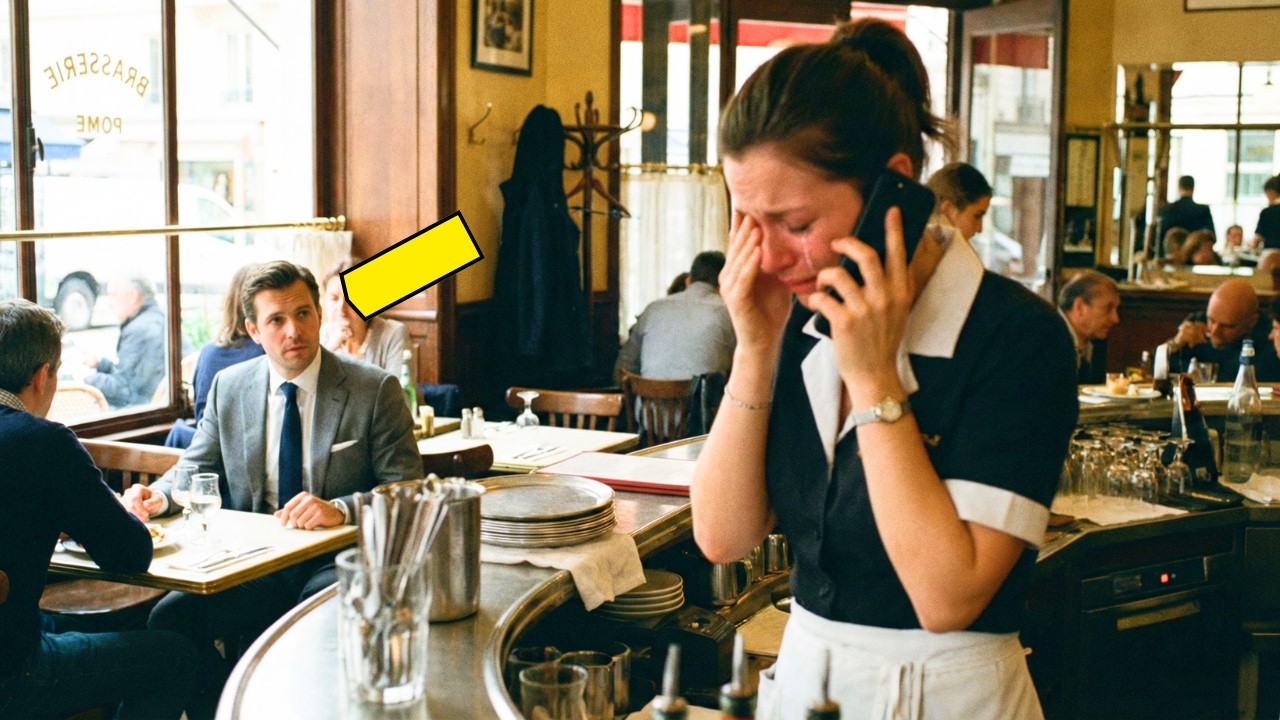
The fluorescent lights in the ER waiting room had been flickering for forty minutes, and I was the only one who seemed to notice. I sat hunched in a plastic chair, holding a cup of coffee that had gone cold, still in the clothes I’d thrown on at 2 a. m. when the pain in my side got too sharp to ignore.

My husband had called it a cramp. “Babe, you always catastrophize. ” He’d driven me anyway, I’ll give him that. The intake nurse took my insurance card, my ID, my co-pay, and told me someone would be with me shortly.
That was an hour ago. My husband had gone to move the car, said the parking structure was full, and he’d find street parking a few blocks away. He kissed my forehead and told me to text him when they called my name. I never saw him again that night.
At first, I thought something had happened to him. I sent three texts, then five. I called twice, and it went straight to voicemail—not the kind that rings first, but the kind that means the phone is off or on airplane mode. I sat there, hand pressed against my lower right side, the pain building in slow waves, and told myself there was an explanation.
They took me back around 4 a. m. A doctor pressed on my abdomen in a few places, and her face did that thing faces do when they already know the answer and are figuring out how to tell you. Appendix.
They needed a CT scan to confirm, but she was almost certain it had to come out tonight. I told her my husband wasn’t here yet. She said they’d need payment information before surgery. I handed her my insurance card again.
She left. Twenty minutes later, a woman in a gray blazer came in instead of the doctor. She had a tablet and a practiced neutral expression. She sat beside my bed and angled the screen toward me.
My insurance had been cancelled, effective ten days ago. There was an outstanding balance of over $18,000 from a previous hospital visit—a minor procedure three months earlier that I thought had been covered. I stared at the numbers. “Is there another form of payment?
” she asked. I pulled up the banking app with shaking fingers. The joint account showed $43. Our savings account, the one we’d been building for four years, the one that had held almost $30,000 in January, showed zero.
I couldn’t speak. The pain in my side had gotten so sharp I could feel it in my teeth. “Ma’am,” the woman said gently, “we’re required by law to provide emergency stabilization, but for the surgical procedure—” “I understand,” I said, because I did, and that was the worst part. She left to get a supervisor.
I lay there in that narrow bed, thinking about my husband’s voicemail, the savings account, and ten days ago when he’d come home late smelling like someone else’s perfume. I’d told myself I was imagining it, the way I’d been telling myself that for most of the past year. The supervisor was a man with reading glasses pushed up on his forehead and the tired look of too many overnight shifts. He explained my options.
They could stabilize me and refer me to a county facility. The wait there was typically four to six hours. He said it like he was reading from a script, because he probably was. That’s when the curtain moved.
I expected a nurse, or the woman with the tablet coming back to try another angle. Instead, a man I had never seen before walked in. He was maybe sixty, with silver hair and the kind of posture that comes from decades of standing in rooms where people expected things from you. He wore a dark coat over a dress shirt, no tie.
He looked completely out of place in an ER at 4:30 a. m. , and yet somehow he looked like he belonged there more than anyone else. He looked at me for a long moment, and his face did something I wasn’t prepared for.
It crumpled slightly at the corners of his eyes, the way people look when they’re seeing something that hurts them. “Excuse me,” the supervisor said. The man turned to him. “I’ll cover the balance and any additional costs for this patient’s care.
” He pulled a card from his breast pocket and handed it over. “Run whatever authorization you need. I’ll wait. ” The supervisor looked at the card, and something shifted in his posture.
He excused himself without another word. I was alone with this stranger. “I don’t know you,” I said. It came out smaller than I meant.
“No,” he said. “You don’t. ” He sat down in the chair beside my bed, the one the woman with the tablet had used, and folded his hands. “But I’ve known about you for a long time.
”
The surgery took just under two hours. My appendix had been hours from rupturing. The surgical resident who checked on me afterward told me I was lucky I’d come in when I did. A few more hours, and we’d be having a very different conversation.
I woke up in recovery with an IV in my arm and a throbbing ache in my side that was already better than what I’d been living with all night. My mother-in-law was not there. My best friend, who lived forty minutes away and would have driven through a hurricane for me, didn’t know I was here. I hadn’t called anyone.
I hadn’t had the chance. The man in the dark coat was sitting in the chair by the window when they moved me to a room. He stood up when they wheeled me in. “You’re still here?
” I said. “I thought someone should be. ” His name was Roland. Roland Ashby.
He said it simply, like it was a name I might recognize. I didn’t, at first. “Why are you here? ” I asked.
“Why did you—” I gestured vaguely at everything, the room, my arm, the surgery that had just happened and apparently been paid for by a complete stranger. He looked at me for a long moment. Then he said, “Because your mother was my sister, and I’ve been looking for you for twenty-seven years. ”
The thing about receiving news like that is that your brain doesn’t process it the way you’d expect.
I didn’t cry. I didn’t say that’s impossible. I just lay there with the IV dripping something into my arm, and I looked at him and said, “That’s not my name. ” He said, “I know what name you grew up with.
I know who raised you. ” He paused. “I also know that your birth mother’s name was Christine Ashby, and that she died in a car accident when you were fourteen months old, and that before she died, she had been my sister for thirty-two years. ”
My mother, the woman who raised me, had told me I was adopted when I was eight.
She’d said my birth mother was very young and couldn’t take care of me. She’d said there was no other family. She’d said it in the way she said everything—matter-of-factly, without cruelty, but without room for follow-up questions either. I hadn’t asked many.
I was eight, then twelve, then seventeen, then twenty-four, getting married in a backyard in Ohio, and it seemed too late to start asking questions about a woman I’d never known. Roland told me things over the next two hours that rearranged everything I thought I understood about my own history. Christine hadn’t been a young woman who couldn’t cope. She’d been twenty-eight, finishing a graduate degree, and she’d left me with a neighbor for a weekend while she attended a conference in another city.
The car accident happened on a Sunday afternoon on an icy overpass outside Pittsburgh. She never made it home. The neighbor called the number Christine left, and when the social services investigation began, no family was located. Roland had been living overseas at the time, working a contract job.
By the time he returned and discovered what had happened to his sister, I had already been placed. He tried. He had the paperwork to prove it, he said. He showed me photographs on his phone.
Christine, laughing, dark-haired, standing in front of a house I didn’t recognize. And then a photo of Christine holding a baby. The baby was looking up at the camera with the specific confused expression of a very small person who does not understand what a camera is. I recognized the birthmark on that baby’s left wrist.
I have a birthmark on my left wrist. I didn’t say anything for a very long time after that. Roland was quiet too. He had the good sense not to fill the silence.
Finally, I said, “My husband isn’t here. ” “I noticed,” he said. “He left last night before the surgery. I don’t know where he is.
” I said it out loud for the first time, and it felt like pressing on a bruise. “Our savings account was emptied. My insurance was cancelled. ” I paused.
“I think he’s been planning this for a while. ” Roland’s expression didn’t change much, but something in his posture got very still. “What do you need? ” he asked.
“I don’t know yet,” I said. “Honestly, I don’t know anything right now. ” “That’s okay,” he said. “You don’t have to know yet.
You just got out of surgery. ”
My best friend drove up the next morning the second I texted her. She showed up with a duffel bag of clothes and a face full of controlled fury, the kind she got when someone she loved had been wronged. She hugged me for a long time and didn’t say anything.
That was exactly right. I told her everything—Roland, the account, the insurance, the years of things I’d dismissed and explained away. She had her phone out before I finished. “I’m calling my cousin,” she said.
Her cousin was a family law attorney in Cincinnati. I’d met him once at a barbecue. He’d seemed sharp. My husband had taken the money, all of it, nearly $28,000 accumulated over six years, and moved it to an account I had no access to.
This, my best friend’s cousin told me on the phone that afternoon, was financial abuse, and depending on the timing and circumstances, potentially marital fraud. He asked if I had access to bank statements. I told him I had my phone and the banking app, and that I could pull everything going back three years. “Perfect,” he said.
“Screenshot everything. ”
While I was in the hospital, Roland made arrangements I hadn’t asked for but found I couldn’t argue against. He had a sister, my mother’s sister, and that made him family, and he was going to behave accordingly whether I was ready for it or not. A hospital room was not the place to process a DNA revelation, so he didn’t push.
He came by in the afternoons, brought decent coffee from a place two blocks away, and mostly just sat with me while I stared out the window and tried to locate my own feelings somewhere inside the enormous blankness that had settled in. He told me more about Christine when I asked. The Ashby family, it turned out, was a name I absolutely should have recognized. Roland had spent thirty years building a medical device company from a two-person startup into something that employed over four hundred people and had been acquired six years ago by a larger corporation, with Roland retaining a significant ownership stake.
He wasn’t wealthy in the way that people on television are wealthy. He was wealthy in the way that is quieter and more permanent than that. I didn’t know what to do with this information. I told him so directly.
“You don’t have to do anything with it,” he said. “It doesn’t change anything you don’t want it to. ” “It changes everything,” I said. “Yes,” he agreed.
“But on your terms, when you’re ready. ”
I went home to my best friend’s apartment, not the house I’d shared with my husband, three days after the surgery. My husband had not contacted me, not once. A text came through on the second day from a number I didn’t recognize, just three words: “I’m sorry.
Bye. ” My attorney said to forward it to him and not respond. The house was in both our names. This was the first piece of leverage in a situation that had not offered me many.
My attorney moved quickly. By the time I was well enough to understand the full shape of what had happened, he had already sent the first round of discovery requests and filed for an emergency freeze on my husband’s financial accounts, both the new one and any others connected to his name. The money hadn’t gone as far as he’d planned. Some of it had gone to a woman I’d had a feeling about since the previous spring.
The kind of feeling you suppress because acknowledging it makes it real. My attorney showed me wire transfer records, receipts, a lease agreement on an apartment in another city. Six months. He’d been planning this for at least six months.
I sat with that number for a long time. I tried to remember what we’d been doing six months ago. A weekend trip to see his parents. A dinner party at our neighbor’s house.
A Sunday morning when he’d made pancakes and we’d eaten them on the back porch and he’d seemed happy. Or at least I’d thought he seemed happy. And I’d thought I was happy too, or near enough that I hadn’t been looking closely enough at the difference. The DNA test came back four weeks after I left the hospital.
It was at that point a formality. I already knew what it would say. Roland called me when the results were in. I was sitting in my best friend’s living room with a cup of tea, watching snow come down outside the window.
He read me the percentage: 99. 7% first-degree family match. Then he was quiet for a moment, and I was quiet for a moment, and then he said, “I’d like you to meet the rest of the family when you’re ready, if you want to. ” I thought about the photograph of Christine, the baby with the birthmark.
“Yeah,” I said. “Okay, I think I want to. ”
The mediation session was scheduled for a Tuesday in March, fourteen weeks after the night I’d sat in that ER waiting room watching the fluorescent light flicker. My husband had finally appeared through his attorney, by phone, in paperwork, and the portrait that emerged was not of a man who had acted in a sudden panic, but of someone who had been quietly methodical about it.
The account transfers, the insurance cancellation, the apartment signed before he’d ever said a word to me. My attorney called it a calculated financial exit. I called it something else privately in the moments when I let myself feel the full weight of it. I had a good attorney.
I want to be clear about that, because a lot of what happened in those months came down to having people in my corner who knew what they were doing. My best friend’s cousin was methodical in the way that makes opposing attorneys uncomfortable. He documented everything. He was very patient about returning my calls.
The mediation lasted most of the day. I sat across a table from my husband for the first time since the night he’d walked out of that waiting room. He looked different, smaller somehow. He wouldn’t meet my eyes for the first half of the morning.
And when he finally did, what I saw there wasn’t remorse exactly. It was the look of someone who has realized that the situation is not going to resolve the way they hoped. By 2:00 in the afternoon, we had a settlement. The full savings returned.
His share of the equity in the house, which would go to sale. Attorney’s fees. The woman he’d been with, it turned out, had already moved on to someone else. That particular chapter had ended without my having to do anything about it at all.
I signed the last page and walked out into the gray March air and stood on the sidewalk for a minute just breathing. My best friend was waiting by the car. She handed me a coffee. “Well?
” she said. “It’s done,” I said. She nodded like she’d already known it would be good. Roland’s family lived forty minutes north of the city in a house that had been in the Ashby family for three generations.
He took me there on a Saturday in April when the weather had finally started to suggest that spring was coming. He warned me on the drive that there would be people, that his wife and his two adult children would be there, that there was no pressure and we could leave whenever I wanted. “You keep saying that,” I told him. “That there’s no pressure.
” “Because it’s true,” he said. “I know,” I said. “I just find it notable. ” He glanced over at me.
“Is that unusual for you? ” I thought about it honestly. “For most of my life, yeah. ”
His wife met us at the door.
She was warm in the way that some people are warm. It comes off them like heat, and you feel it before they’ve said a word. She hugged me, and I let her. It wasn’t as strange as I’d expected.
There were photos of Christine in the living room. I’d known they would be there. Roland had warned me. But still, the first time I saw her face at that size, framed and real and hung on a wall like someone’s most important thing, I had to stop and look for a moment.
Roland came to stand beside me. “She had your same way of going still,” he said quietly, “when she was thinking about something. ” I didn’t trust myself to answer that. We ate lunch around a long table, Roland’s family and me, and it was awkward in the way that first things always are, full of small moments of trying to find the shared language.
His daughter—my cousin, technically, a fact that kept surfacing in my mind at odd angles—asked me careful questions about my work, about the city I lived in, about things that had nothing to do with DNA or deceased mothers or the strange pathway that had led me to this table. She was trying to give me room to just be a person. I appreciated it more than I could say. At some point in the afternoon, Roland disappeared into the kitchen to help with dessert, and I was left for a few minutes with his son, who was about my age and had Christine’s same dark hair and apparently also her habit of going quiet when he was thinking.
“Is this completely overwhelming? ” he asked. “Yes,” I said, “but in a way I can handle, I think. ” He nodded.
“She would have been so—” He stopped, started again. “She would have wanted to know you. That’s the thing I keep thinking about. She would have been so—” He shook his head.
“Sorry, I don’t want to make this about her when it’s about you. ” “It’s about both of us,” I said. “It can be about both of us. ”
The first morning I slept in my own place again.
Not my best friend’s couch, not the house I’d shared with my husband, but a small apartment I’d signed a lease on with money that was fully legally mine. I made coffee and stood at the kitchen window watching the street below. I had a therapy appointment that afternoon. I had a deposition scheduled for the following week in connection with a civil claim my attorney was pursuing separately, which I’ll save for another time.
I had plans to go back to Roland’s family for his granddaughter’s birthday in two weeks, and I had a name I hadn’t asked for and hadn’t known I was missing, which now belonged to me, whether I knew what to do with it or not. I thought about the night in the ER. The cold, the plastic chair, the coffee that had gone cold, the way my husband’s phone had gone straight to voicemail, the way a stranger had walked through a curtain and looked at me like he was seeing something that mattered. I’m not the same person who sat in that waiting room.
That’s not an inspirational statement. It’s just accurate. Something happened to me that night, several things at once. And when enough things crack open at the same time, what’s inside gets rearranged.
I used to think stability meant nothing changing. Six years of building something that looked solid from every angle. A joint account. A house with a back porch.
Sunday pancakes. I mistook the absence of visible rupture for safety. I know better now. Safety is knowing who’s in your corner.
Safety is having people who show up. Safety is being able to look at the numbers on a screen and not have them be a lie someone else has been keeping. I wrapped my hands around my coffee mug and felt the warmth of it and looked out at the street where a woman was walking a dog who kept stopping to sniff everything. And the woman let him, and there was something about that I found unexpectedly comforting.
Whatever came next, I would figure it out. I always had. I just hadn’t known it.