It takes roughly 10 pints of blood to sustain a human body, a volume comparable to five large bottles of soda. Yet within that liquid is a network of veins, arteries, and capillaries that, stretched end to end, would wrap around the Earth four times. More astonishing is the fact that a single microscopic sugar molecule determines whether a life-saving transfusion will heal a patient or kill them within minutes. Every one of the body’s 30 trillion red blood cells carries a molecular marker, a chemical flag that functions as an invisible security clearance.
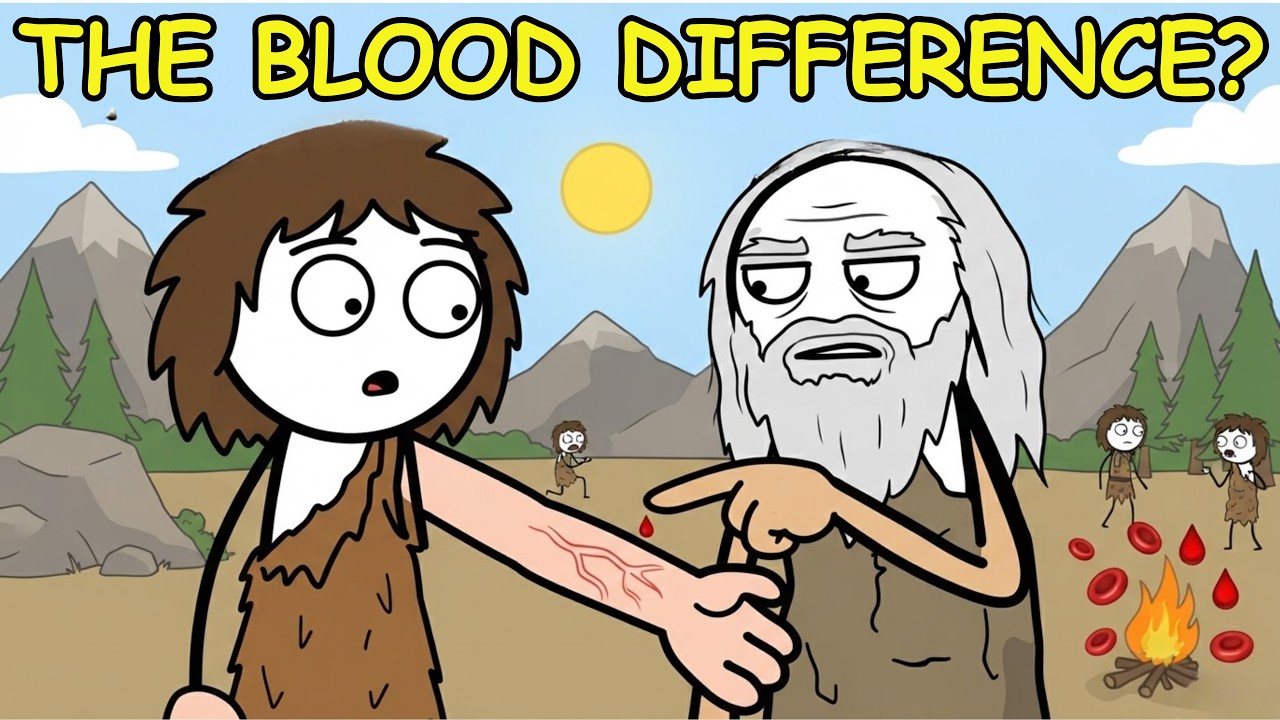
For most of human history, this system went completely unnoticed. It was only when doctors attempted to transfer blood from one person to another, and patients began dying under mysterious circumstances, that the existence of this biological gate was revealed. Before those rules were understood, medical history was a series of fatal experiments. In 1667, Jean-Baptiste Denis, a physician to King Louis XIV, attempted to save a feverish young man by transfusing lamb’s blood into his veins.
The patient survived, likely due to the small volume administered. When Denis repeated the procedure on a second patient, the result was a catastrophic reaction and a painful death. Denis was sued for murder, and blood transfusions were banned in Paris for nearly two centuries. Doctors could not explain why blood, which appeared to be a uniform red fluid, could turn deadly.
The breakthrough came in 1901. Karl Landsteiner, an Austrian researcher, systematically mixed blood samples from himself and five colleagues. He observed that certain combinations remained smooth while others caused red cells to clump together, a process called agglutination. Landsteiner identified the cause: sugar-based markers, or antigens, on the surface of blood cells.
He classified two main markers, A and B. Individuals with the A marker are type A, those with B are type B, those with both are type AB, and those with neither are type O, named after the German word “ohne,” meaning without. The logic of this system is ruthless. The immune system is trained from birth to recognize its own antigens as self and to attack everything else.
A person with type A blood produces antibodies designed to destroy type B markers. The introduction of incompatible blood triggers a massive clumping reaction, rupturing cells and releasing toxic hemoglobin into the kidneys, causing total system failure. Landsteiner’s discovery earned him a Nobel Prize and made surgery significantly safer, but it raised a deeper question: why did evolution create incompatible blood groups? Why not a single universal type?
The leading explanation is disease resistance. Blood types function like different locks on a door, and pathogens are master key makers. If all humans shared one blood type, a single virus could evolve to target it and potentially wipe out the species. Maintaining variety ensures that some portion of the population will survive any given outbreak.
There is documented evidence for this theory. Malaria, historically the deadliest killer of humans, is remarkably bad at attacking type O cells. A 2007 study of over 500 children in Mali confirmed that those with type O blood had a 66% lower chance of developing severe malaria than those with type A or B. In sub-Saharan Africa, where malaria has exerted constant evolutionary pressure for thousands of years, type O is the dominant blood type.
The parasite cannot grip the slippery surface of type O cells. However, type O is not universally superior. Vibrio cholerae, the bacterium that causes cholera, produces a toxin that binds more effectively to the gut lining of people with type O blood. During outbreaks in the Ganges Delta, researchers found that type O individuals were more likely to experience severe dehydration.
This biological tug-of-war explains regional variations. Type B appears at higher frequencies in Central Asia and parts of India, likely a response to the specific diseases endemic to those areas. Similar patterns emerge with the bubonic plague. Some research suggests Yersinia pestis, the bacterium responsible for the Black Death, carries a surface structure that mimics the antigen found in type O blood.
This molecular disguise allowed the plague to slip past the immune systems of type O individuals, while those with type A, which looked sufficiently different, mounted a faster response. This molecular mimicry continues to affect modern health. Norovirus, the cause of most cruise ship stomach flu outbreaks, latches onto specific sugars in the gut that are often identical to blood type markers. Approximately 80% of people are “secretors,” meaning they secrete blood type sugars into their saliva, tears, and intestinal mucus.
For type O secretors, certain norovirus strains are particularly infectious. The 20% who carry a specific FUT2 gene mutation are non-secretors; the virus has no handle to grab, and many of these individuals remain healthy even in outbreak conditions. The age of this system is remarkable. DNA analysis shows that the A and B versions of blood type genes have been preserved for at least 20 million years.
Chimpanzees mostly have type A and O, while gorillas are almost entirely type B. Humans share this security gate architecture with ancestors that predate the species itself. The conflict between blood and pathogens predates tools, fire, and language. The Rh factor, identified by the plus or minus sign in a blood type, adds another layer.
This protein, first studied in rhesus monkeys, can cause tragic complications. If an Rh-negative mother carries an Rh-positive baby, her immune system may produce antibodies against the Rh protein. In a second pregnancy, these antibodies can cross the placenta and attack the baby’s red blood cells. This condition, now preventable with modern medicine, was a silent killer for most of history.
Beyond the ABO and Rh systems, there are 33 total blood group systems, including Duffy, Kell, and Kidd. Each represents a different lock. The Duffy system, for example, is entirely absent in most people of West African descent because its absence makes red blood cells completely immune to Plasmodium vivax, a specific malaria strain. This specialization emerged in one region to solve one specific problem.
Blood type also influences organ transplantation. Blood type antigens are present on platelets, saliva, and the lining of the lungs and gut, not just red blood cells. A type A kidney transplanted into a type B recipient triggers immediate rejection of the entire organ. Modern medical research continues to uncover links between blood type and health outcomes.
Some studies suggest type AB individuals may have a slightly higher risk of cognitive decline. Type O individuals have a lower risk of heart disease and blood clots but may be more prone to stomach ulcers due to interactions with H. pylori bacteria. During the COVID-19 pandemic, data indicated type O individuals had a slightly lower risk of severe infection compared to type A.
The mystery is far from solved. Researchers do not fully understand why type AB exists, given its rarity, nor the specific pressures that created all 33 blood systems. The fossil record offers a haunting connection to the past: blood type markers have been detected in Neanderthal remains. The same molecular flags circulating through modern hearts also moved through theirs, millions of years ago.
The scientific understanding of blood types reframes them as more than a medical detail. They are a survival mechanism, a collective insurance policy. By maintaining variety within a population, humanity ensured that no single outbreak could erase everyone. Those alive today carry the specific sugar molecules that allowed their ancestors to survive a plague, a parasite, or a bacterial epidemic that killed others.
It is a 20-million-year record of adaptation, written in the simplest of biological building blocks.