The roar of the engines had barely faded from the tarmac of the Hockenheimring when the silence of the paddock was shattered by the screech of tires and the sickening crunch of metal against concrete. It was August 8, 1982, and the Formula 1 world watched in horror as Didier Pironi’s Ferrari speared into the rear of Alain Prost’s Renault, launching the Frenchman’s car into a violent, barrel-rolling nightmare that would not only end his career but set the stage for a tragedy so profound it would echo through the decades. The man who had dared to defy the ghosts of his fallen teammate was now fighting for his very legs, his life, and his future, unaware that the cruelest twist of fate was still waiting in the wings, five years down a watery grave in the English Channel.
Didier Pironi was never meant to be a statistic, never meant to be a cautionary tale. Born on March 26, 1952, in the quiet commune of Villecresnes, Val-de-Marne, he was a man of intellect and ambition, holding a science degree and poised to step into the family’s construction business. But the call of the asphalt was too loud.
 In 1972, he enrolled at the Winfield Racing School at Paul Ricard, and his natural aptitude was undeniable; he finished as the top student, earning a scholarship that launched him into the lower formulas. By 1974, he was the Formula France champion, and by 1976, he had conquered Super Renault. His victory at the Monaco Grand Prix Formula 3 support race in 1977 was a declaration of intent—this was a driver destined for the pinnacle of motorsport.
His Formula 1 debut came in January 1978 with Tyrrell, a team that recognized his raw pace but struggled to provide him with a consistently competitive machine. It wasn’t until he moved to Ligier in 1980 that Pironi tasted his first Grand Prix victory, a triumphant day at Zolder, Belgium. Yet, it was the siren call of Maranello that truly changed his trajectory.
In 1981, Enzo Ferrari himself signed Pironi, pairing him with the beloved Canadian wildman, Gilles Villeneuve. The partnership was initially one of mutual respect, a dream team destined to bring glory back to the Prancing Horse. But the dream curdled into a nightmare at the 1982 San Marino Grand Prix at Imola.
In a move that would fracture their relationship irreparably, Pironi passed Villeneuve on the final lap, ignoring what Villeneuve believed was a team agreement to hold station. Villeneuve was livid, vowing never to speak to Pironi again. The tension was palpable, the air thick with betrayal.
Just two weeks later, during qualifying for the Belgian Grand Prix at Zolder, Villeneuve crashed fatally while trying to outdo his teammate’s time. The entire motorsport community was plunged into mourning, and Pironi, the man who had inadvertently sparked the rivalry, was left to carry the weight of a guilt that would never fully lift. He was now the de facto leader of Ferrari, but the joy of racing had been replaced by a somber, relentless drive to win.
Pironi pushed forward, winning two more races that season and leading the World Championship standings as the summer heat intensified. The ghost of Villeneuve seemed to spur him on, but the darkness was closing in. At the German Grand Prix at Hockenheim, the skies opened up, and the track became a treacherous river of standing water.
 In practice, Pironi came upon Prost’s slower Renault, and in a moment of blinding spray and misjudgment, he slammed into the back of the French car. The impact was catastrophic. Pironi’s Ferrari was launched into the air, flipping violently before crashing back to earth.
He was extracted from the wreckage with compound fractures to both legs, his body broken, his career over in a split second.
The medical team fought for hours to save his limbs, and while they succeeded in preventing amputation, the damage was so severe that Pironi would never walk without a limp, let alone race a Formula 1 car again. He was forced to watch from the sidelines as Keke Rosberg snatched the 1982 World Championship title, a title that should have been his. The pain was not just physical; it was the agony of a man who had climbed to the summit only to be thrown off the cliff.
For years, he underwent agonizing surgeries and rehabilitation, his fighting spirit refusing to accept the verdict of the doctors. In 1986, he even tested for AGS and Ligier, proving he still had the speed, but the injuries and a massive insurance payout—which he would have to return if he raced—kept him out of the cockpit for good.
But Didier Pironi was not a man who could sit still. The adrenaline that had fueled his racing career needed a new outlet, and he found it in the violent, unforgiving world of offshore powerboat racing. It was a sport that demanded the same reckless courage, the same split-second reflexes, and the same willingness to tempt death.
 He threw himself into it with the same fervor he had shown in Formula 1, competing in the treacherous waters of the English Channel. His girlfriend, Catherine Goux, watched with a mixture of pride and terror, knowing that her partner was once again dancing with disaster. She was pregnant with his twins, a secret joy that he would never live to see.
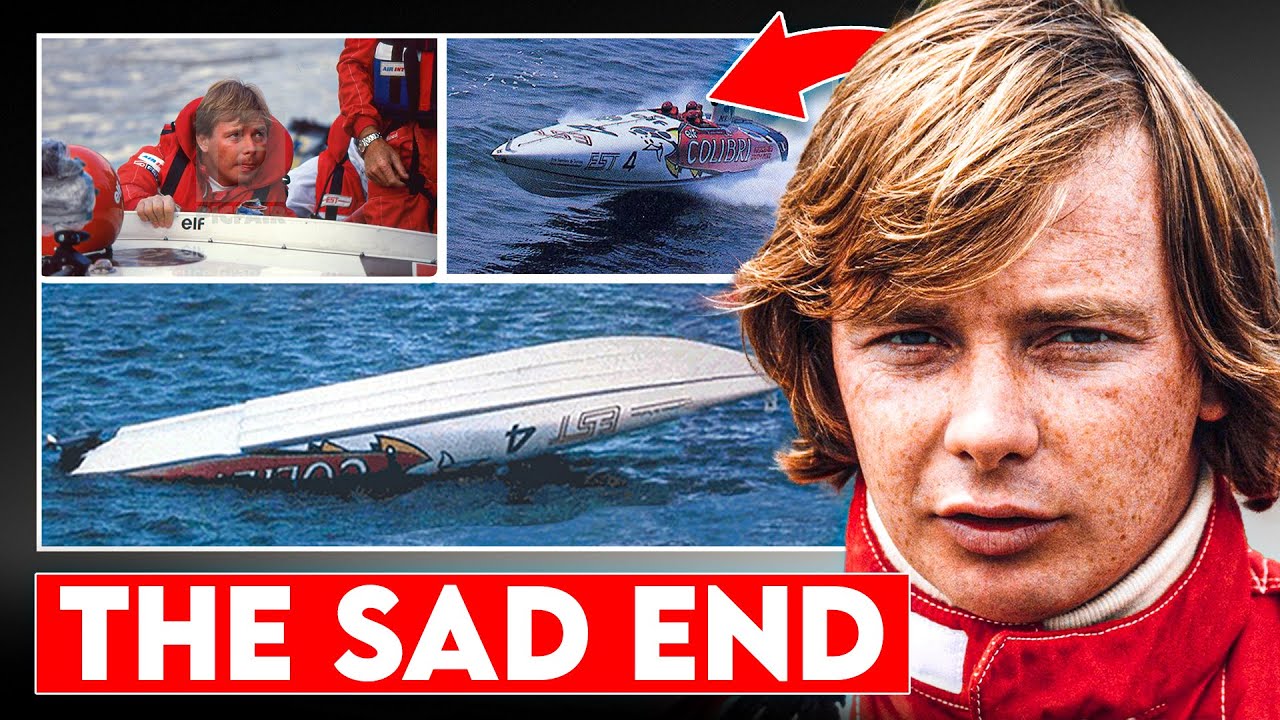
On August 23, 1987, during the Needles Trophy race near the Isle of Wight, Pironi’s powerboat, the Colibri, was slicing through the waves at high speed when it hit the massive wake of an oil tanker. The boat was launched into the air, flipping end over end before crashing down in a maelstrom of foam and debris. Pironi, along with his two crew members—journalist Bernard Giroux and his friend Jean-Claude Guénard—were thrown into the churning sea.
The rescue teams arrived too late. Didier Pironi was pronounced dead at the scene. He was just 35 years old, a man who had survived the fiery wrecks of Formula 1 only to be killed by the very ocean he had sought for solace.
The news sent shockwaves through the racing world. Here was a man who had been a lightning rod for controversy, a driver who had been vilified for his actions at Imola, yet who had also been a symbol of relentless determination. His death was a cruel irony, a final twist in a story already heavy with tragedy.
But even in death, Pironi’s legacy was not finished. His girlfriend, Catherine Goux, was left to raise the twins she had been carrying. In a poignant tribute to the two men who had defined Pironi’s life, she named them Didier and Gilles—Gilles in honor of the teammate he had lost, the man whose death had haunted him.
 It was a gesture that spoke to the complex, intertwined fates of the two Ferrari drivers.
Years later, the Pironi name would return to the Formula 1 paddock. Gilles Pironi, the son who had been born after his father’s death, pursued a career in engineering, eventually joining the Mercedes-AMG Petronas Formula 1 Team. In 2020, at the British Grand Prix, Gilles stood on the podium, celebrating a victory with the team, a moment that felt almost poetic.
The son of a man who never won the World Championship was now standing in the winner’s circle, carrying the weight of a legacy that was both a blessing and a burden. It was a reminder that while Didier Pironi’s life was cut brutally short, his bloodline and his spirit endured.
Pironi’s statistics tell a story of unfulfilled potential: three Grand Prix victories, thirteen podiums, four pole positions, and 101 championship points. But numbers cannot capture the drama, the intensity, or the tragedy of his journey. He was a man who lived his life at full throttle, whether it was on the race track, in the powerboat, or in the pursuit of his passions.
His career was a roller coaster of soaring highs and crushing lows, from the elation of winning for Ferrari to the despair of watching his teammate die, from the agony of his own career-ending crash to the final, fatal plunge into the cold Atlantic waters.
The question that lingers is whether Pironi was a victim of his own hubris or a hero who simply refused to yield to fate. At Imola, he made a choice that fractured a friendship and arguably contributed to a death. At Hockenheim, he was a victim of circumstance, a man in the wrong place at the wrong time.
And in the English Channel, he was a thrill-seeker who pushed the limits one too many times. His story is a stark reminder that the line between glory and disaster is razor-thin, and that even the brightest stars can be extinguished in an instant. The racing world remembers Didier Pironi not just for his speed, but for his courage, his flaws, and his unyielding refusal to slow down, even when the world told him to stop.