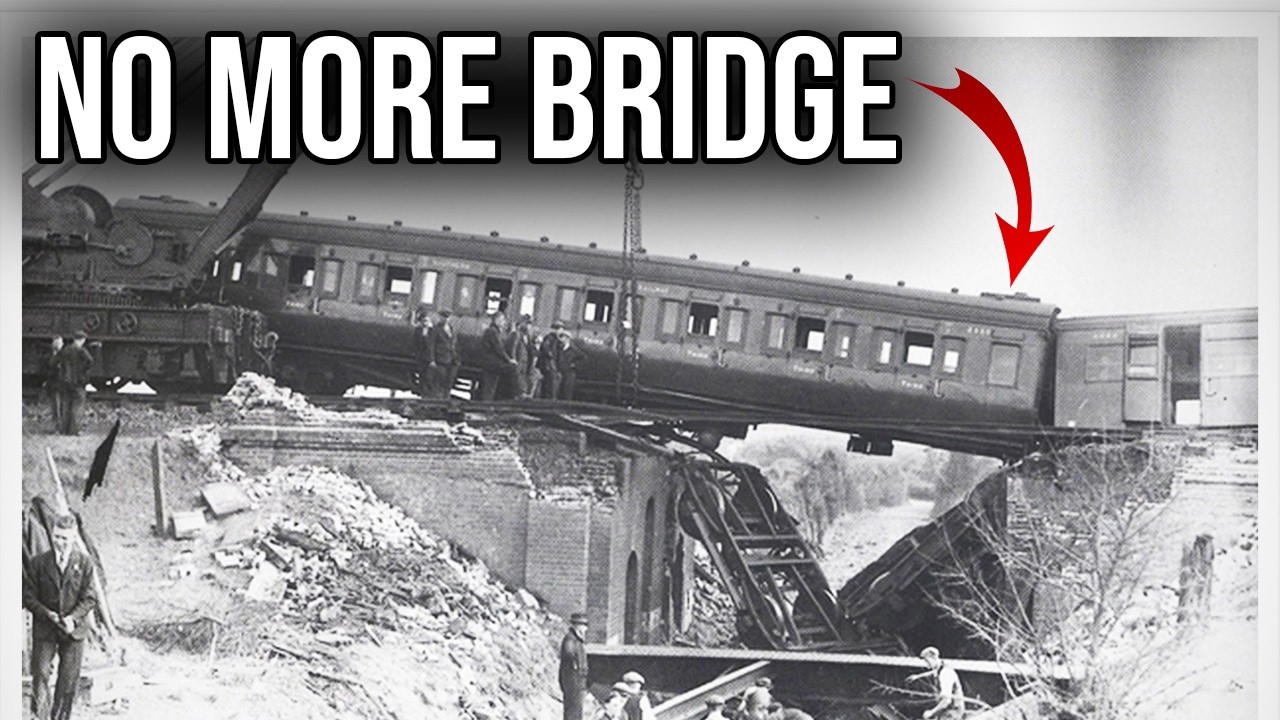
UPCHURCH, Kent — A British express train packed with hundreds of passengers plunged into a gap left by a vanished railway bridge on August 16, 1944, after a German V-1 flying bomb severed the span only seconds before the locomotive reached it, killing eight people and injuring more than sixty in one of the Second World War’s most bitterly unlucky home-front disasters.
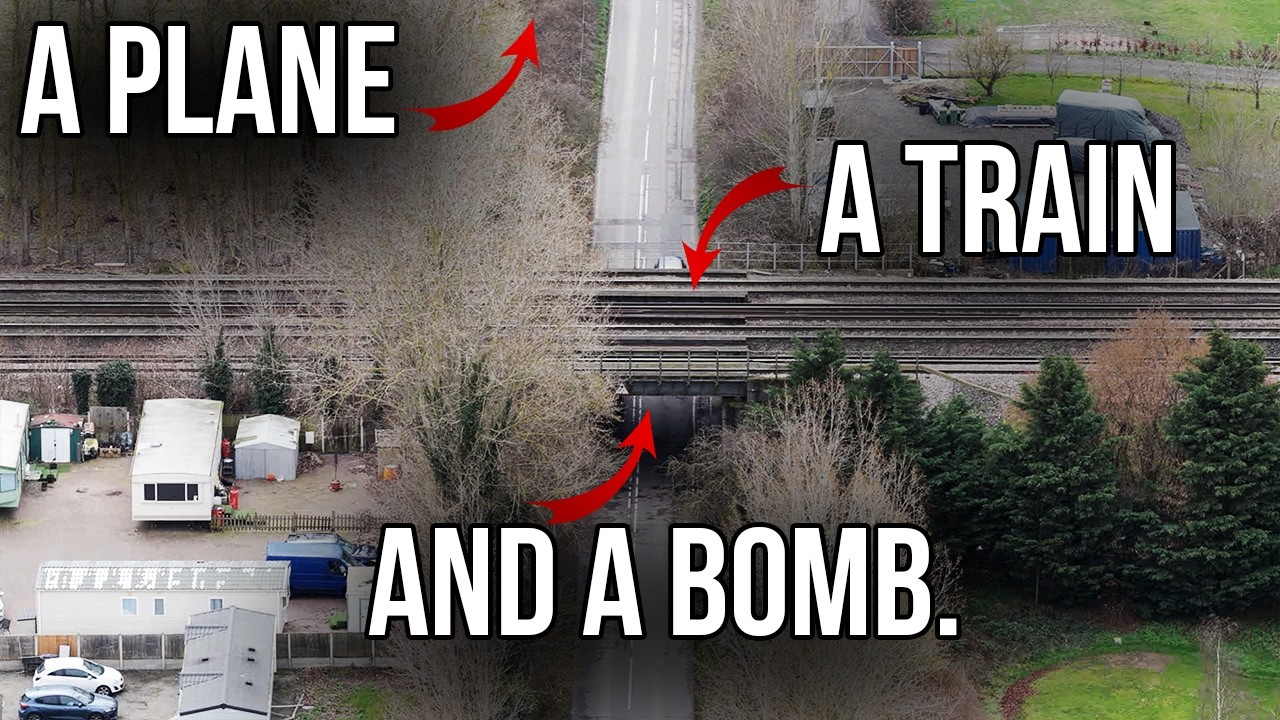
The London Victoria to Ramsgate Express, carrying an estimated four to six hundred passengers at roughly sixty miles per hour, was approaching Oak Lane near the village of Upchurch when the bridge ahead of it simply ceased to exist. The pilot of a Royal Canadian Air Force fighter had just tipped the doodlebug out of the sky. The bomb fell exactly where it should not have fallen.
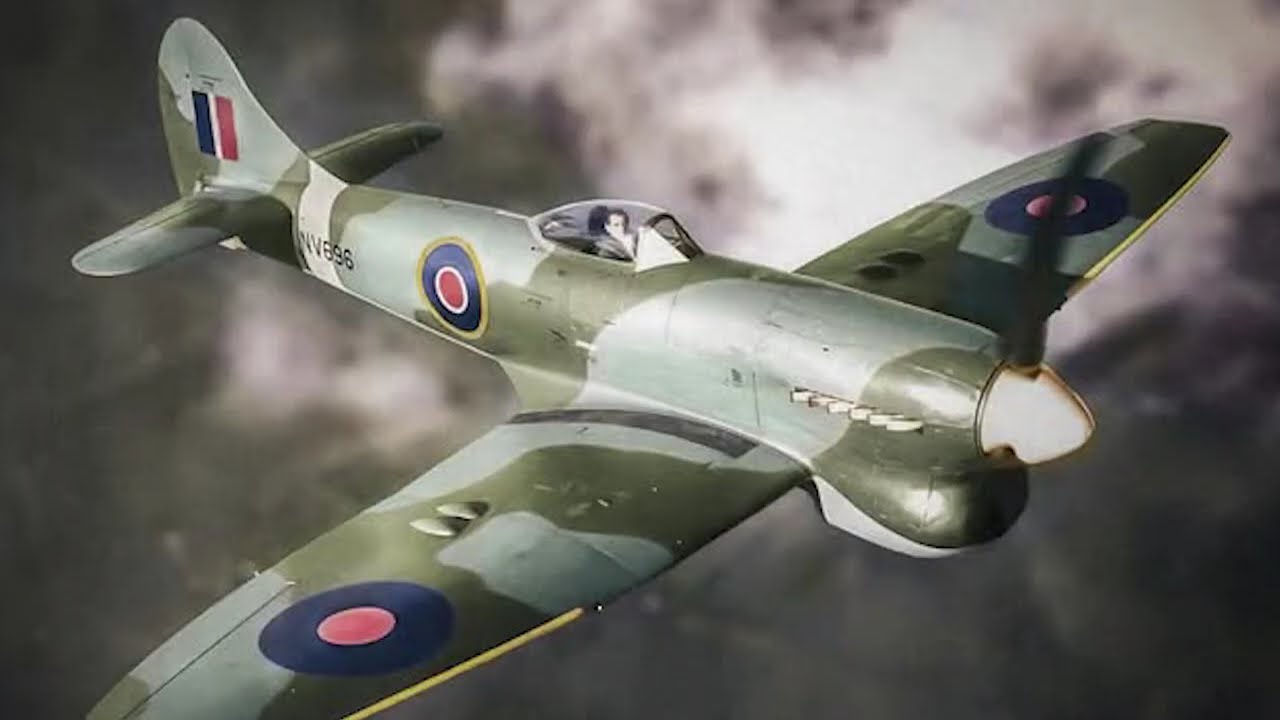
Flight Lieutenant John Alfred Malloy, a Hawker Tempest V pilot of 274 Squadron, had chased the V-1 from Dover at two thousand feet as part of Operation Diver, the RAF campaign to intercept the flying bombs before they reached London. His official report was terse: “Tipped V1 off balance with wingtip having chased the V1 at 2,000 ft from Dover.”
The technique was not reckless improvisation. It was doctrine. Pilots would slide a wingtip beneath the V-1’s wing to disrupt the airflow over it, upsetting the gyroscopic guidance system and sending the bomb tumbling.
Shooting a doodlebug down was considered more dangerous, because the resulting explosion could engulf the attacking aircraft.
Malloy pulled away believing the job was finished. The bomb began a long, arcing dive toward open farmland. Damson pickers working in a nearby orchard heard the telltale buzzing overhead and watched in horror as the machine came down toward them.
At the last moment it changed course and struck the railway bridge.
Arthur Edward Naylor, sixty-one, was working beside the tracks. He became the first of the dead.
The train was seconds behind. Driver Charles Barnett later reported that shortly after passing Rainham station his hat was blown from his head. Looking out, he saw only a cloud of smoke ahead.
By then no brake application could have mattered.
 What followed was described by survivors as an almighty explosion and a jolt that threw passengers the length of corridors. The locomotive and tender jumped the gap and landed on the far side before overturning, injuring Barnett and his fireman. The first two carriages dropped into the void and were crushed almost beyond recognition.
The third rode up onto the debris. The fourth smashed into it, forming what one account called a makeshift bridge.
One survivor, the mother of writer Jonathan Smale, recalled standing in a corridor talking to a sailor when passengers began pointing at the sky. “We could all then see the flying bomb coming down closer and closer to us, almost chasing us and getting bigger,” she remembered. The jolt threw her and the sailor along the corridor and around the gangway corner.
When the carriage stopped, she was in the nearest one to the yawning gap. “One man was completely covered in blood,” she said. “Wounded and dead lying everywhere.
Those poor people, we were the lucky ones.”
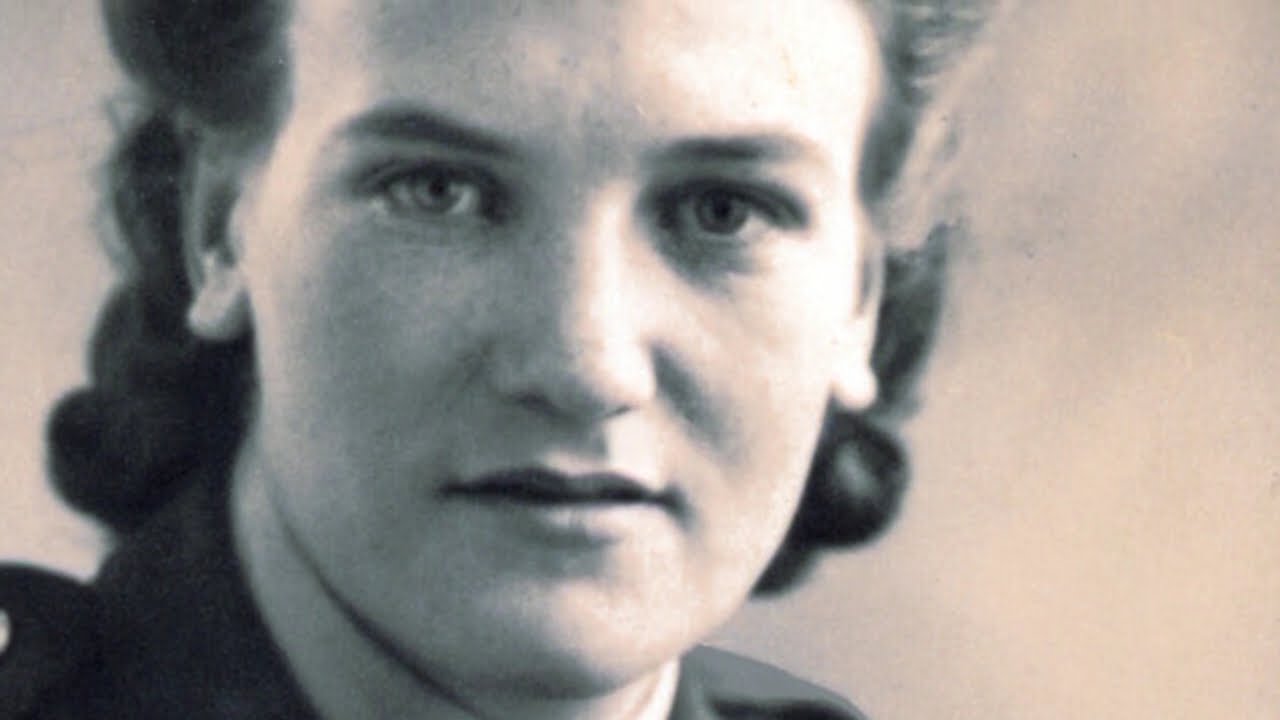
Among the dead was Private Vera Barbara Martin of the Auxiliary Territorial Service, aged nineteen. She had joined the ATS in 1942 at seventeen and a half and trained as a plotter, tracking the size and direction of German raids. Her older sister Gwen served alongside her at the same searchlight station.
The sisters had been granted leave and had decided to go to the coast. They boarded the express at Victoria at 3:53 that afternoon. Both were in the first carriage, the one that plummeted into the gap.
Gwen survived, buried in the wreckage, and dug herself free. “I came to and wondered immediately where my sister was,” she recalled. “I got free and helped everyone get free.
I found my sister under the train.” Vera had been killed instantly. Gwen suffered serious leg injuries and spent a long period recovering from the trauma.
Vera, known to family and friends as Babe, was born on February 6, 1925, one of four children of Horace and Ann Martin of 1 Bowers Road, Shoreham. Her nickname is said to have come from a rendition of “Kiss the Boys Goodbye” at a village hall event. Her sister remembered her fearlessness during the flying bomb raids.
“We did everything together,” Gwen said. “Babe was never frightened and was laughing to the end.”
A local vicar described her as “a genuine favorite here. Her cheerful and kind disposition ensured this, and she remained brave and an encourager of others to the end.” She was laid to rest at the Church of St Peter and St Paul in Shoreham.
The human cost was recorded in full. The dead were Mrs Ethel Emily Beadle, fifty-one; Able Seaman Charles William Cummins, forty-four; Able Seaman Albert Edward Eley, forty-two; Private Geoffrey Herbert Gallop, twenty; Mrs Ivy Maud Smith, thirty-seven; Mr Frank Albert Sneazel, fifty-six; Mr Arthur Edward Naylor, sixty-one; and Private Vera Barbara Martin, nineteen.
Thirty-three people were seriously injured and twenty-eight suffered only slight injuries. Most of the wounded were taken to St Bartholomew’s Hospital in Rochester. A nearby transport cafe, the Rest Tea Rooms, was converted into a temporary hospital.
Doctors, ambulances, passers-by, the fruit pickers and members of the Women’s Voluntary Service converged on the scene to pull survivors from the wreckage.
One act of quick thinking prevented a second catastrophe. The fireman, despite having been aboard a locomotive that jumped a bridge and flipped onto its back, ran roughly two miles to Newington station to warn of the disaster. An express that would normally have passed the same spot at the same time was running late that day and was still at Newington.
It stayed there.
Flight Lieutenant Malloy circled the crash site again and again, flying low over the wreckage. Survivors remembered him. “That poor man, the pilot, circling round and round the crash site in his plane,” the surviving passenger recalled.
“He must have felt so terrible.”
Eustace Missenden, general manager of the Southern Region’s railways, offered a measured verdict. “His attempt to save life had been unsuccessful,” he wrote. “But who can say how many more lives might have been lost if the Doodlebug had carried on to the Medway towns or London?”
Malloy tipped another V-1 off balance roughly three hours later the same day; it fell harmlessly into the sea. He did not survive the war. On January 13, 1945, during a strafing attack on a car near Paderborn, Germany, his Tempest failed to pull up and struck the ground, exploding and killing him instantly.
A lake in Kenora, Ontario, was named Malloy Lake in his honour in 1960.
Wartime press restrictions clouded the immediate reporting. Early accounts suggested the train had derailed on a bend or struck an obstruction. The dramatic phrase “the train that jumped the gap” became the headline, obscuring the fact that not all of the train jumped anything, and that a V-1 had removed the bridge.
Infrastructure could not wait. The bridge was rebuilt in three days and still carries the line today.
Gwen Martin later became a founding member of the women’s section of the Shoreham British Legion. She died in 2013, carrying the memory of her sister for nearly seventy years.
At Vera’s grave, a single flower grows from the stone. The inscription reads: “To the beautiful memory of Private Vera Barbara Martin, killed whilst on active service, 16th of August, 1944, aged 19 years.”