For millions of fans, Pat Morita simply was Mr. Miyagi.
The quiet voice.
The unforgettable wisdom.
“Wax on, wax off.”
The gentle mentor who became the emotional heart of The Karate Kid.
But behind one of Hollywood’s most beloved characters was a battle audiences never saw.
Morita almost didn’t get the role.
He was rejected.
Underestimated.
And forced to audition again and again because powerful people in Hollywood could not imagine the comedian from Happy Days becoming a serious dramatic actor.
Yet what happened during those auditions would ultimately change the movie—and Pat Morita’s life—forever.
Before The Karate Kid, Morita was primarily known for comedy.
His work on Happy Days had made him recognizable, but that success became an unexpected obstacle when the role of Mr. Miyagi appeared.
Producer Jerry Weintraub reportedly did not see Morita as Miyagi.
To him, Morita was a comedian.
The character required dignity, mystery, sadness, and emotional authority.
But director John G. Avildsen saw something different.
He believed Morita possessed a depth audiences had never been allowed to see.
So Morita was given a chance.
And when he arrived to audition, he hardly looked like someone preparing for the opportunity of a lifetime.
After a difficult period in Hawaii, Morita appeared tired and unpolished.
Ironically, that helped.
Instead of looking like a polished television personality, he appeared grounded.
Weathered.
Real.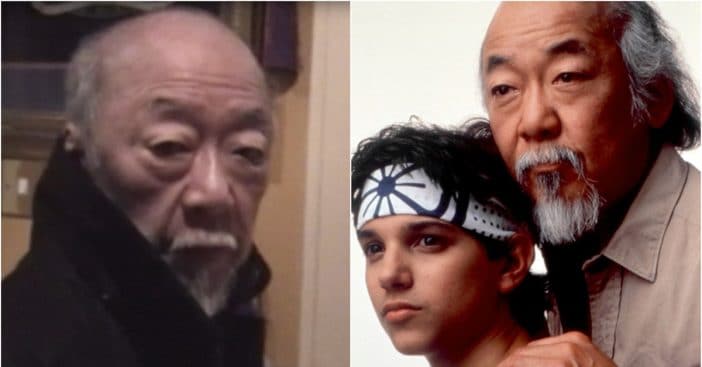
Something about that exhausted version of Morita seemed closer to the man Mr. Miyagi needed to be.
But one audition was not enough.
Morita reportedly went through five increasingly demanding auditions.
Each time, he had to prove the same thing.
He was not merely a comedian attempting drama.
He could actually become Miyagi.
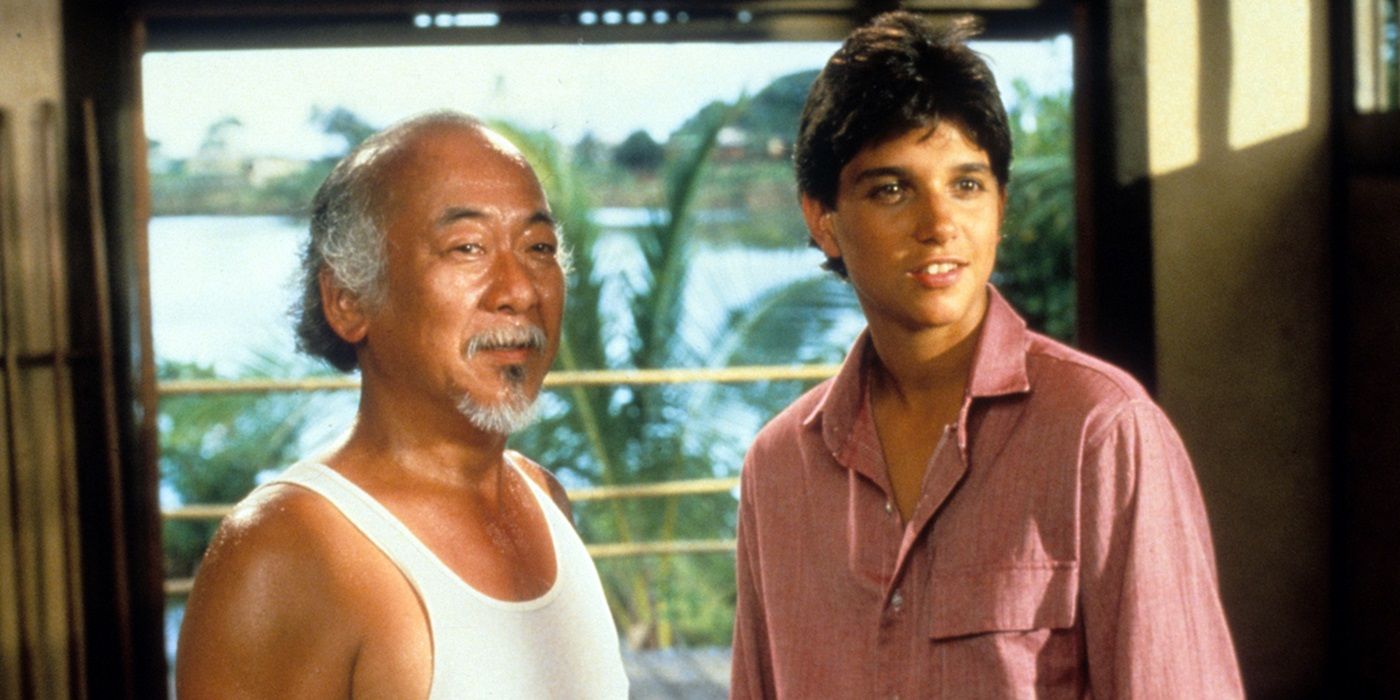
Then came Ralph Macchio.
The chemistry between them changed everything.
Morita did not overpower the scenes.
He slowed them down.
His lines carried quiet weight.
His pauses mattered.
And beside Macchio’s youthful energy, Morita created exactly the balance the story required.
Gradually, the skepticism began disappearing.
The actor producers initially struggled to imagine in the role was becoming increasingly difficult to imagine without it.
According to the account, Weintraub eventually acknowledged that he had been wrong, apologized to Morita, and offered him the part.
But winning the role was only the beginning.
Morita still had to create Mr. Miyagi.
One of the most important elements was the voice.
Miyagi’s distinctive cadence would become instantly recognizable, but the documentary describes its beginnings as surprisingly accidental.
Morita’s exhaustion during the audition process affected the way he spoke.
His delivery became slower.
 More deliberate.
More restrained.
Instead of abandoning it, Morita recognized something valuable.
He refined that rhythm until the voice became part of Miyagi’s identity.
But Morita understood that the character needed more than memorable dialogue and martial arts lessons.
Miyagi needed pain.
That became especially important during one of the film’s most vulnerable scenes.
Daniel discovers Miyagi drinking alone and learns about the devastating loss of his wife and child during World War II.
It shattered the image of the endlessly wise, emotionally controlled mentor.
Suddenly Miyagi was not simply teaching Daniel how to fight.
He was a grieving man carrying wounds that had never disappeared.
Morita reportedly fought to preserve that emotional vulnerability.
Without scenes like this, Miyagi risked becoming a caricature.
With them, he became human.
And Morita’s instincts were vindicated.
His performance earned him an Academy Award nomination for Best Supporting Actor.
The comedian Hollywood initially doubted had delivered an Oscar-nominated dramatic performance.
But something else was happening away from the cameras.
Morita’s relationship with Ralph Macchio reportedly began reflecting the bond between Miyagi and Daniel.
Macchio was the younger star carrying much of the movie.
Morita became a supportive, protective presence.
Their connection was not simply manufactured when cameras started rolling.
A genuine mutual respect developed between them.
That authenticity helped give The Karate Kid its emotional center.
The karate mattered.:quality(85):upscale()/2023/04/20/833/n/48559432/a21d381464418b99bd9c82.52704172_.jpg)
The tournament mattered.
But the relationship between Daniel and Miyagi was what made audiences care.
Morita understood that.
Mr. Miyagi was never really about fighting.
He was about discipline.
Loss.
Patience.
Dignity.
And the relationship between a lonely teenager and an older man who discovered that he still had something important to give.
For Pat Morita, the role also carried a powerful irony.
Hollywood had almost denied him the opportunity because executives thought they already knew who he was.
A comedian.
A familiar television face.
Someone audiences were supposed to laugh at.
But beneath that image was an actor waiting for someone to take him seriously.
John Avildsen did.
And eventually everyone else had to as well.
Morita would remain permanently connected to Mr. Miyagi for the rest of his life.
He died in 2005 at the age of 73, but the character only became more beloved with time.
Generations who were not even alive when The Karate Kid premiered discovered Miyagi’s lessons.
And behind that legacy remains the remarkable story of how close Hollywood came to losing him.
Five auditions.
Repeated skepticism.
A director who refused to give up.
A young co-star whose chemistry helped prove the casting worked.
And an actor determined to show that there was far more inside him than comedy.
Pat Morita entered the audition room fighting to be taken seriously.
He walked away with the role that would define his career.
And perhaps the greatest truth behind The Karate Kid is that Mr. Miyagi’s most important lesson existed before filming even began.
Never assume you already know what someone is capable of.


